No fees unless we win.
Get a free consultation
72 Reviews
4.8
★★★★★

Mentor Brain Injury Lawyer

Suffered a Brain Injury in Mentor? Contact Us Today

A traumatic brain injury can affect memory, concentration, speech, movement, mood, employment, relationships, and the ability to live independently.

Symptoms may appear immediately or develop over the following hours or days, and a person does not need to lose consciousness or have abnormal imaging to sustain a concussion or other brain injury.

A Mentor brain injury lawyer can investigate how the injury occurred, preserve medical and accident evidence, identify the responsible parties, and document the injury’s cognitive, physical, emotional, and financial effects.

Piscitelli Law Firm represents people injured in Mentor and throughout Northeast Ohio in brain injury cases involving motor vehicle accidents, falls, unsafe property conditions, medical negligence, defective products, and other forms of wrongful conduct.

Mentor Brain Injury Lawyer

Get Help From a Mentor Brain Injury Attorney

Brain injury claims often depend on medical evidence that is not immediately visible.

Symptoms may develop over time, imaging may appear normal, and insurance companies may dispute whether the accident caused changes in memory, concentration, mood, movement, or daily functioning.

A Mentor brain injury attorney can investigate how the injury occurred, identify the applicable legal claims and insurance coverage, and gather evidence from medical providers, witnesses, employers, and qualified experts.

The case may require neuropsychological testing, rehabilitation records, employment documents, and testimony describing how the injury changed the person’s work, relationships, and independence.

Piscitelli Law Firm represents people with concussions and other traumatic brain injuries throughout Mentor and Northeast Ohio.

Frank Piscitelli has over 30 years of experience helping injured Ohioans pursue justice, and he prepares every serious injury case with the care, attention, and resources it deserves.

You should not have to face medical bills, missed work, ongoing symptoms, and insurance pressure alone after suffering a brain injury.

Contact Piscitelli Law Firm today for a free consultation, or use the chat feature on this page to get help from a Mentor brain injury attorney.

Why Brain Injury Claims Require Specialized Medical and Legal Evidence

A brain injury can affect nearly every part of a person’s life, including memory, speech, mood, concentration, movement, sleep, and the ability to work.

Even a mild traumatic brain injury can create symptoms that interfere with daily routines, while a moderate or severe TBI may require long-term medical care, occupational therapy, and support from brain injury specialists.

Brain injury claims can be difficult because symptoms are not always visible.
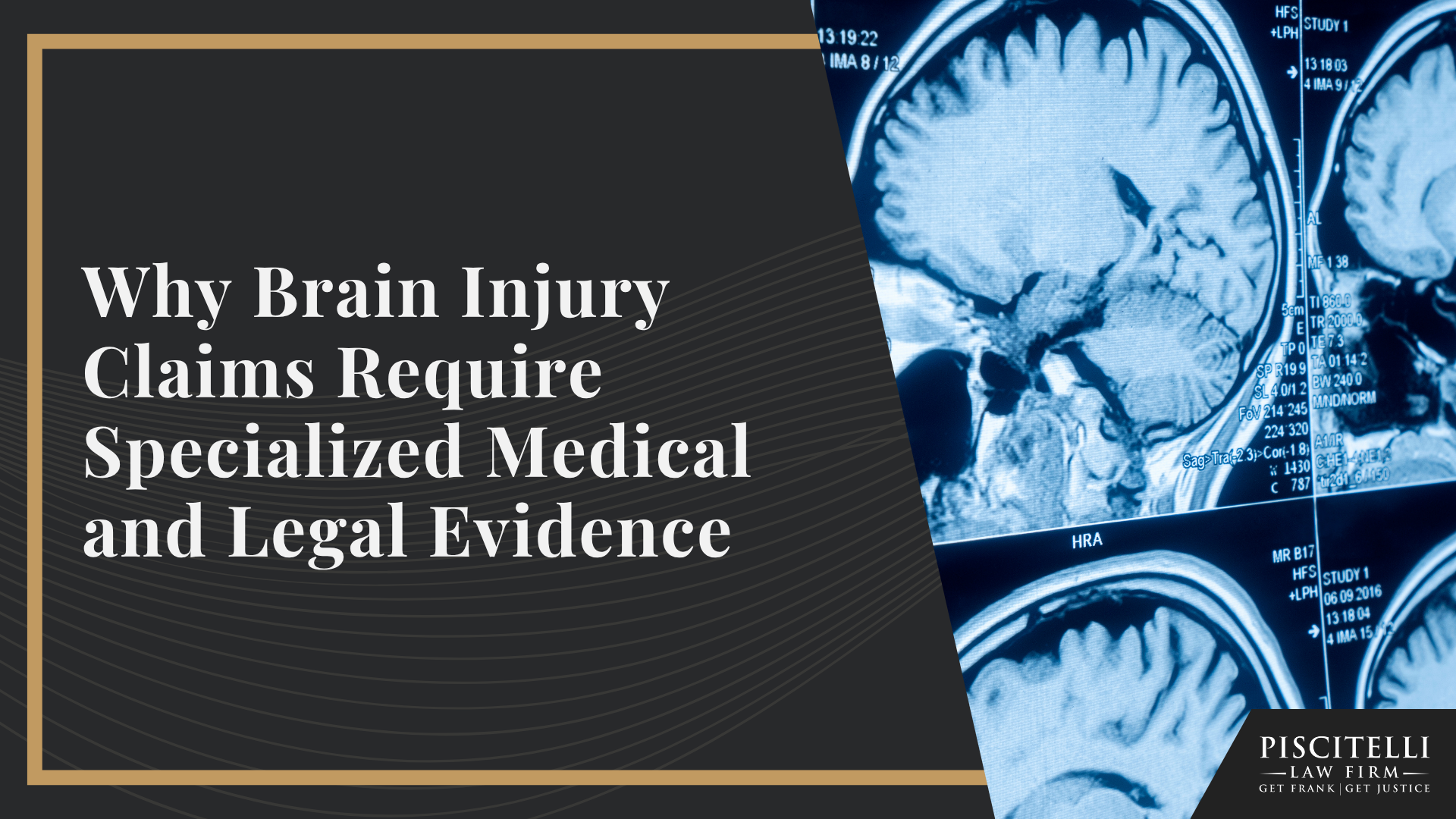
Insurance companies and defense counsel may argue that the injury is exaggerated, unrelated to the accident, or less serious than the medical records show.

A Mentor brain injury lawyer can help brain injury victims gather evidence, document medical treatment, and pursue compensation for medical bills, lost wages, pain and suffering, and long-term care needs.

Piscitelli Law Firm understands how serious these cases are and provides legal services for injured clients facing the legal system after a traumatic brain injury.

Common Accidents That Cause Brain Injuries in Mentor

Traumatic brain injuries can happen in many types of accidents.

A head injury may occur when the head strikes an object, when the brain moves violently inside the skull, or when an object penetrates the skull and damages brain tissue.
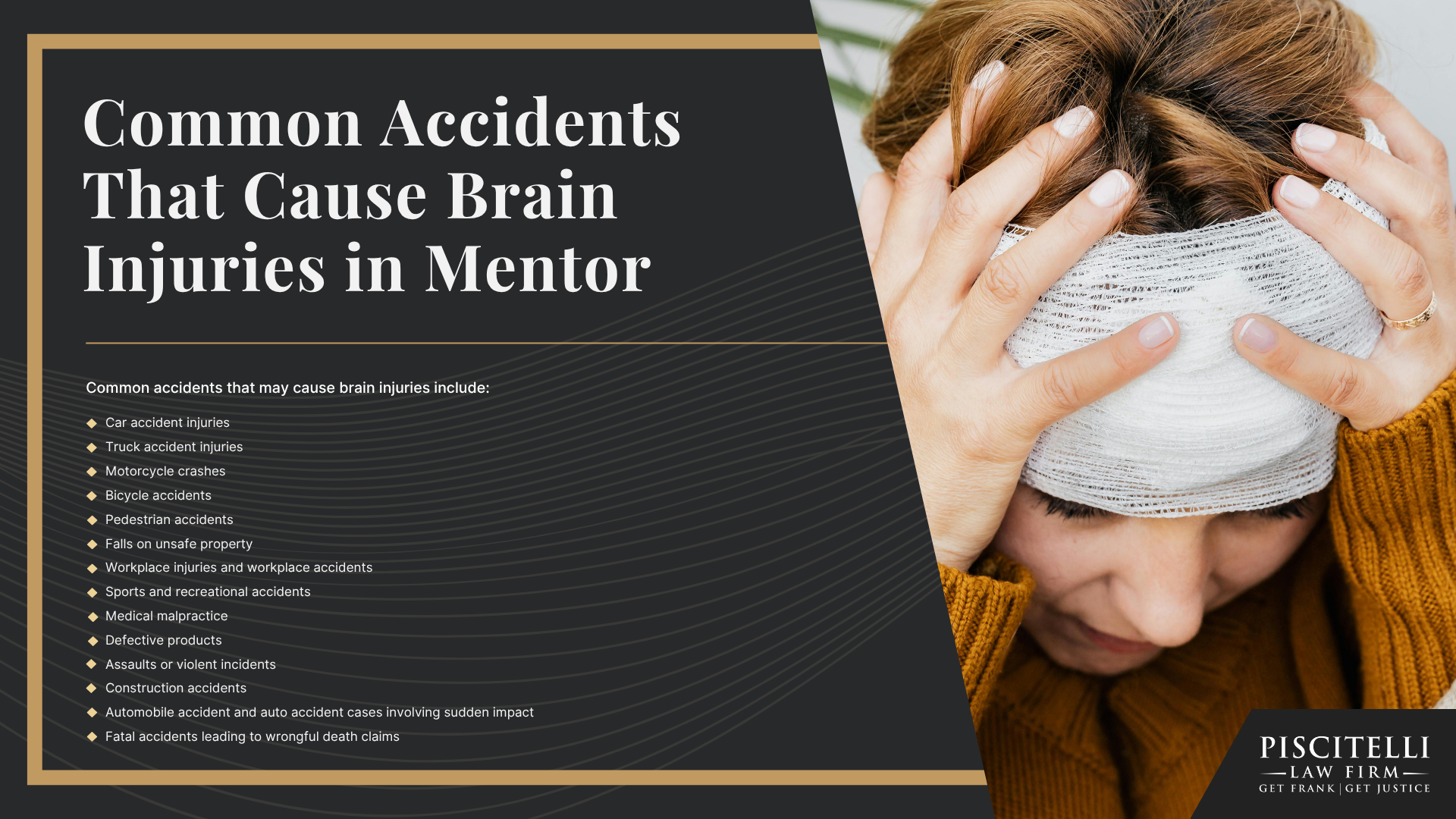
Common accidents that may cause brain injuries include:

  • Car accident injuries
  • Truck accident injuries
  • Motorcycle crashes
  • Bicycle accidents
  • Pedestrian accidents
  • Falls on unsafe property
  • Workplace injuries and workplace accidents
  • Sports and recreational accidents
  • Medical malpractice
  • Defective products
  • Assaults or violent incidents
  • Construction accidents
  • Automobile accident and auto accident cases involving sudden impact
  • Fatal accidents leading to wrongful death claims

The legal requirements depend on how the brain injury occurred. Motor vehicle and premises claims generally require proof of negligence.

Medical malpractice claims follow separate professional-negligence rules and deadlines.

Workplace injuries may fall within Ohio’s workers’ compensation system, although a separate claim may be available against a negligent third party.

Product liability and intentional assault cases also involve different legal standards.

Car Accidents, Truck Crashes, and Motorcycle Accidents

Motor vehicle accidents are a common cause of traumatic brain injuries.

A crash can cause the head to strike a steering wheel, window, dashboard, pavement, or another surface, but a TBI can also happen without a direct blow when the brain is forced forward and backward inside the skull.

A car accident, automobile accident, auto accident, truck accident, or motorcycle crash may cause a mild concussion, closed head injury, skull fracture, brain contusion, brain bleed, diffuse axonal injury, or severe TBI.

The impact can create a primary injury at the time of the crash and secondary brain injuries that develop afterward due to swelling, blood clots, reduced oxygen, or cerebral edema.

These cases often involve accident reports, medical records, insurance coverage, expert opinions, and disputes over fault.

A traumatic brain injury lawyer can help injured clients understand their rights and pursue a traumatic brain injury claim after a serious crash.

Falls, Premises Liability, and Unsafe Property Conditions

Falls are another common cause of brain trauma, especially when a person hits their head on pavement, stairs, flooring, furniture, shelving, or another hard surface.

A fall may happen because of wet floors, broken stairs, poor lighting, uneven walkways, icy sidewalks, missing handrails, or other unsafe property conditions.

A premises liability brain injury case may involve:

  • Falls at stores, restaurants, or shopping centers
  • Falls at apartment complexes or rental properties
  • Falls on icy or poorly maintained sidewalks
  • Falls from stairs, ladders, or platforms
  • Workplace falls
  • Nursing home falls
  • Falls caused by poor lighting or missing warnings
  • Falls involving children or older adults

Property owners may be responsible when negligence creates or fails to correct a dangerous condition.

Personal injury attorneys can review maintenance records, incident reports, photos, video footage, and witness statements to determine whether the property owner failed to act reasonably.

Bicycle, Pedestrian, and Recreational Accidents

Bicyclists, pedestrians, and recreational riders face a high risk of head injury because they have little protection when hit by a vehicle or thrown to the ground.

A cyclist or pedestrian may suffer a traumatic brain injury even when wearing a helmet, especially if the impact involves a motor vehicle or a hard surface.

Mentor brain injury cases may involve:

  • Bicycle crashes on suburban roads
  • Pedestrian accidents at intersections or crosswalks
  • Recreational accidents at parks, trails, fields, or sports facilities
  • Scooter, skateboard, or e-bike crashes
  • Children injured during sports or play
  • Falls from playground equipment
  • Crashes caused by careless drivers who fail to yield

These accidents can cause mild TBI, moderate brain injuries, or catastrophic injuries that require extensive medical treatment.

A brain injury attorney can investigate the crash, gather evidence, and help injured people recover compensation.
What Is a Traumatic Brain Injury?

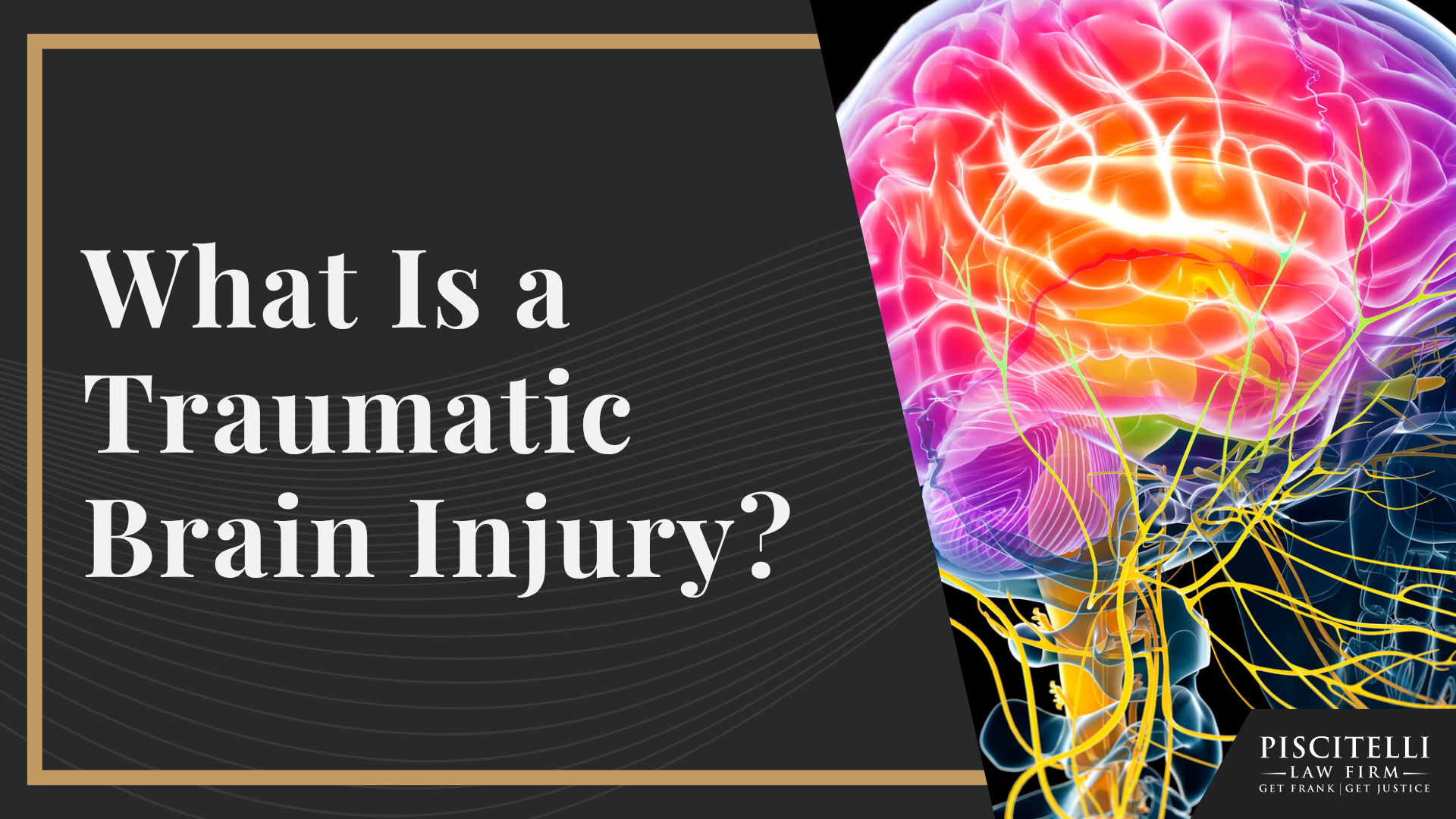
A traumatic brain injury refers to a disruption in brain function caused by a blow, jolt, bump, penetrating injury, or other trauma to the head.

A traumatic brain injury (TBI) can range from a mild concussion to a severe injury that causes permanent disability or death.

A primary brain injury happens at the time of the initial injury.

This may include a skull fracture, brain contusion, brain bleed, penetrating injury, or diffuse axonal injury.

Secondary brain injuries may develop after the accident when swelling, reduced oxygen, blood clots, cerebral edema, or other complications cause additional brain damage.

Because brain function controls movement, memory, speech, mood, judgment, and personality, even a seemingly minor head injury should be taken seriously.

Anyone with brain injury symptoms should seek medical attention right away.

Types of Brain Injuries

Brain injuries can be classified by severity, mechanism, and the part of the brain affected.

Some injuries improve with rest and treatment, while others cause permanent disability, cognitive decline, and lifelong care needs.

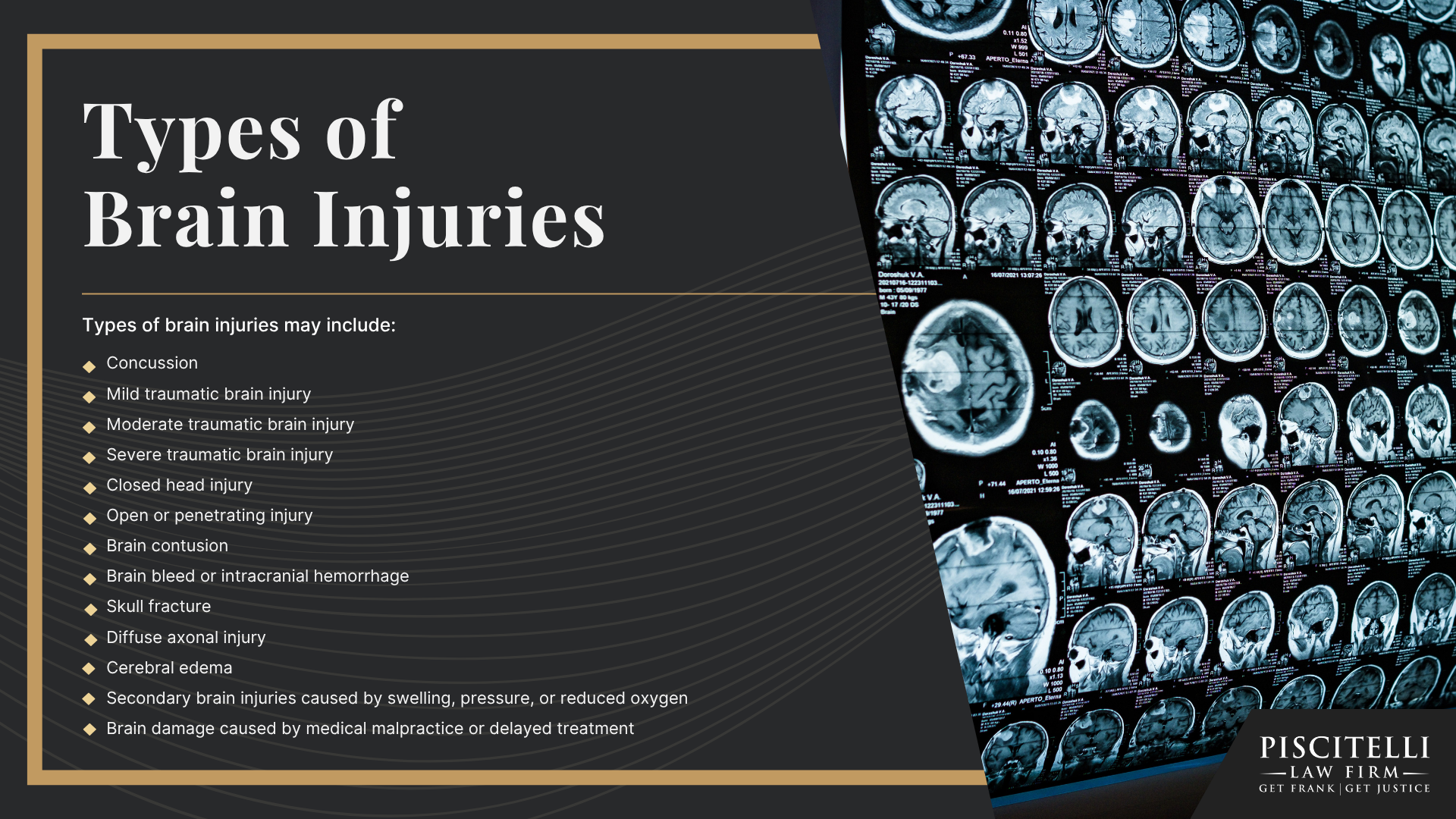
Types of brain injuries may include:

  • Concussion
  • Mild traumatic brain injury
  • Moderate traumatic brain injury
  • Severe traumatic brain injury
  • Closed head injury
  • Open or penetrating injury
  • Brain contusion
  • Brain bleed or intracranial hemorrhage
  • Skull fracture
  • Diffuse axonal injury
  • Cerebral edema
  • Secondary brain injuries caused by swelling, pressure, or reduced oxygen
  • Brain damage caused by medical malpractice or delayed treatment

A traumatic brain injury case may require testimony from medical professionals, neurologists, neuropsychologists, brain injury specialists, and life care planners.

Experienced brain injury attorneys understand the need to document both the initial injury and the long-term effects.

Concussions and Mild Traumatic Brain Injuries

A concussion is a type of mild traumatic brain injury.

Although the word “mild” is often used medically, a mild TBI can still disrupt daily life and create symptoms that last for weeks, months, or longer.

Symptoms of a concussion or mild traumatic brain injury may include:

  • Headache
  • Dizziness
  • Nausea
  • Fatigue
  • Sensitivity to light or sound
  • Confusion
  • Memory problems
  • Trouble concentrating
  • Mood changes
  • Sleep problems
  • Balance problems
  • Blurred vision

Some people try to return to work, school, driving, or exercise too soon after a mild concussion.

Medical care is important because symptoms may worsen, and repeated head trauma can increase the risk of more serious brain injury.

Moderate Brain Injuries and Lasting Symptoms

A moderate brain injury may involve longer confusion, loss of consciousness, abnormal imaging, ongoing symptoms, or a longer recovery period.

CT and MRI scans may identify bleeding, fractures, swelling, or structural damage, but normal imaging does not rule out a concussion or every form of traumatic brain injury.

These injuries may prevent a person from working, driving, caring for children, or handling normal responsibilities.

Moderate brain injury symptoms may include persistent headaches, memory problems, personality changes, balance issues, speech problems, light sensitivity, emotional distress, and difficulty concentrating.

The injured person may need medical treatment, physical therapy, occupational therapy, counseling, medication, and follow-up care with brain injury specialists.

A moderate traumatic brain injury claim must account for more than the first emergency room visit.

A brain injury lawyer can help document future medical care, lost wages, reduced earning ability, and the long-term effect on the injured person’s daily life.

Severe Brain Injuries, Permanent Disability, and Cognitive Decline

A severe TBI can cause permanent disability, cognitive decline, loss of independence, personality changes, seizures, coma, or death.

Severe injuries may involve brain bleeding, brain swelling, diffuse axonal injury, skull fracture, penetrating trauma, or oxygen deprivation.

Severe brain injury victims may need hospitalization, surgery, rehabilitation, home health care, assistive devices, and long-term support.

Family members may also face major changes in household responsibilities, finances, and daily caregiving.

A severe traumatic brain injury lawsuit may seek compensation for medical bills, future medical costs, lost income, pain and suffering, permanent impairment, and the cost of lifelong care.

If a loved one dies from brain trauma, the family may have a wrongful death claim.

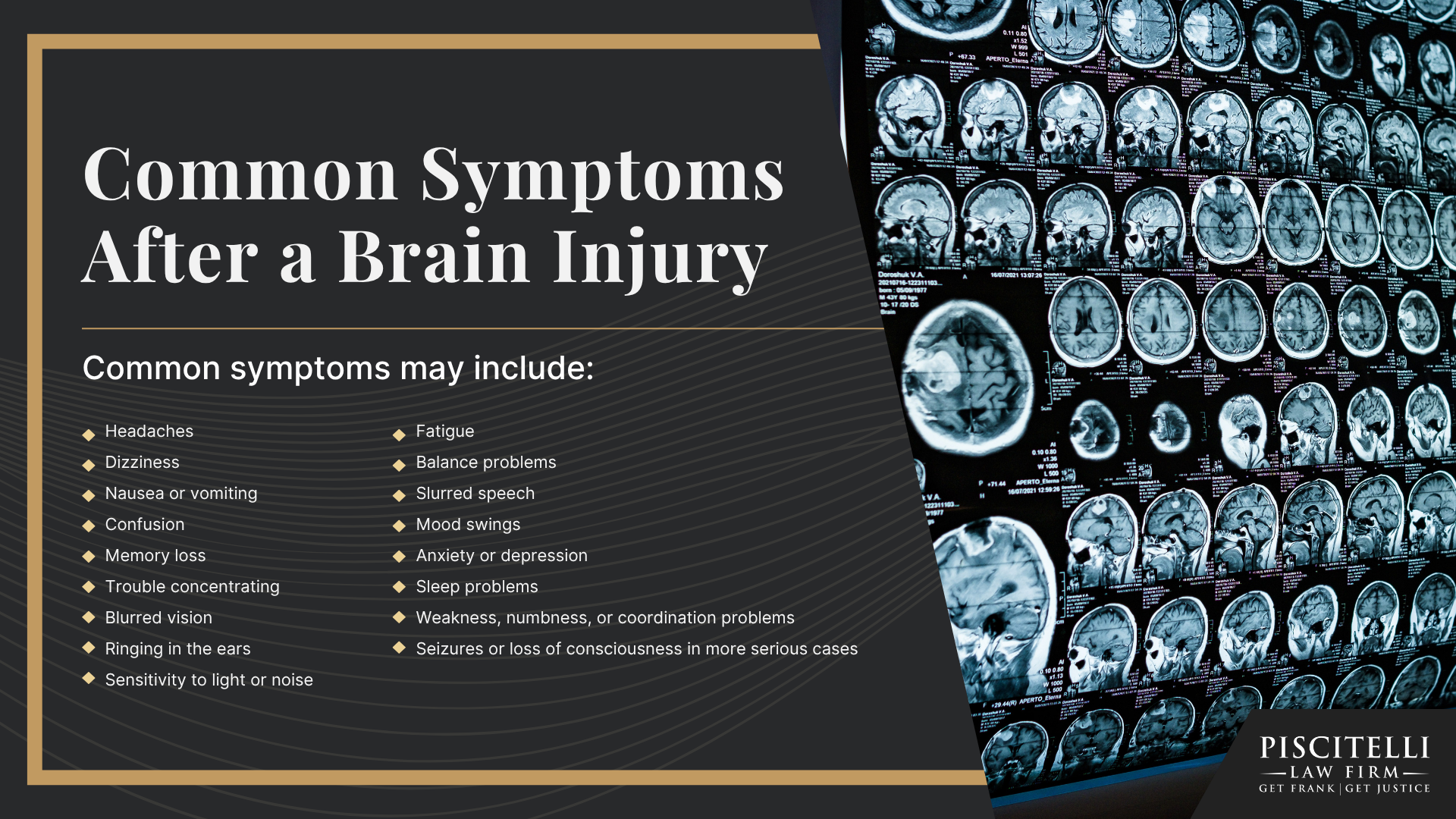
Common Symptoms After a Brain Injury

Brain injury symptoms can appear immediately or develop over time.

Some people feel “off” after an accident but do not realize that headaches, mood changes, memory problems, or sleep issues may be signs of a traumatic brain injury.

Common symptoms may include:

  • Headaches
  • Dizziness
  • Nausea or vomiting
  • Confusion
  • Memory loss
  • Trouble concentrating
  • Blurred vision
  • Ringing in the ears
  • Sensitivity to light or noise
  • Fatigue
  • Balance problems
  • Slurred speech
  • Mood swings
  • Anxiety or depression
  • Sleep problems
  • Weakness, numbness, or coordination problems
  • Seizures or loss of consciousness in more serious cases

The CDC explains that mild TBI and concussion symptoms may affect how a person feels, thinks, acts, and sleeps.

Anyone experiencing concerning symptoms after a head injury should seek medical attention and follow the advice of medical professionals.

Who Can Be Held Liable for a Brain Injury in Mentor?

Liability in a brain injury case depends on how the injury occurred and whose conduct caused or contributed to the harm.

Motor vehicle collisions, unsafe property conditions, medical negligence, defective products, workplace incidents, and intentional acts involve different legal standards, evidence, and filing requirements.

Potentially responsible parties may include:

  • A negligent driver: A driver may be liable when speeding, distracted driving, failure to yield, impaired driving, or another traffic violation causes a collision and resulting brain injury.
  • A trucking company or commercial vehicle operator: Liability may involve the driver, employer, vehicle owner, maintenance provider, cargo company, or another business whose conduct contributed to the crash.
  • A property owner or business: A premises liability claim may arise when an unreasonably dangerous condition, such as a broken stairway, untreated ice, poor lighting, or an uncorrected fall hazard, causes a head injury.
  • A medical provider: A physician, hospital, nursing professional, or other provider may be responsible when a departure from the applicable standard of care causes or worsens a brain injury.
  • A product manufacturer or seller: A defective vehicle component, safety device, helmet, workplace product, or other consumer product may support a product liability claim when the defect contributes to the injury.
  • A negligent third party in a workplace accident: Ohio workers’ compensation may cover an employment-related brain injury, while a separate claim may be available against a contractor, equipment manufacturer, driver, property owner, or another third party.
  • A school, sports organization, or recreational facility: Liability may arise when negligent supervision, unsafe equipment, dangerous property conditions, or improper return-to-play decisions contribute to a brain injury.
  • A person who commits an intentional act: An assault or other deliberate act may support a civil claim in addition to any criminal case.
  • Multiple parties: A single brain injury may result from several acts of negligence, requiring an investigation into each person or entity that contributed to the accident or resulting harm.

Insurance carriers may provide coverage for a responsible party, but the insurer is generally not the party that caused the injury.

A Mentor brain injury lawyer can investigate the accident, identify the applicable legal claims, review available insurance policies, and determine which parties may be held responsible for the documented medical, financial, and functional losses.

What Compensation Is Available After a Mentor Brain Injury?

A brain injury claim may seek compensation for the financial, physical, and emotional losses caused by the accident.

Because brain injuries can affect long-term health and earning ability, compensation should reflect both current needs and future losses.

Compensation may include:

  • Medical bills
  • Emergency care and hospitalization
  • Surgery
  • Neurology and specialist care
  • Imaging, testing, and follow-up appointments
  • Medical treatment and rehabilitation
  • Occupational therapy
  • Future medical expenses
  • Lost wages
  • Lost income and reduced earning ability
  • Pain and suffering
  • Emotional distress
  • Loss of independence
  • Home health care or assistive devices
  • Loss of enjoyment of life
  • Wrongful death damages when brain trauma is fatal

Insurance companies may focus only on short-term medical costs, but a serious brain injury case must account for ongoing treatment and the injury’s full impact.

Ohio generally limits noneconomic damages in personal injury cases, but certain permanent and substantial injuries are exempt from the ordinary cap.

Whether a severe brain injury meets a statutory exception depends on the medical evidence and the specific functional limitations proved in the case.

Piscitelli Law Firm can help injured clients pursue full and fair compensation.

Evidence in Mentor Brain Injury Cases

Evidence is critical in brain injury cases because symptoms can be disputed, delayed, or difficult to see from the outside.

Medical records, expert opinions, and accident evidence can help prove the injury, the cause, and the long-term damages.

Important evidence may include:

  • Accident reports
  • Police reports
  • Medical records
  • Emergency room records
  • CT scans, MRIs, and other imaging
  • Neurology and neuropsychology evaluations
  • Treatment plans
  • Medication records
  • Medical bills
  • Witness statements
  • Photos and videos from the accident scene
  • Employment and wage records
  • School records when applicable
  • Notes about symptoms, pain, sleep issues, and daily limitations
  • Testimony from medical professionals and brain injury specialists

A law firm handling brain injury claims can preserve evidence, work with experts, and prepare the case for negotiations or court.

Medical, functional, and lay-witness evidence may be used to address defense arguments that the symptoms predated the accident, arose from another condition, or do not create measurable limitations.

How Our Lawyers Can Assist After a Brain Injury

After a brain injury, injured people and their families may face medical bills, insurance pressure, lost wages, ongoing symptoms, and uncertainty about the future.

A Mentor brain injury lawyer can handle the legal process while you focus on treatment and recovery.

Our lawyers can assist by:

  • Reviewing your case during a free consultation
  • Explaining your legal rights
  • Investigating the accident
  • Gathering accident reports, medical records, and witness statements
  • Identifying liable parties and insurance coverage
  • Working with medical professionals and brain injury specialists
  • Calculating medical expenses, lost wages, and future care needs
  • Dealing with insurance companies and defense counsel
  • Negotiating for fair compensation
  • Filing a brain injury lawsuit when necessary
  • Representing you in court if the case does not settle fairly

Piscitelli Law Firm provides legal services for brain injury victims and their families.

Frank Piscitelli has the experience, preparation, and client-focused approach needed to guide injured people through a difficult personal injury case.

What to Do After a Brain Injury in Mentor

The steps taken after a head injury can affect both medical recovery and the strength of a legal claim.

The most important step is to seek medical attention right away, even if symptoms seem mild at first.

After a brain injury in Mentor, consider taking these steps:

  • Call 911 after a serious accident
  • Seek medical attention immediately
  • Follow all medical advice
  • Save medical records, discharge papers, and test results
  • Track brain injury symptoms in a journal
  • Take photos of the accident scene and visible injuries
  • Get witness contact information
  • Avoid returning to work, driving, sports, or strenuous activity before medical clearance
  • Notify your own insurer when required, but avoid guessing about fault, symptoms, or recovery.
  • Consider obtaining legal advice before giving a recorded statement to another party’s insurer.
  • Contact a Mentor brain injury lawyer as soon as possible

Early action can help protect both your health and your claim.

Medical treatment also helps connect the brain injury symptoms to the accident.

How Ohio Law Affects Brain Injury Claims

Ohio law affects brain injury claims through negligence rules, insurance coverage, damages, filing deadlines, and comparative fault.

Most traumatic brain injury claims require proof that another party owed a legal duty, breached that duty, caused the injury, and caused damages.

Ohio law may affect:

  • Whether another party was negligent
  • Whether medical malpractice rules apply
  • Whether workplace injury rules apply
  • Whether the injured person is accused of partial fault
  • Whether insurance coverage is available
  • What damages may be recovered
  • How long the injured person has to file a lawsuit
  • Whether wrongful death damages may be available

A traumatic brain injury lawyer can explain how Ohio law applies to the case and help injured clients avoid mistakes that may affect compensation.

Ohio’s Statute of Limitations for Brain Injury Cases

Ohio Revised Code § 2305.10 generally requires actions for bodily injury or damage to personal property to be filed within two years after the claim accrues.

This deadline may apply to many brain injury claims involving car accidents, falls, truck accidents, motorcycle crashes, defective products, and other negligence-based injuries.

Some cases may involve different deadlines.

Medical malpractice, claims involving minors, government entities, workplace injuries, delayed diagnosis, or wrongful death may require additional legal analysis.

Because missing a deadline can prevent an injured person from recovering compensation, it is important to speak with a lawyer quickly.

A Mentor brain injury lawyer can review the facts and explain the deadline that applies to your case.

Comparative Negligence in Ohio Brain Injury Claims

Ohio follows a comparative negligence rule.

This means an injured person may still recover damages if they were partly at fault, as long as their fault was not greater than the combined fault of the other responsible parties.

Recovery is barred when the injured person is found more than 50% responsible.

At 50% fault, the injured person may still recover, but the award is reduced by 50%.

In brain injury cases, insurance companies may argue that the injured person caused or worsened the accident, delayed medical care, ignored safety rules, or had symptoms from another source.

These arguments are often used to reduce the value of a traumatic brain injury claim.

If an injured person is assigned a percentage of fault, compensation may be reduced by that percentage.

A brain injury attorney can gather evidence, challenge unfair blame, and explain how Ohio comparative negligence law applies.

Piscitelli Law Firm: Speak With a Mentor Brain Injury Lawyer Today

A traumatic brain injury can affect far more than medical test results.

Changes in memory, concentration, mood, communication, mobility, employment, and independence may continue long after the initial accident.

Piscitelli Law Firm works with injured people and their families to document those losses, identify the responsible parties, and pursue compensation supported by the medical and functional evidence.

Frank Piscitelli has more than 30 years of experience representing injured Ohioans and personally directs the legal strategy in the cases the firm accepts.

Our law firm handles brain injury claims involving motor vehicle crashes, falls, unsafe property conditions, medical negligence, defective products, and other wrongful conduct.

Qualifying cases are handled on a contingency-fee basis, subject to the written representation agreement.

Contact Piscitelli Law Firm today for a free consultation, or use the chat feature on this page to speak with a Mentor brain injury lawyer.

Frequently Asked Questions

Published by:
Share
Picture of Frank Piscitelli
Frank Piscitelli

Member of the Ohio State Bar Association since 1993. With 30+ years of legal experience, Attorney Frank Piscitelli has secured over $55 million in compensation for Ohio injury victims, car accident victims, and surviving family members of Ohio wrongful death victims.


This article has been written and reviewed for legal accuracy and clarity by the team of writers and attorneys at Piscitelli Law Firm and is as accurate as possible. This content should not be taken as legal advice from an attorney. If you would like to learn more about our owner and experienced Ohio personal injury lawyer, Frank Piscitelli, you can do so here.

Piscitelli Law Firm does everything possible to make sure the information in this article is up to date and accurate. If you need specific legal advice about your case, contact us. This article should not be taken as advice from an attorney.

Additional Resources

Other cases we handle in Mentor
All
Car Accidents
Motorcycle Accidents
Other Accidents & Injuries
Truck Accidents
You can learn more about other cases we handle in Mentor below:
Mentor Bicycle Accident Lawyer
Mentor Slip and Fall Lawyer
Mentor Wrongful Death Lawyer
Mentor Nursing Home Abuse Lawyer
Mentor Daycare Injury Lawyer
Mentor Catastrophic Injury Lawyer
Mentor Burn Injury Lawyer
Mentor Public Transportation Accident Lawyer
Mentor DUI Accident Lawyer
Mentor Pedestrian Accident Lawyer
Mentor Rideshare Accident Lawyer
Mentor Motorcycle Accident Lawyer
Mentor Truck Accident Lawyer
Mentor Car Accident Lawyer
Personal Injury Lawyer Mentor, Ohio
Were you or a loved one injured in Mentor?

A serious injury can have life-altering results.

Don’t settle for less than you deserve, speak with an award-winning personal injury lawyer today.

72 Reviews
4.8
★★★★★
Recovered damages
$50 Million+

Table of Contents

Practice Areas
About Piscitelli Law

For 30 years, Frank Piscitelli has been fighting for clients who have been the victims of the wrongful death of a loved one.

Do you believe you’re entitled to compensation?

Use our Instant Case Evaluator to find out in as little as 60 seconds!

Guides & Resources
Edit Template

Other Mentor Personal Injury Cases

All
Car Accidents
Motorcycle Accidents
Other Accidents & Injuries
Truck Accidents
Local Mentor Resources
Education
Emergency Services
Courthouses
Department of Motor Vehicles
Sights to See