Catastrophic injury cases often involve losses that extend far beyond the initial hospitalization and recovery period.
Many injured individuals require ongoing medical treatment, rehabilitation, assistive equipment, home modifications, personal care assistance, and other support services for years or even decades after the accident.
Because these future needs can represent a substantial portion of a claim’s value, attorneys frequently work with life-care planners, physicians, rehabilitation specialists, and economists to evaluate the long-term impact of the injury.
A life-care plan is a detailed assessment of the medical care, services, equipment, and accommodations an injured person may need in the future.
The purpose is to document the full cost of living with a permanent disability or serious impairment rather than focusing only on current medical bills.
This analysis helps establish the financial impact of the injury and provides a framework for calculating future damages.

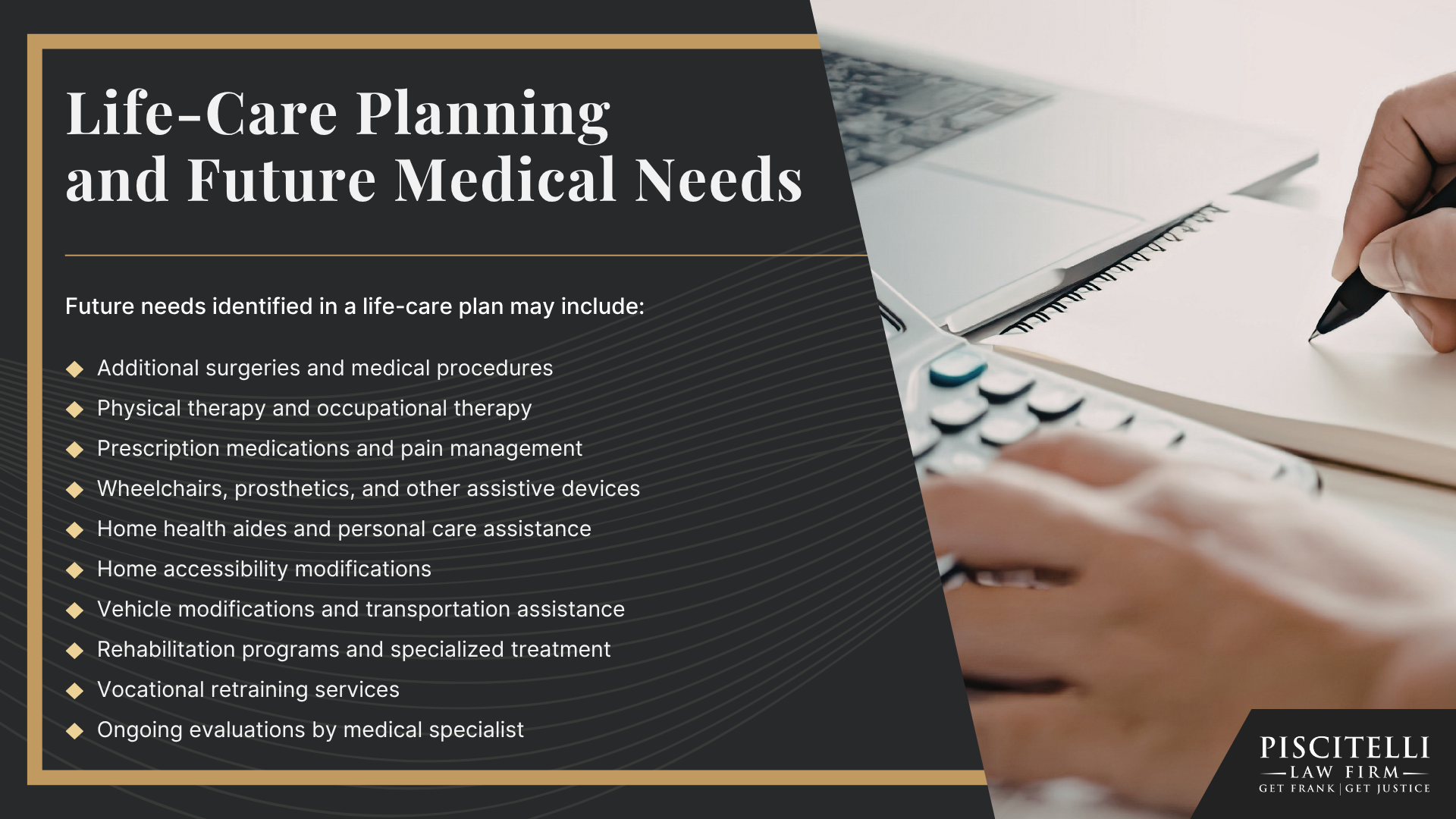
Future needs identified in a life-care plan may include:
- Additional surgeries and medical procedures
- Physical therapy and occupational therapy
- Prescription medications and pain management
- Wheelchairs, prosthetics, and other assistive devices
- Home health aides and personal care assistance
- Home accessibility modifications
- Vehicle modifications and transportation assistance
- Rehabilitation programs and specialized treatment
- Vocational retraining services
- Ongoing evaluations by medical specialists
Catastrophic injuries often affect a person’s ability to work, maintain independence, and perform everyday activities.
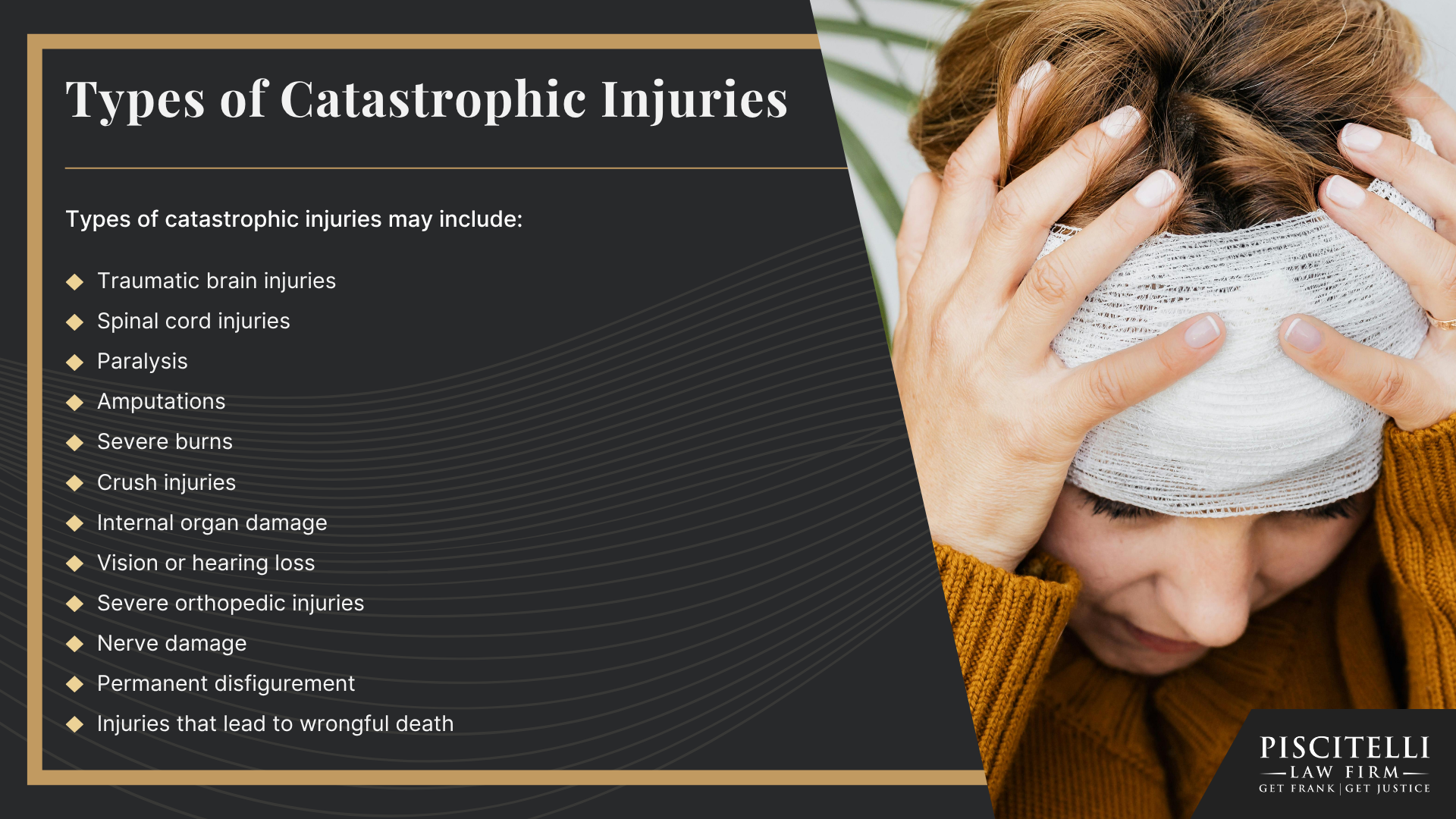
A thorough life-care plan can help demonstrate the long-term consequences of traumatic brain injuries, spinal cord injuries, amputations, severe burns, paralysis, and other permanent conditions.
In many catastrophic injury cases, this evidence plays an important role in establishing the future medical expenses and support needs that may be required throughout the injured person’s lifetime.
How Our Lawyers Can Assist
An Ohio personal injury attorney can protect your rights, manage the legal process, and deal with the insurance companies while you focus on healing.
Catastrophic injury cases often require detailed investigation, expert support, and strong legal representation from the beginning.
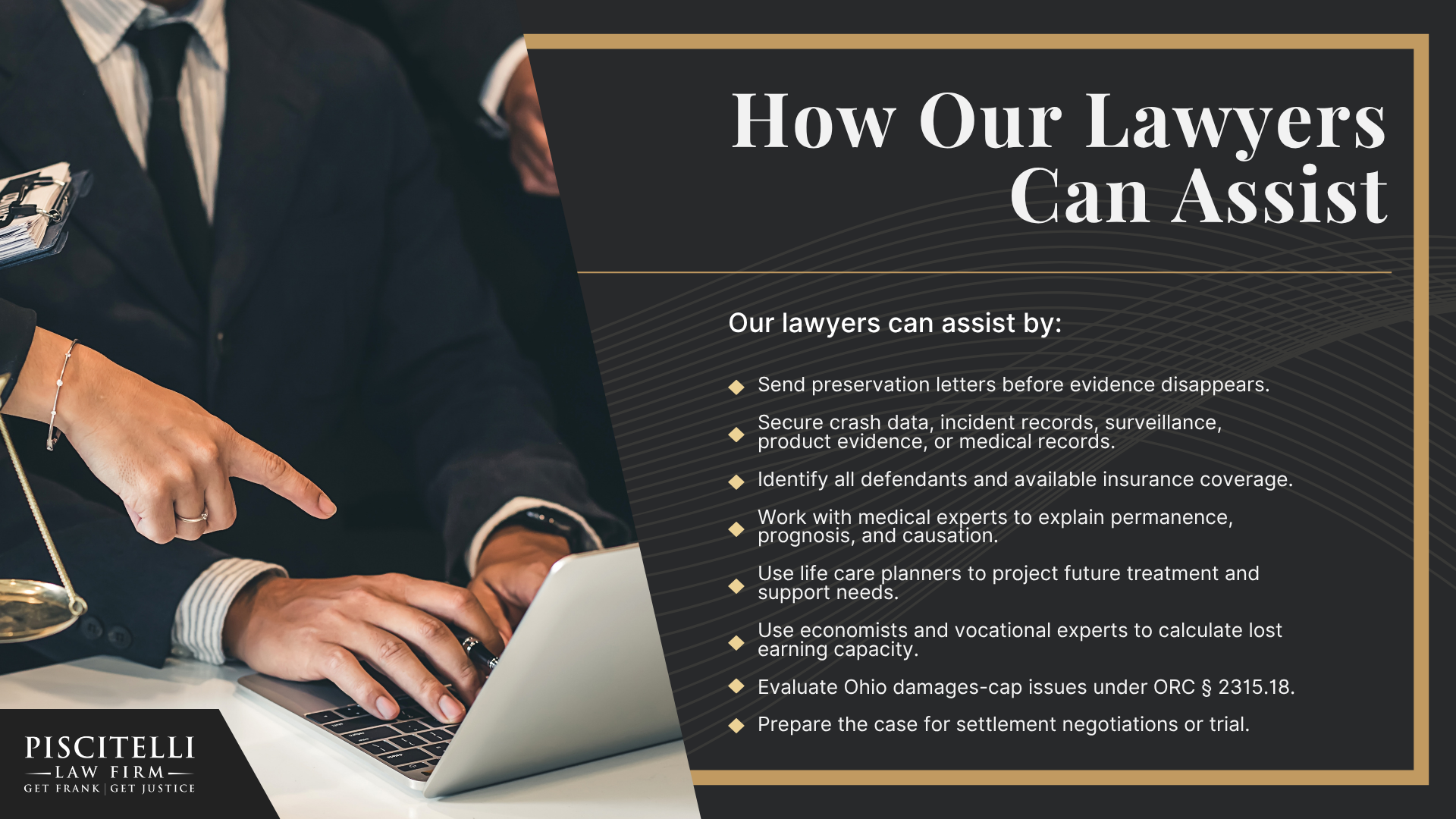
Our lawyers can assist by:
- Send preservation letters before evidence disappears.
- Secure crash data, incident records, surveillance, product evidence, or medical records.
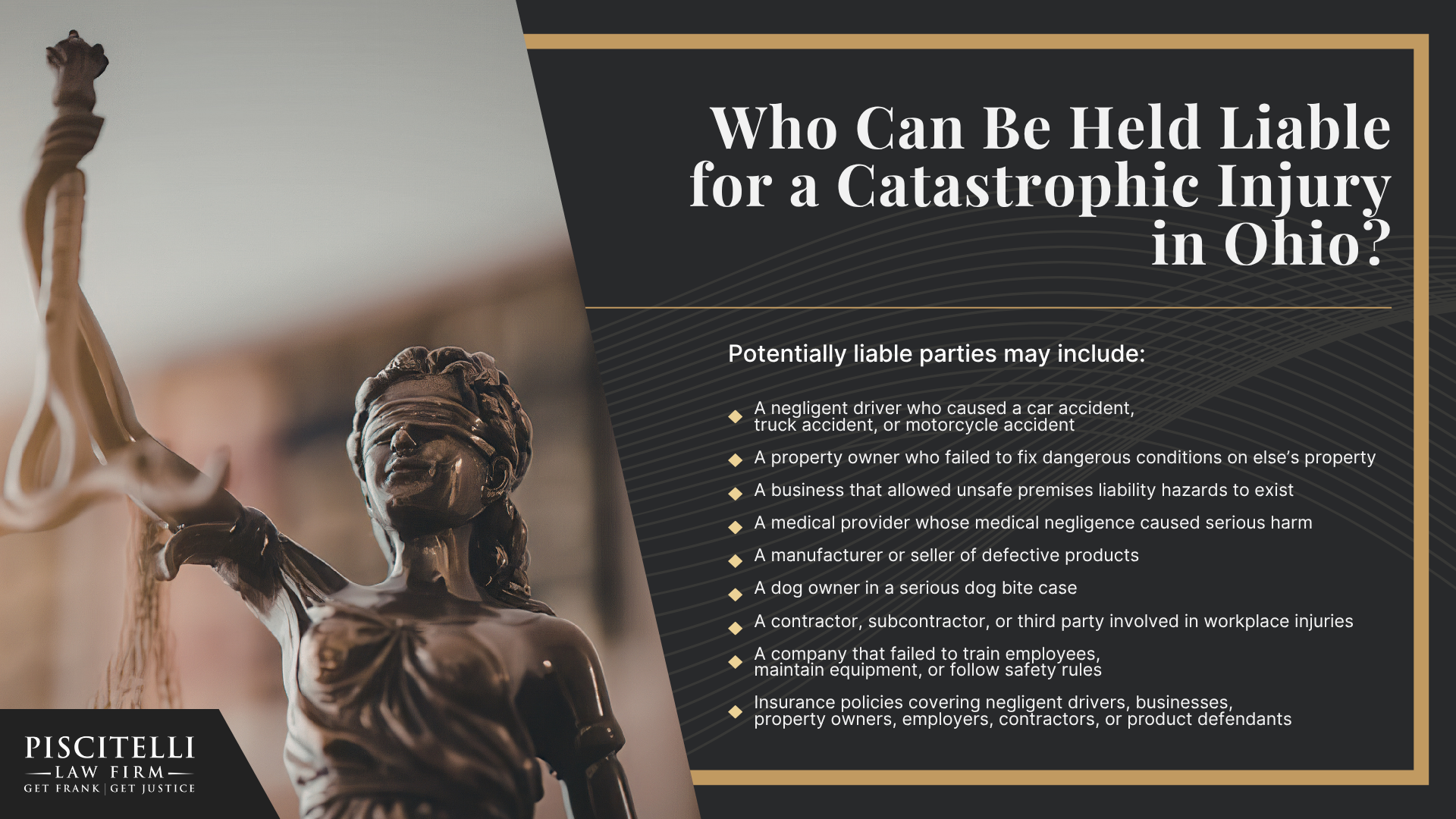
- Identify all defendants and available insurance coverage.
- Work with medical experts to explain permanence, prognosis, and causation.
- Use life care planners to project future treatment and support needs.
- Use economists and vocational experts to calculate lost earning capacity.
- Evaluate Ohio damages-cap issues under ORC § 2315.18.
- Prepare the case for settlement negotiations or trial.
Piscitelli Law Firm understands that injured people need more than paperwork and phone calls.
They need personal injury attorneys who listen, explain the next steps, and fight for justice when a catastrophic injury changes their future.
The firm operates on a contingent fee basis, which means there are no upfront costs and no legal fees unless compensation is recovered for the client.
Evidence in Ohio Catastrophic Injury Cases
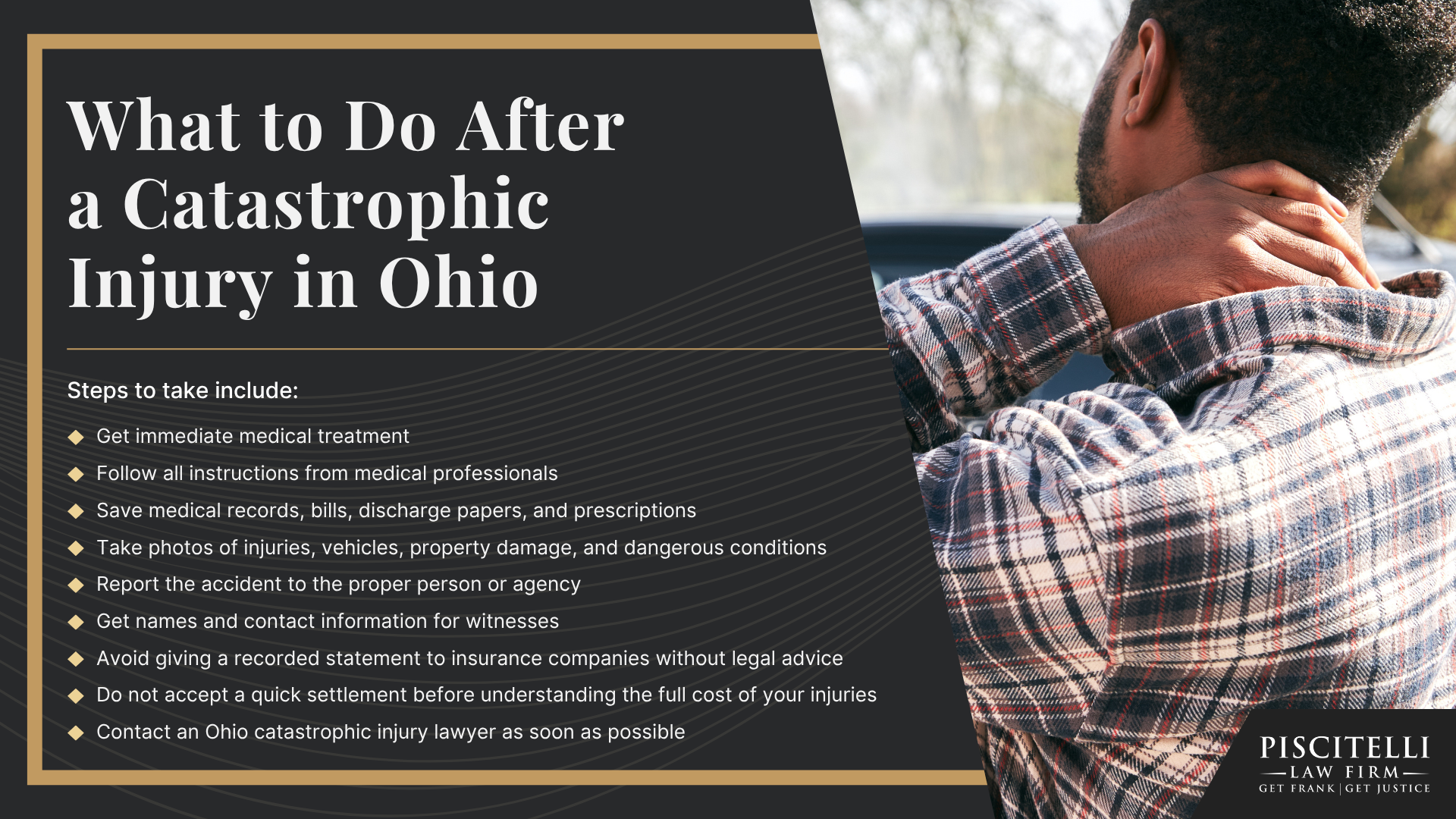
Strong evidence is critical in Ohio catastrophic injury cases because the injured person must prove how the accident happened, who caused it, and how the injury has changed their life.
Insurance companies often challenge liability, dispute the severity of injuries, or argue that medical expenses and lost income are not fully connected to the accident.
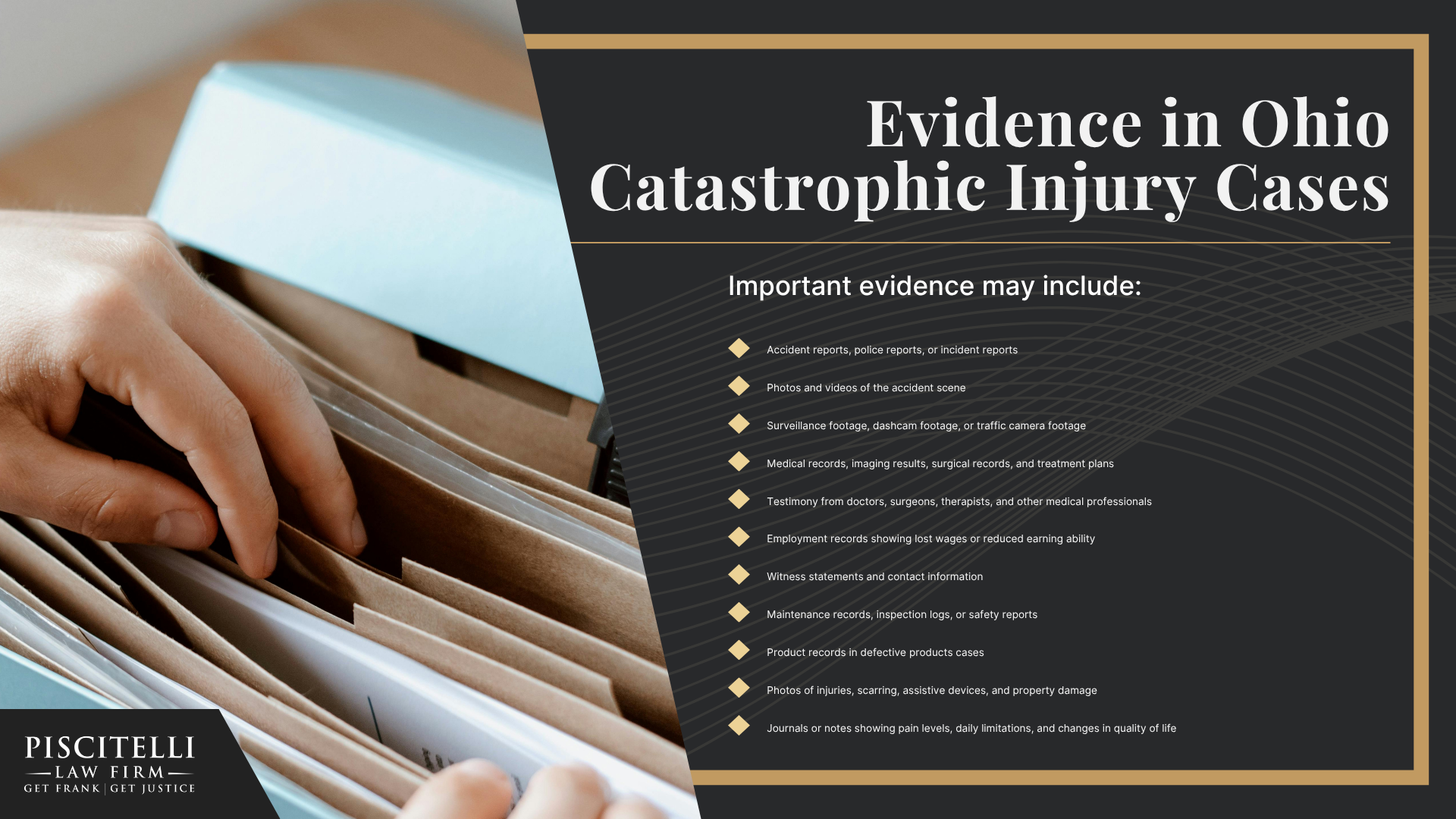
Important evidence may include:
- Accident reports, police reports, or incident reports
- Photos and videos of the accident scene
- Surveillance footage, dashcam footage, or traffic camera footage
- Medical records, imaging results, surgical records, and treatment plans
- Testimony from doctors, surgeons, therapists, and other medical professionals
- Employment records showing lost wages or reduced earning ability
- Witness statements and contact information
- Maintenance records, inspection logs, or safety reports
- Product records in defective products cases
- Photos of injuries, scarring, assistive devices, and property damage
- Journals or notes showing pain levels, daily limitations, and changes in quality of life
Piscitelli Law Firm can gather evidence, preserve key records, work with experts, and build a clear picture of the harm caused by a catastrophic injury.
In serious injury cases, this evidence helps show the full cost of the accident, including medical bills, future medical treatment, lost income, pain and suffering, disability, and the long-term support an injured person may need.