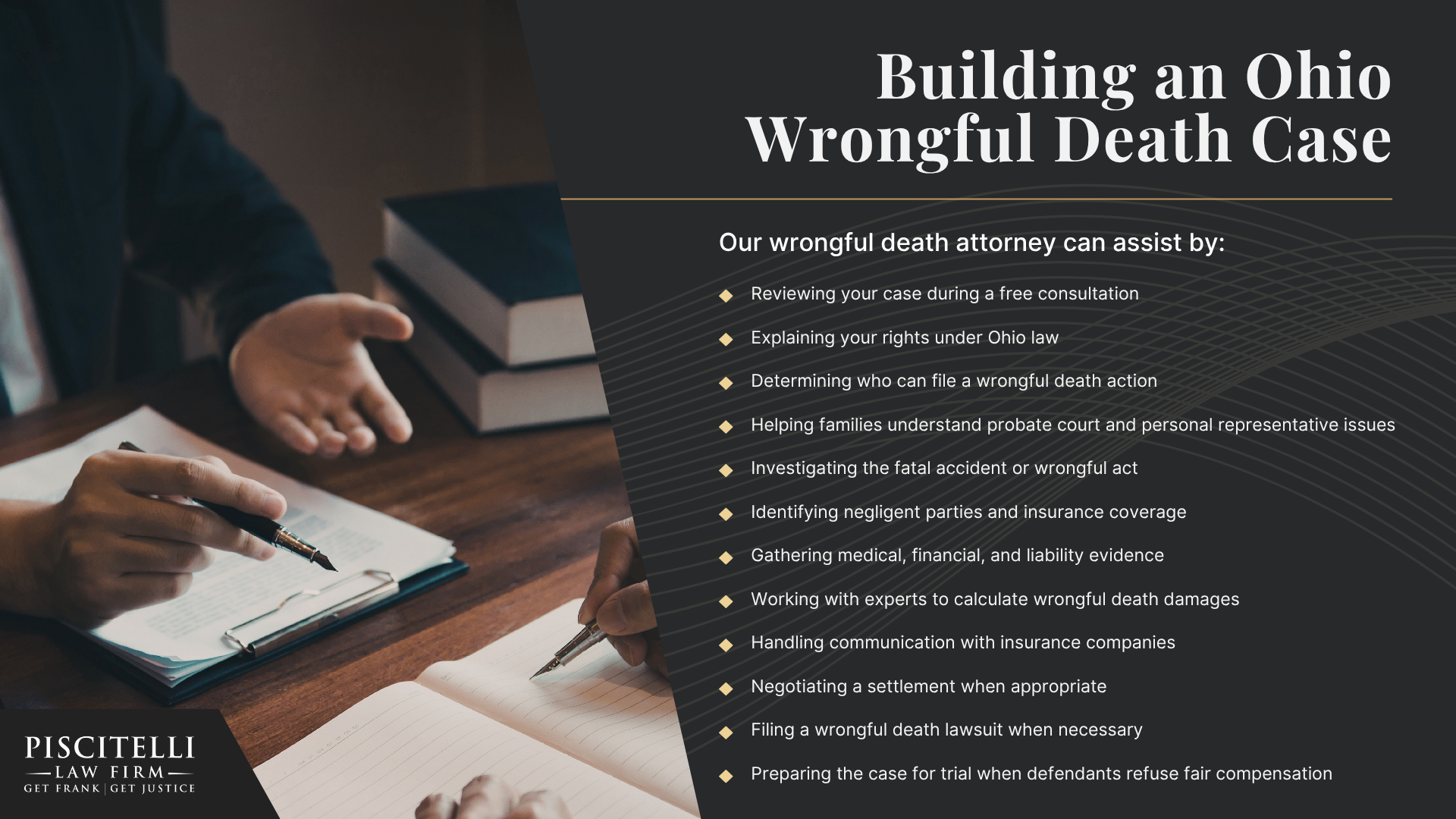
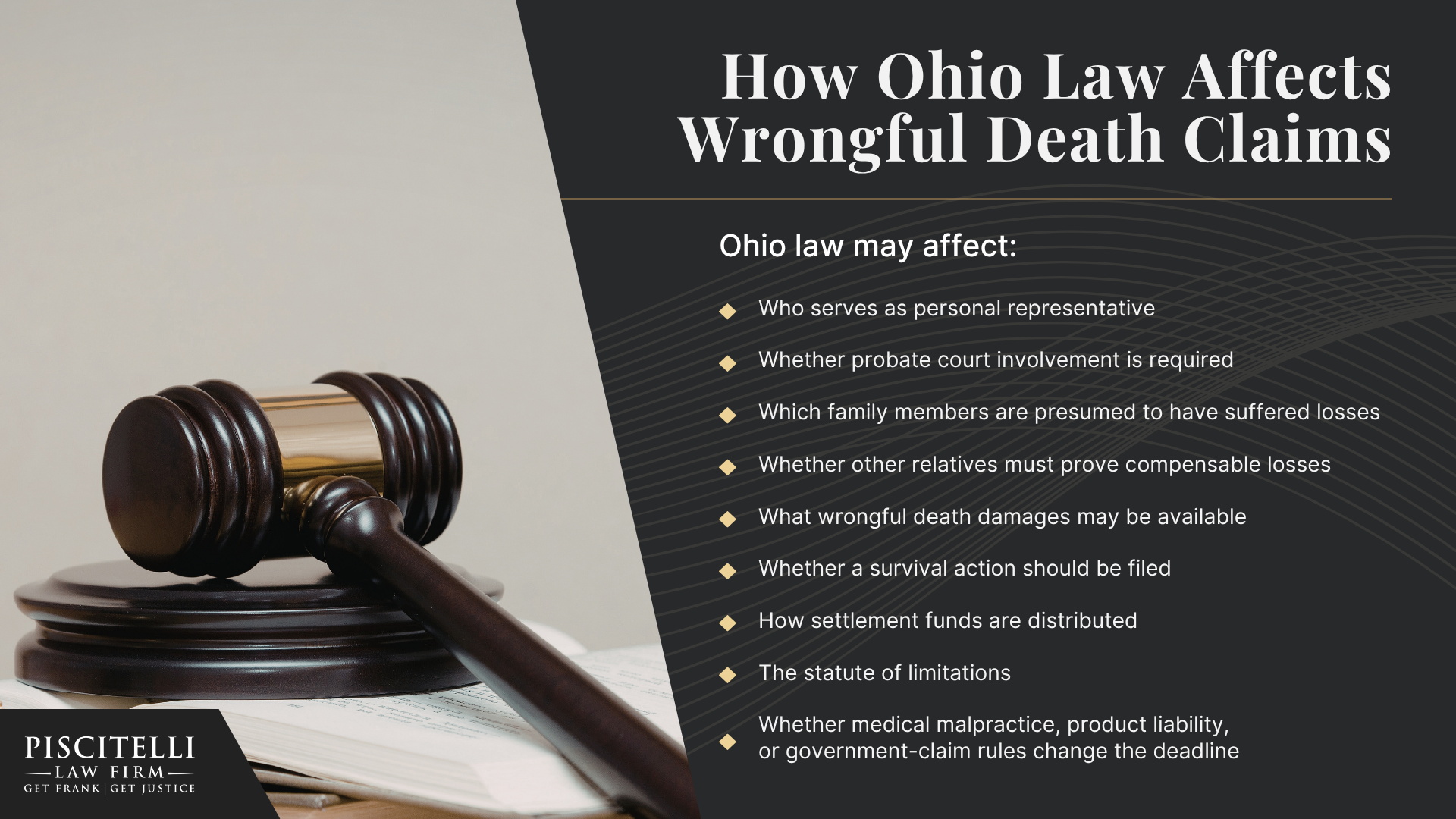
In Ohio, a wrongful death lawsuit is filed by the personal representative of the deceased person’s estate.
This personal representative may be named in a will or appointed by the probate court if there is no will or if the named person cannot serve.
The personal representative files the wrongful death action for the exclusive benefit of the surviving family members who suffered losses because of the death.
These family members may include the surviving spouse, children, parents, and, in some cases, other relatives who can prove compensable losses.

This rule can be confusing because the person who files the case is not always the only person who may receive compensation.
A surviving spouse may suffer financial support losses and mental anguish, while children may suffer loss of guidance, companionship, and prospective inheritance.
Ohio wrongful death attorneys can help families understand these legal terms, coordinate with probate court when necessary, and protect the rights of the surviving family.
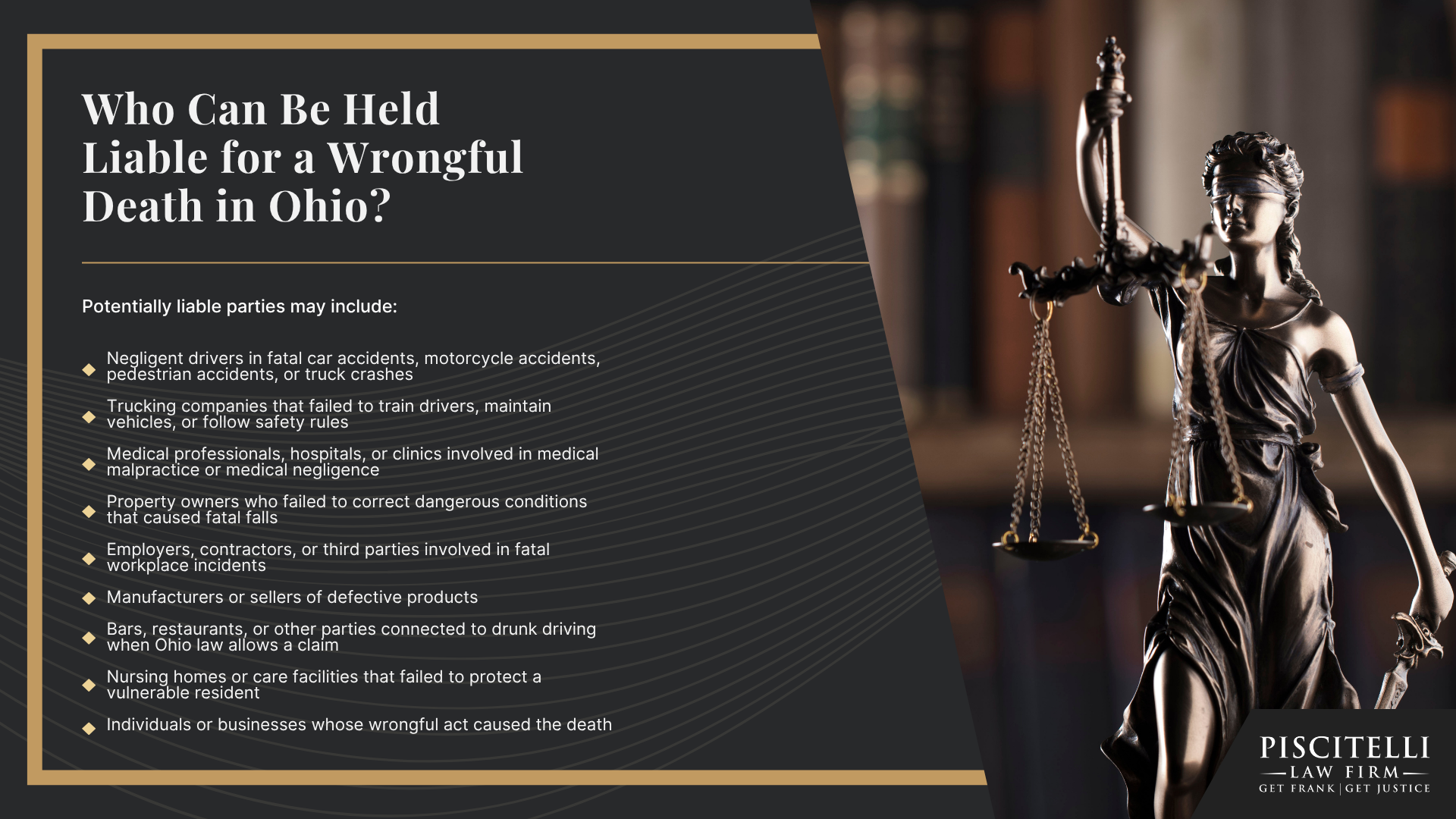
Who Can Be Held Liable for a Wrongful Death in Ohio?
Any person, company, property owner, medical provider, or organization whose negligence caused a fatal injury may be held liable in an Ohio wrongful death case.
Liability depends on the facts, the legal duty owed to the deceased person, the defendant’s breach of that duty, and whether that breach caused the death.
Potentially liable parties may include:
- Negligent drivers in fatal car accidents, motorcycle accidents, pedestrian accidents, or truck crashes
- Trucking companies that failed to train drivers, maintain vehicles, or follow safety rules
- Medical professionals, hospitals, or clinics involved in medical malpractice or medical negligence
- Property owners who failed to correct dangerous conditions that caused fatal falls
- Employers, contractors, or third parties involved in fatal workplace incidents
- Manufacturers or sellers of defective products
- Bars, restaurants, or other parties connected to drunk driving when Ohio law allows a claim
- Nursing homes or care facilities that failed to protect a vulnerable resident
- Individuals or businesses whose wrongful act caused the death
Some wrongful death cases involve more than one liable party.
A legal team can review the evidence, identify every possible source of compensation, and pursue maximum compensation from all responsible parties.
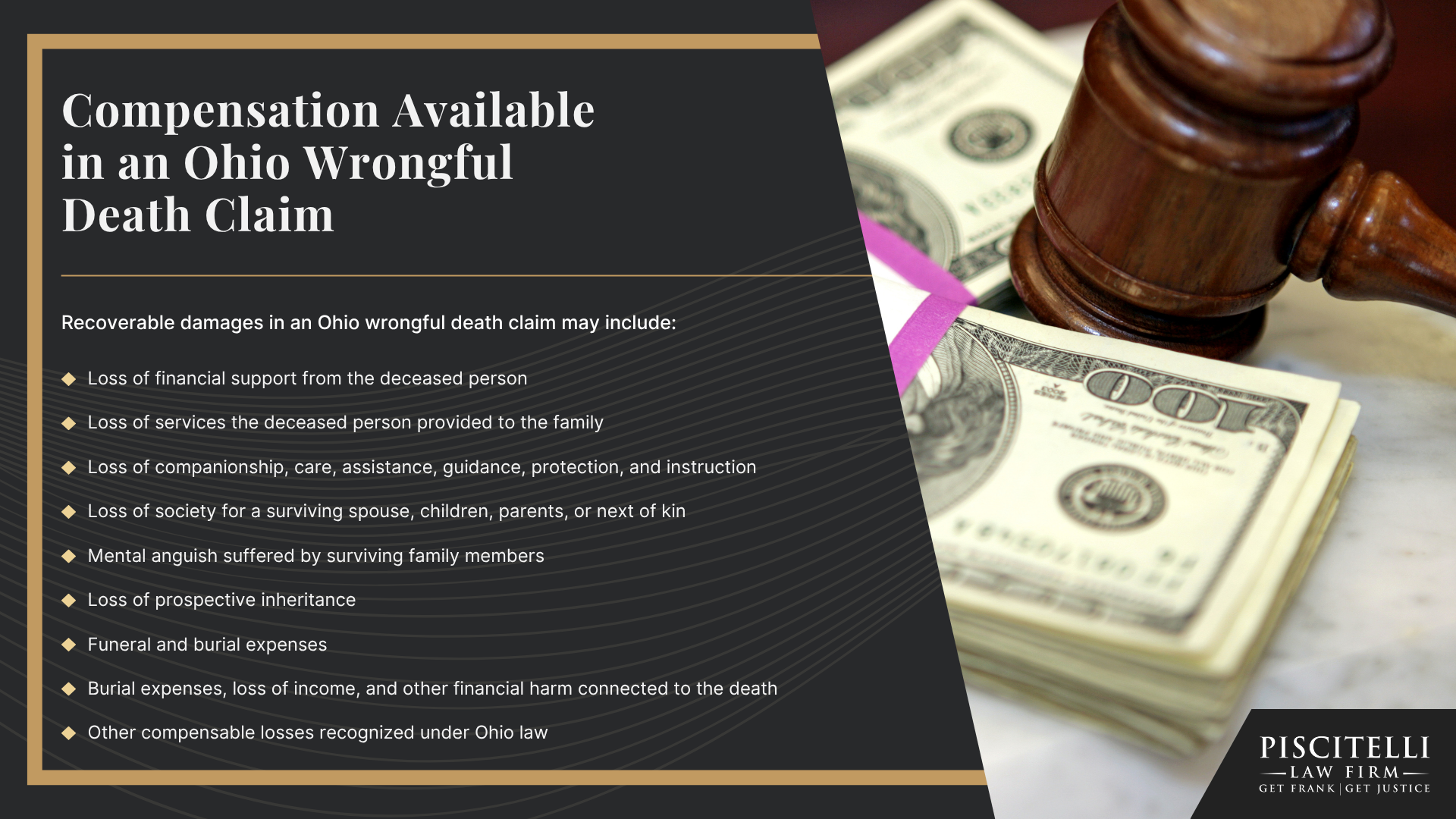
Compensation Available in an Ohio Wrongful Death Claim
Wrongful death damages are meant to address the financial and personal losses suffered by surviving family members after a loved one dies.
These damages cannot undo the tragic loss, but they can help families recover damages for the harm caused by the wrongful act.
Recoverable damages in an Ohio wrongful death claim may include:
- Loss of financial support from the deceased person
- Loss of services the deceased person provided to the family
- Loss of companionship, care, assistance, guidance, protection, and instruction
- Loss of society for a surviving spouse, children, parents, or next of kin
- Mental anguish suffered by surviving family members
- Loss of prospective inheritance
- Funeral and burial expenses
- Burial expenses, loss of income, and other financial harm connected to the death
- Other compensable losses recognized under Ohio law
A related survival action may also seek compensation for damages suffered by the deceased person before death, such as medical expenses, conscious pain and suffering, and lost income between the injury and death.
The distinction matters because wrongful death damages generally belong to surviving family members, while survival action damages may belong to the victim’s estate or decedent’s estate.
An experienced death lawyer can evaluate the estimated value of the claim, explain the damages suffered, and pursue compensation for the surviving family and the deceased person’s estate when both claims apply.
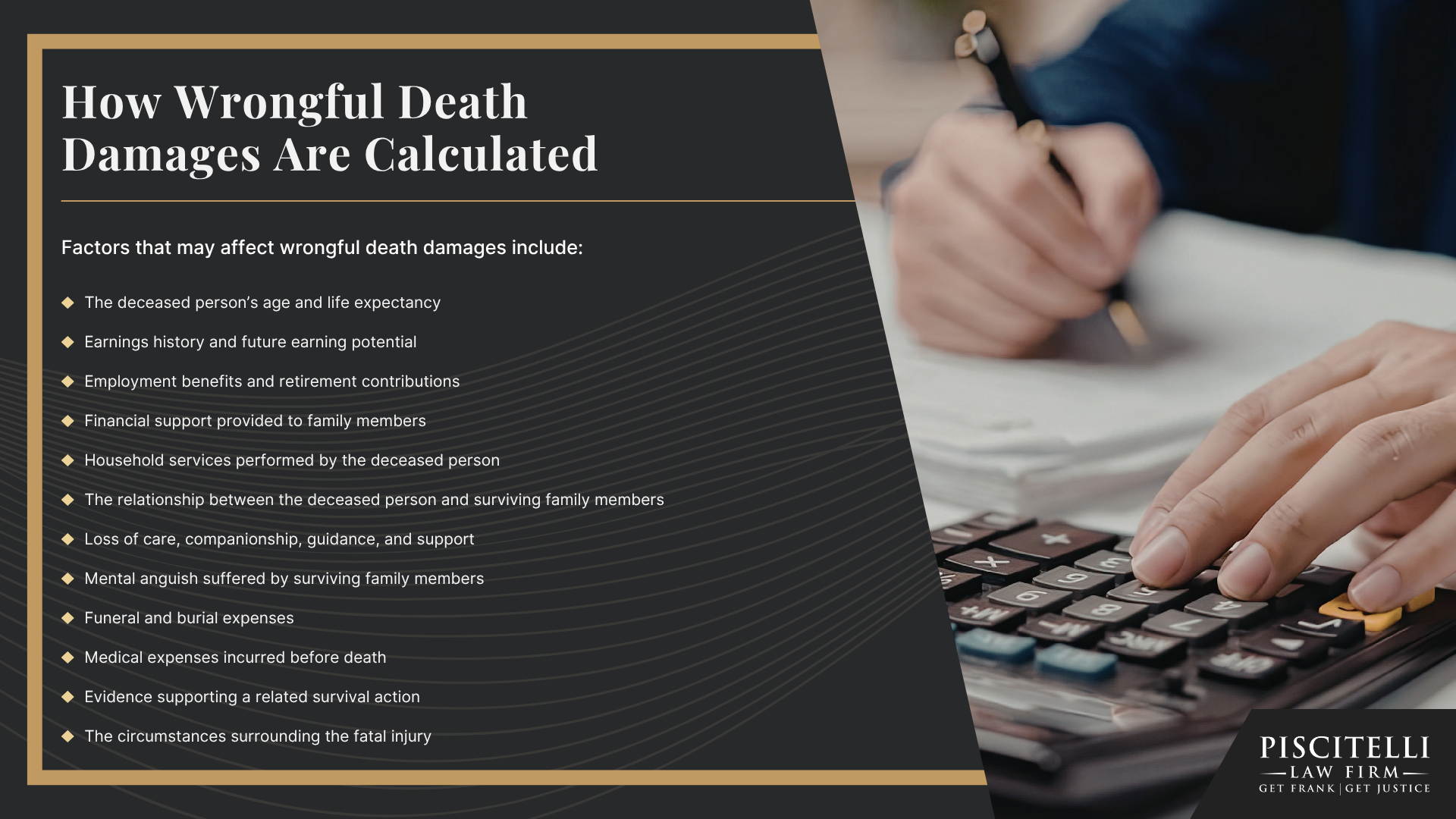
How Wrongful Death Damages Are Calculated
Calculating damages in an Ohio wrongful death case involves more than adding funeral expenses and outstanding bills.
Many families lose years or decades of financial support, household services, guidance, and companionship that would have been provided if their loved one had survived.
Because every family situation is different, the value of a wrongful death claim depends on the evidence, the circumstances of the death, and the losses suffered by surviving family members.
Economists, financial experts, medical professionals, and other specialists are often used to evaluate the long-term impact of a fatal injury.
Factors that may affect wrongful death damages include:
- The deceased person’s age and life expectancy
- Earnings history and future earning potential
- Employment benefits and retirement contributions
- Financial support provided to family members
- Household services performed by the deceased person
- The relationship between the deceased person and surviving family members
- Loss of care, companionship, guidance, and support
- Mental anguish suffered by surviving family members
- Funeral and burial expenses
- Medical expenses incurred before death
- Evidence supporting a related survival action
- The circumstances surrounding the fatal injury
In many cases, the largest losses are not limited to immediate financial costs.
Families may lose future income, retirement benefits, parental guidance, caregiving support, and other contributions that would have continued for years.
A thorough evaluation of these losses helps establish the full impact of the death and provides a foundation for pursuing fair compensation under Ohio law.
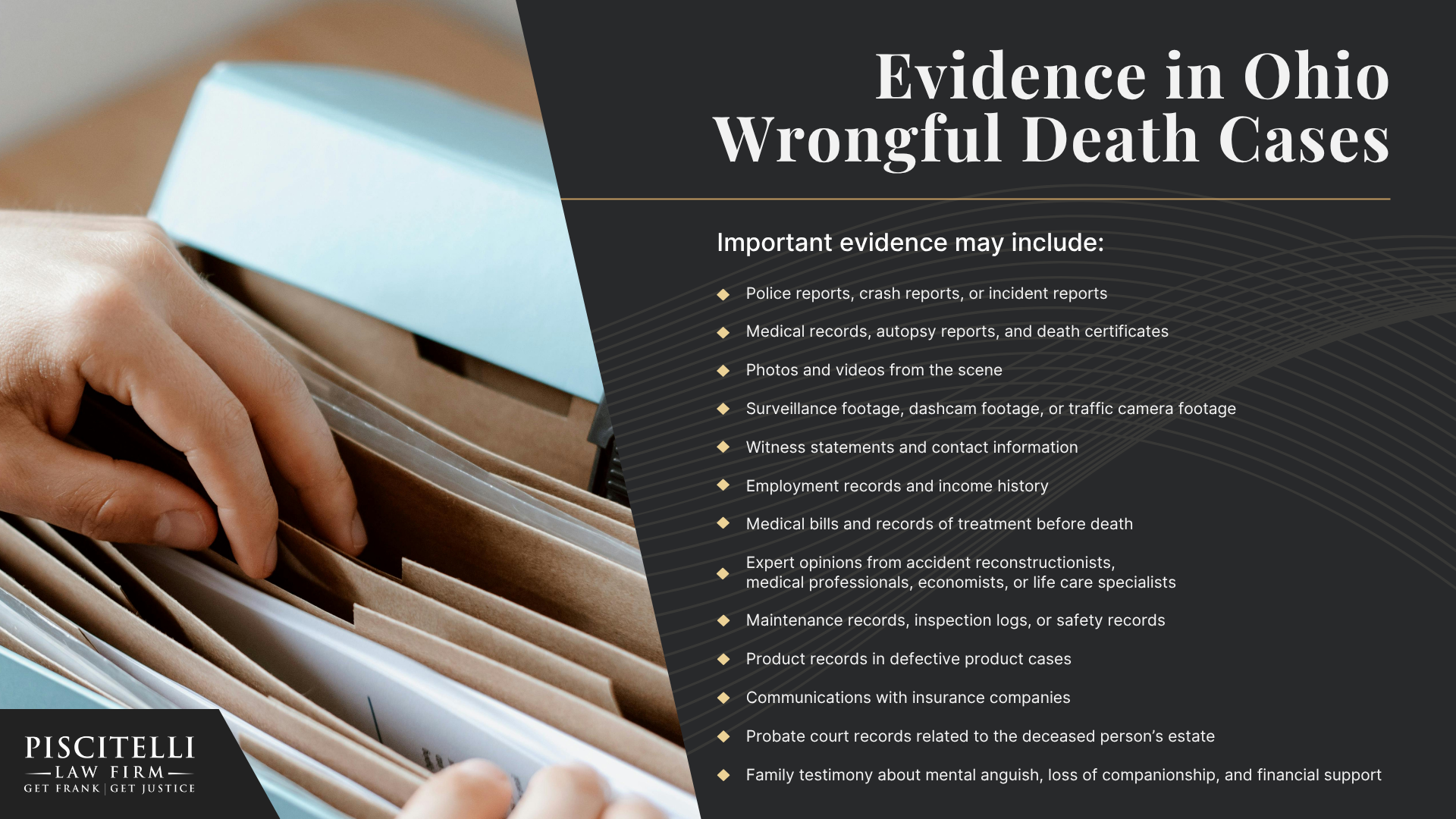
Evidence in Ohio Wrongful Death Cases
Evidence is critical in an Ohio wrongful death case because families must prove how the death happened, who caused it, and what losses resulted.
Insurance companies and defendants may dispute liability, blame the deceased person, challenge damages, or argue that the death was not caused by their conduct.
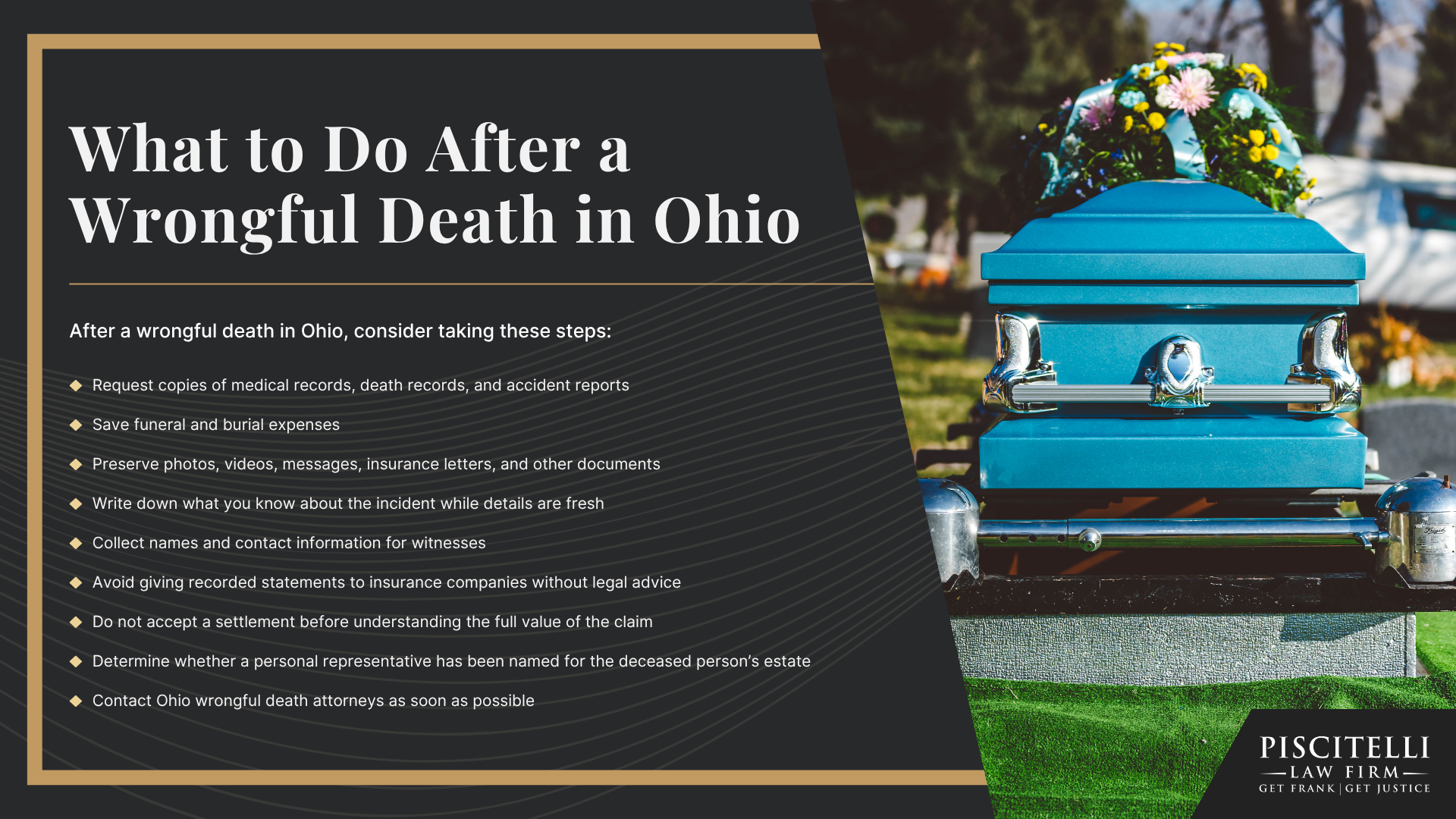
Important evidence may include:
- Police reports, crash reports, or incident reports
- Medical records, autopsy reports, and death certificates
- Photos and videos from the scene
- Surveillance footage, dashcam footage, or traffic camera footage
- Witness statements and contact information
- Employment records and income history
- Medical bills and records of treatment before death
- Expert opinions from accident reconstructionists, medical professionals, economists, or life care specialists
- Maintenance records, inspection logs, or safety records
- Product records in defective product cases
- Communications with insurance companies
- Probate court records related to the deceased person’s estate
- Family testimony about mental anguish, loss of companionship, and financial support
Piscitelli Law Firm can gather evidence, preserve key records, and work with experts to build a clear picture of what happened.
Strong evidence helps show the defendant’s breach of a legal duty, the losses suffered by surviving family members, and the compensation the family may deserve.