Do You Need Help After a Daycare Injury in Cleveland?
If your child was injured at a daycare in Cleveland, Piscitelli Law Firm can review what happened and explain what steps may be available under Ohio law.
Frank Piscitelli represents families throughout Cleveland and the surrounding area in cases involving serious injuries at daycare centers and other childcare settings.
Daycare injury claims can be complex because they often involve supervision standards, incident reporting, staffing records, and disputes over how the injury occurred.
Piscitelli Law Firm approaches these cases with careful investigation and documentation, especially when a facility or its insurer moves quickly to control the narrative or minimize what happened.
Call (216) 931-7000 to speak with the firm and request a free consultation.
Injured in a Daycare in Cleveland? Contact Us
A daycare injury can leave families facing urgent medical decisions, missed work, and serious concerns about whether a child was properly supervised.
In the days after an incident, a daycare may provide limited information, rely on a short written report, or refer you to an insurance company that is focused on reducing exposure rather than explaining what happened.
That early uncertainty makes it hard to protect your child’s interests and preserve the facts while memories are fresh and records still exist.
Piscitelli Law Firm helps families take control of the situation with a structured investigation and clear guidance.
A Cleveland daycare injury lawyer reviews the incident details, requests available documentation, and evaluates whether the facts point to inadequate supervision, unsafe conditions, or other failures that may support a claim.
Working with a daycare injury lawyer and experienced daycare injury attorneys can also help you avoid missteps with insurers and focus on documenting medical care and the full impact of the injury.
If you are looking for a childcare injury lawyer to evaluate what happened, Piscitelli Law Firm can explain your options and what comes next.
Contact Piscitelli Law Firm today to speak with a daycare lawyer and request a free consultation.
A daycare injury case can turn on records and rules that are specific to a daycare center or childcare facility, including supervision logs, staffing ratios, incident reporting, and internal policies.
Ohio law also requires licensed child care centers to ensure children are not left alone or unsupervised, and staffing ratios must be maintained at all times.
When a young child suffers serious injuries, families often need help quickly preserving information the daycare provider may not voluntarily provide once the daycare’s insurance company becomes involved.
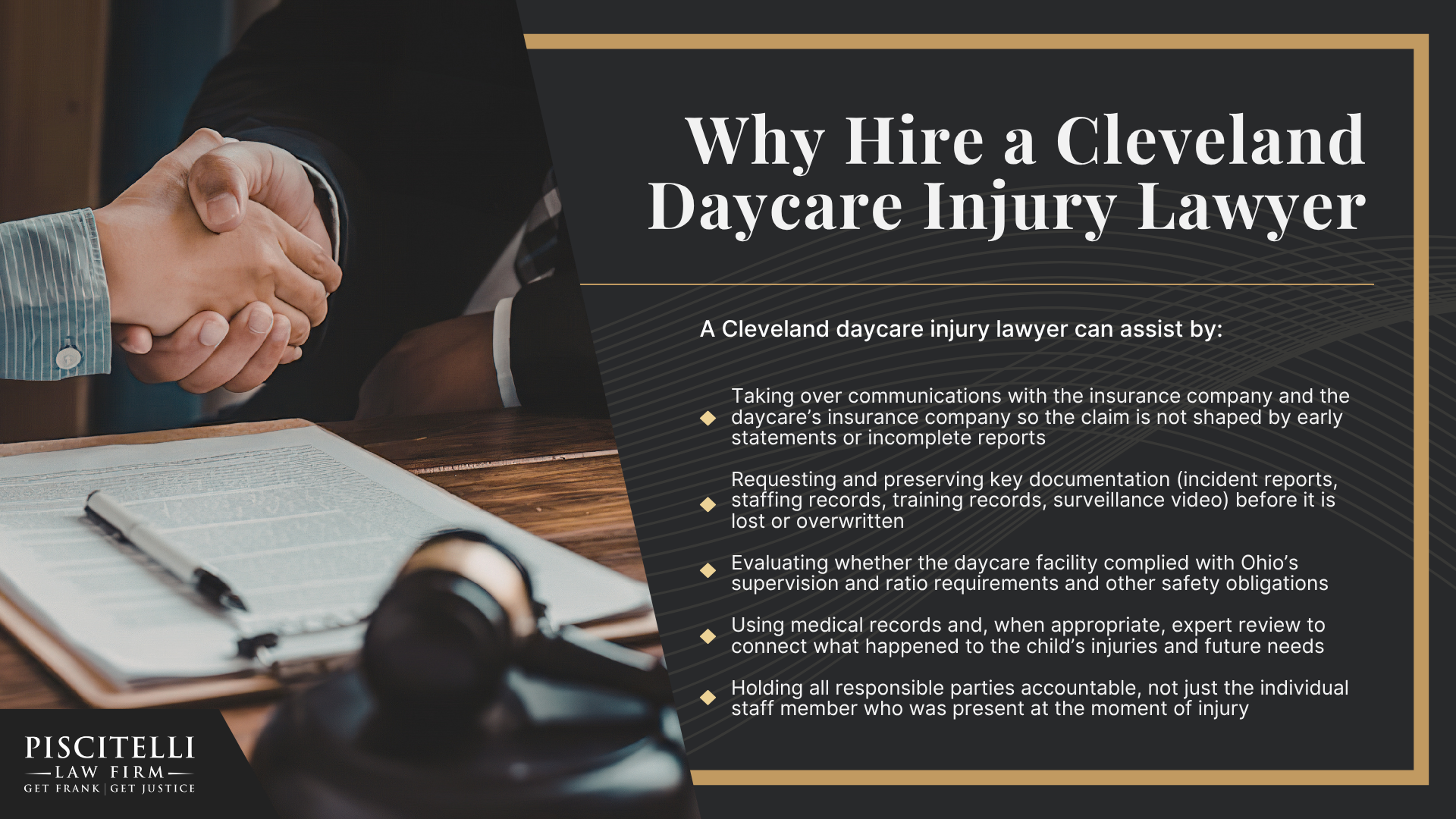
A Cleveland daycare injury lawyer can assist by:
Taking over communications with the insurance company and the daycare’s insurance company so the claim is not shaped by early statements or incomplete reports
Requesting and preserving key documentation (incident reports, staffing records, training records, surveillance video) before it is lost or overwritten
Evaluating whether the daycare facility complied with Ohio’s supervision and ratio requirements and other safety obligations
Using medical records and, when appropriate, expert review to connect what happened to the child’s injuries and future needs
Holding all responsible parties accountable, not just the individual staff member who was present at the moment of injury
Families can also use Ohio’s child care search tools to review licensing status and inspection history for childcare centers and other childcare facilities, which can provide context when daycare negligence is suspected.
A daycare injury claim usually depends on whether the injury was preventable and whether the daycare provider failed to meet required standards of care.
Many cases involve daycare negligence tied to lack of supervision, unsafe environments, staffing shortages, or failure to follow established safety procedures.
Ohio’s rules emphasize supervision and safe operation, and serious incidents include injuries requiring professional medical consultation or treatment.
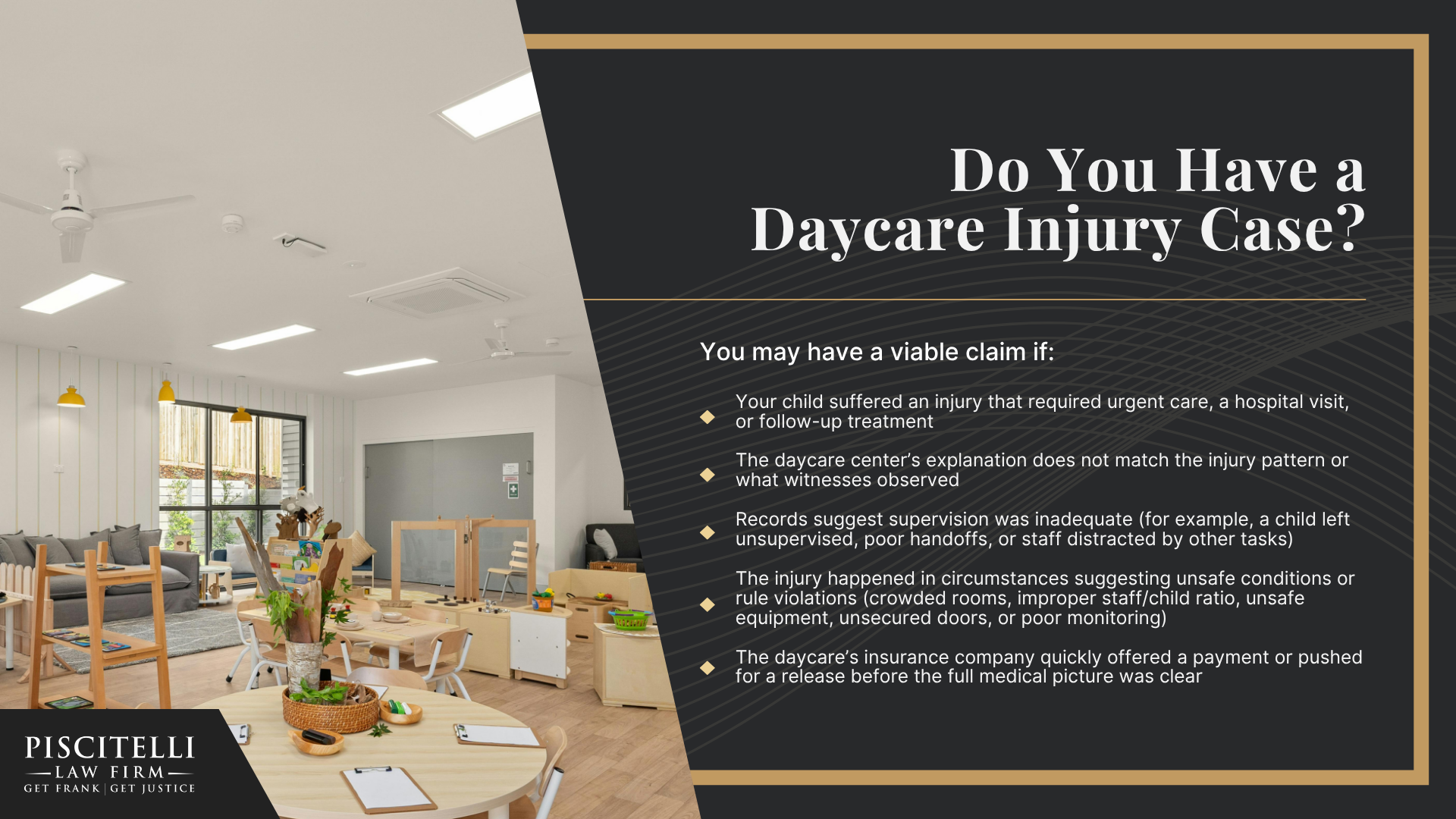
You may have a viable claim if:
Your child suffered an injury that required urgent care, a hospital visit, or follow-up treatment
The daycare center’s explanation does not match the injury pattern or what witnesses observed
Records suggest supervision was inadequate (for example, a child left unsupervised, poor handoffs, or staff distracted by other tasks)
The injury happened in circumstances suggesting unsafe conditions or rule violations (crowded rooms, improper staff/child ratio, unsafe equipment, unsecured doors, or poor monitoring)
The daycare’s insurance company quickly offered a payment or pushed for a release before the full medical picture was clear
Because these cases can involve other children, changing staff shifts, and documentation controlled by the childcare center, speaking with an experienced attorney early can help preserve evidence and clarify whether daycare negligence cases are supported by the facts and records.
Depending on what happened, multiple parties may share responsibility, and identifying all potentially liable parties is often necessary to pursue a complete personal injury claim.
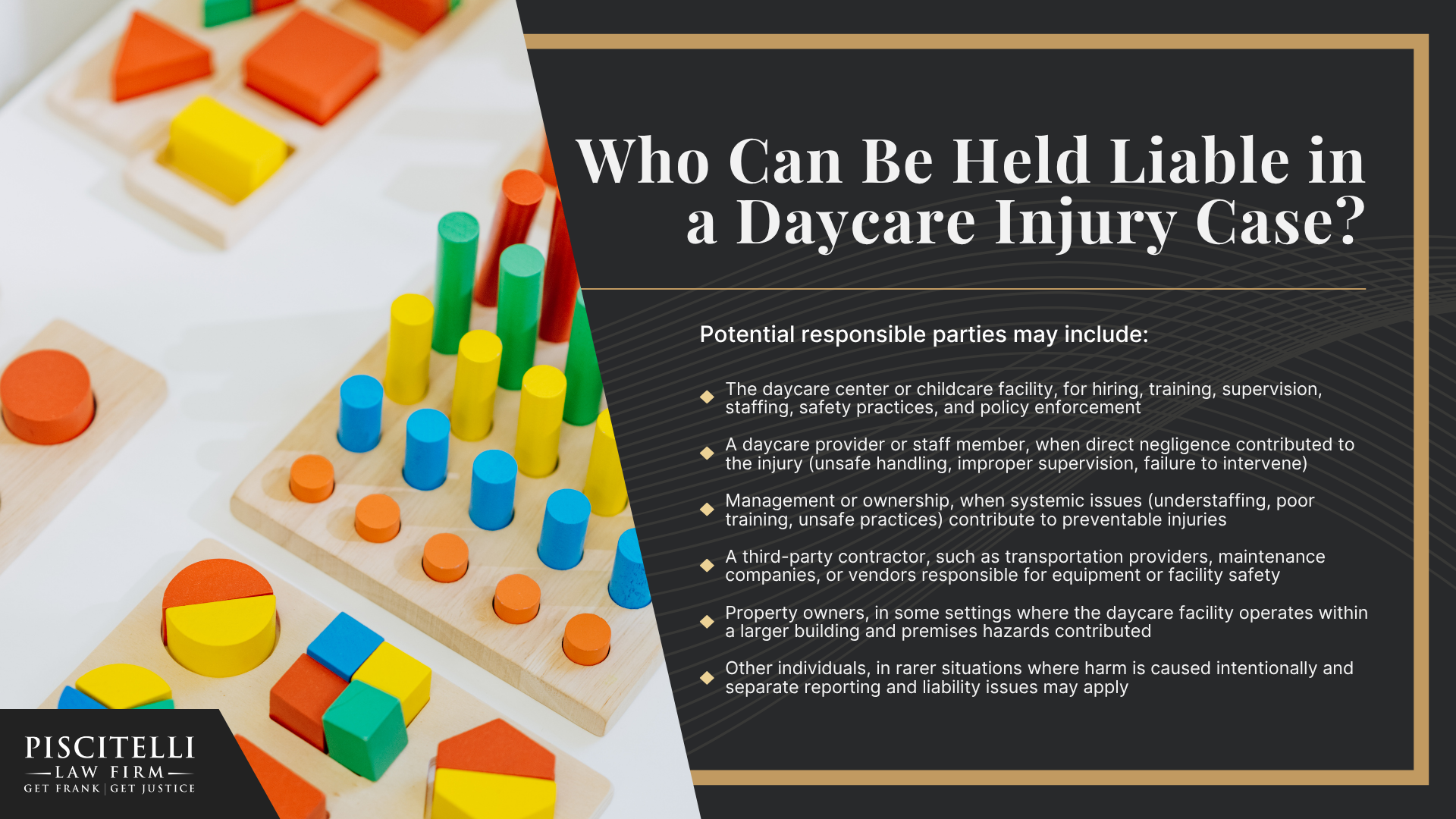
Potential responsible parties may include:
The daycare center or childcare facility, for hiring, training, supervision, staffing, safety practices, and policy enforcement
A daycare provider or staff member, when direct negligence contributed to the injury (unsafe handling, improper supervision, failure to intervene)
Management or ownership, when systemic issues (understaffing, poor training, unsafe practices) contribute to preventable injuries
A third-party contractor, such as transportation providers, maintenance companies, or vendors responsible for equipment or facility safety
Property owners, in some settings where the daycare facility operates within a larger building and premises hazards contributed
Other individuals, in rarer situations where harm is caused intentionally and separate reporting and liability issues may apply
A daycare injury lawyer typically evaluates who controlled the environment, who had the duty to supervise and protect a young child, and what documentation supports the claim.
Ohio’s regulatory framework around child care center operation, including supervision and ratio requirements, is often part of that analysis.
What To Do After a Daycare Injury in Cleveland, OH
When a child’s injury happens at a daycare center or childcare center, the first priority is medical care and safety.
If the child is in immediate danger or you suspect intentional abuse or sexual abuse, call 911 and contact appropriate authorities right away.
If the situation is not emergent, take steps to protect your child’s rights, document what occurred, and preserve information before the daycare’s insurance company or another insurance company begins shaping the narrative.
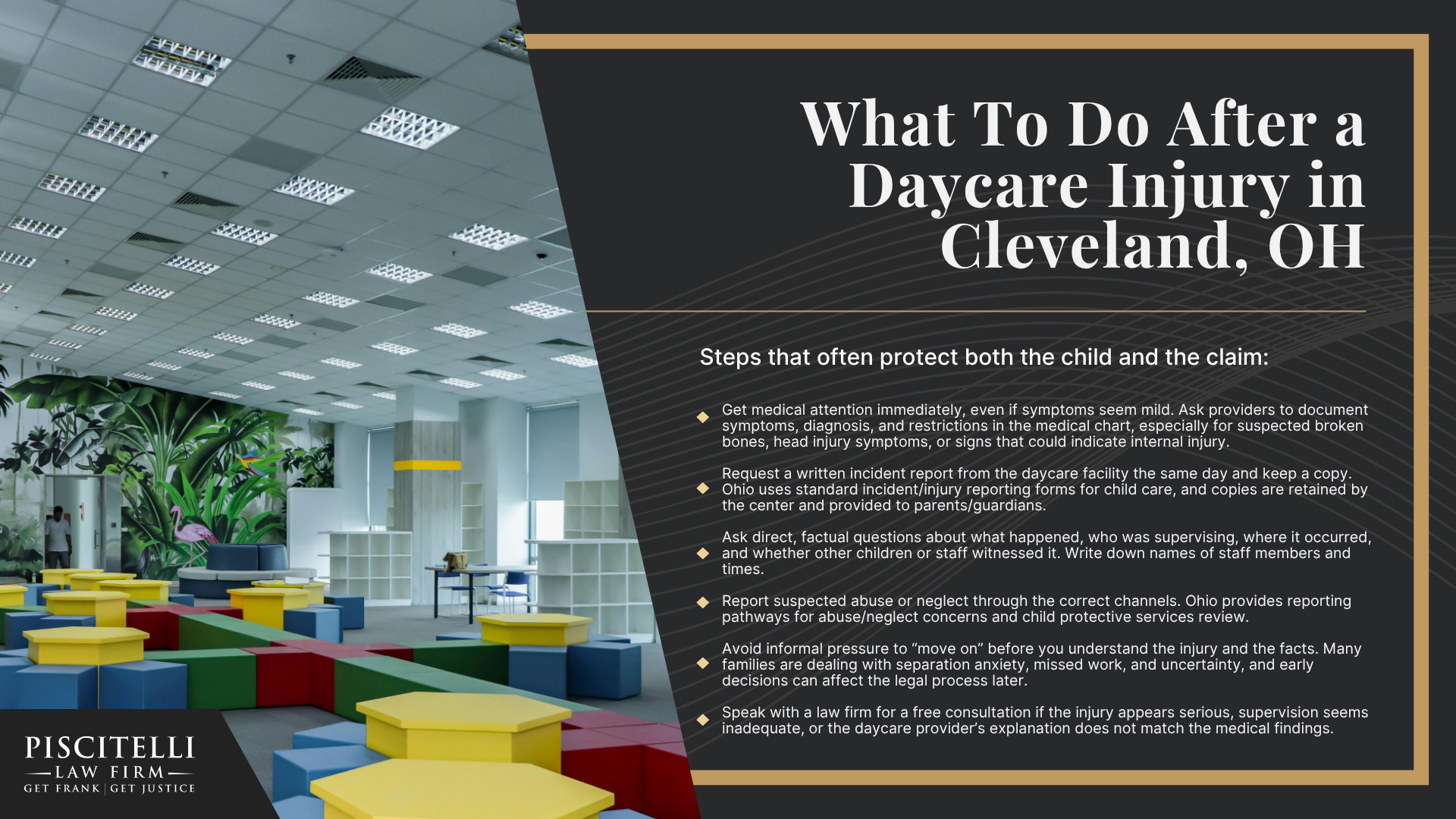
Steps that often protect both the child and the claim:
Get medical attention immediately, even if symptoms seem mild. Ask providers to document symptoms, diagnosis, and restrictions in the medical chart, especially for suspected broken bones, head injury symptoms, or signs that could indicate internal injury.
Request a written incident report from the daycare facility the same day and keep a copy. Ohio uses standard incident/injury reporting forms for child care, and copies are retained by the center and provided to parents/guardians.
Ask direct, factual questions about what happened, who was supervising, where it occurred, and whether other children or staff witnessed it. Write down names of staff members and times.
Report suspected abuse or neglect through the correct channels. Ohio provides reporting pathways for abuse/neglect concerns and child protective services review.
Avoid informal pressure to “move on” before you understand the injury and the facts. Many families are dealing with separation anxiety, missed work, and uncertainty, and early decisions can affect the legal process later.
Speak with a law firm for a free consultation if the injury appears serious, supervision seems inadequate, or the daycare provider’s explanation does not match the medical findings.
Gather Evidence for Your Daycare Injury Claim
Daycare cases often depend on whether the facility used proper safety measures and whether there was negligent supervision or inadequate staffing at the time the accident occurs.
Evidence can also matter if there is suspected abuse, because timelines and records become critical.
Your goal is to preserve information while it is still available, especially if the daycare or insurer tries to limit what you receive.
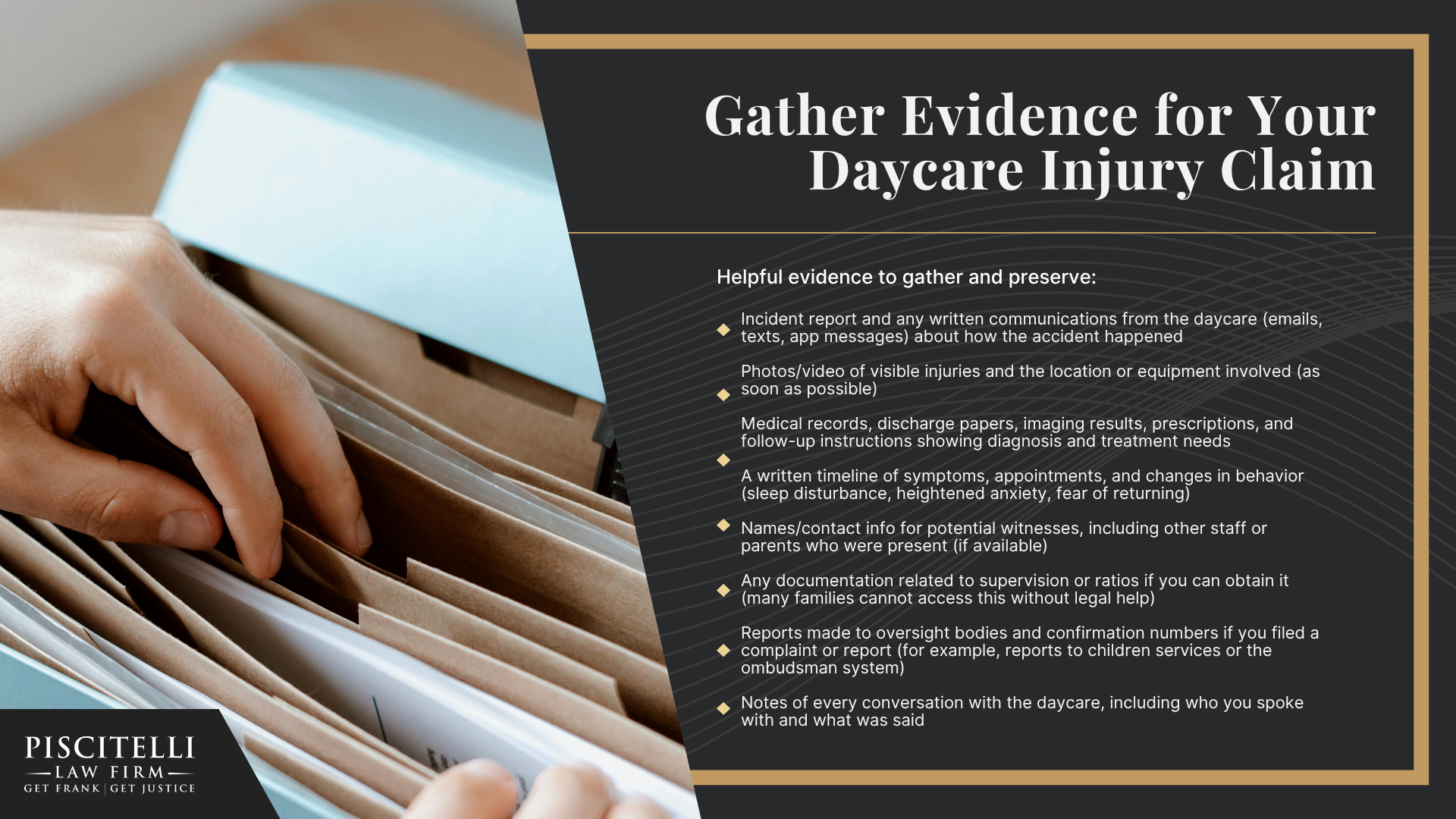
Helpful evidence to gather and preserve:
Incident report and any written communications from the daycare (emails, texts, app messages) about how the accident happened
Photos/video of visible injuries and the location or equipment involved (as soon as possible)
Medical records, discharge papers, imaging results, prescriptions, and follow-up instructions showing diagnosis and treatment needs
A written timeline of symptoms, appointments, and changes in behavior (sleep disturbance, heightened anxiety, fear of returning)
Names/contact info for potential witnesses, including other staff or parents who were present (if available)
Any documentation related to supervision or ratios if you can obtain it (many families cannot access this without legal help)
Reports made to oversight bodies and confirmation numbers if you filed a complaint or report (for example, reports to children services or the ombudsman system)
Notes of every conversation with the daycare, including who you spoke with and what was said
If you suspect abuse or neglect, Ohio’s licensing and reporting framework recognizes serious incident reporting and parent notification requirements for child care programs.
Common Damages in Daycare Injury Claims
A daycare injury claim is intended to address the harm a child and family actually suffered, not just the initial urgent care visit.
Depending on the facts, damages may include both economic losses (documented costs) and non-economic harm (pain, distress, and disruption).
In the most severe cases, daycare injury lawsuits may involve catastrophic outcomes, including permanent impairment or, rarely, wrongful death or even death, which changes the damages analysis significantly.
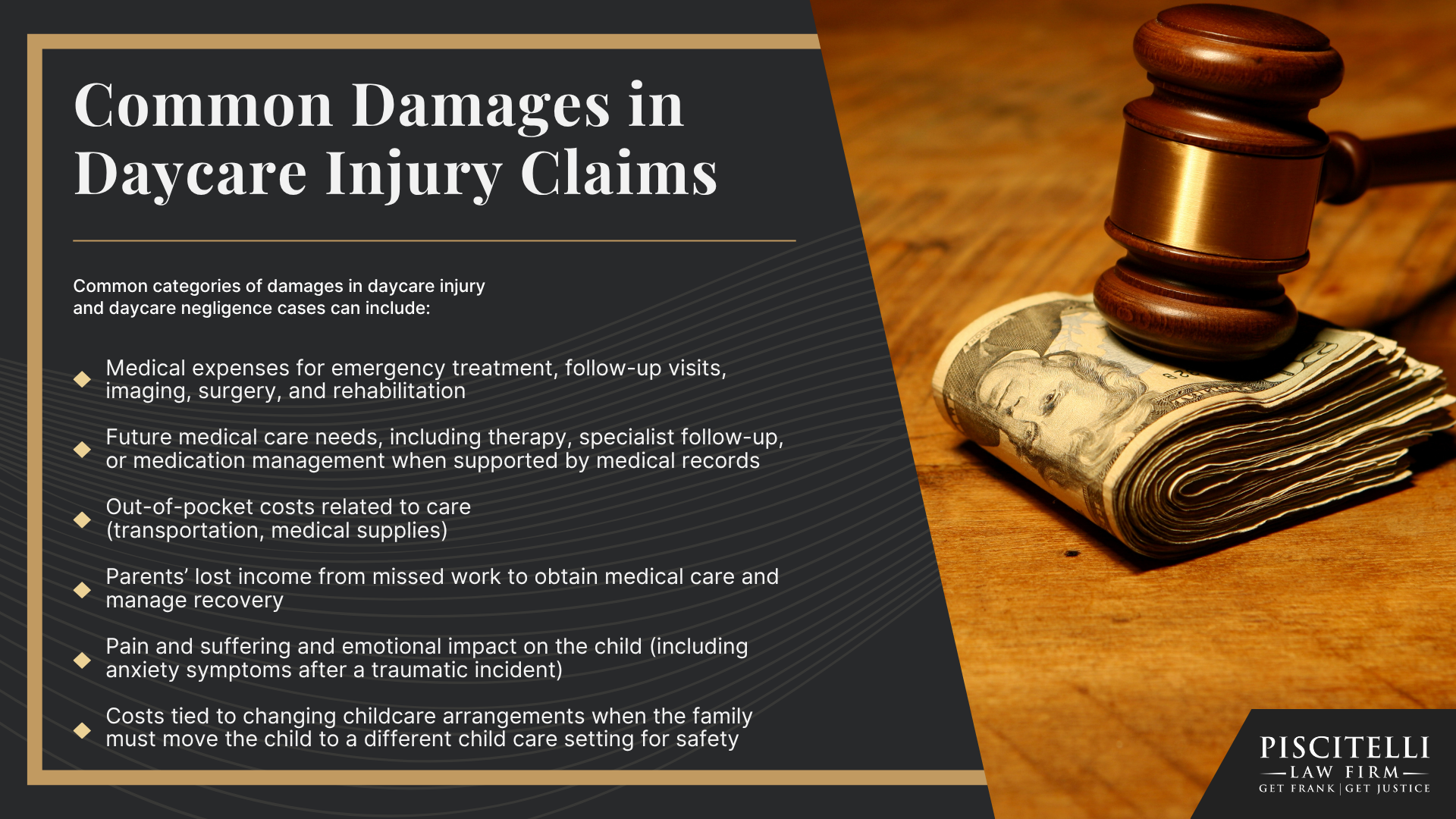
Common categories of damages in daycare injury and daycare negligence cases can include:
Medical expenses for emergency treatment, follow-up visits, imaging, surgery, and rehabilitation
Future medical care needs, including therapy, specialist follow-up, or medication management when supported by medical records
Out-of-pocket costs related to care (transportation, medical supplies)
Parents’ lost income from missed work to obtain medical care and manage recovery
Pain and suffering and emotional impact on the child (including anxiety symptoms after a traumatic incident)
Costs tied to changing childcare arrangements when the family must move the child to a different child care setting for safety
Many firms handle these matters on a contingency fee basis, meaning attorney fees are typically paid only if compensation is recovered.
If you are considering next steps, a free consultation can help you understand whether the facts suggest preventable injuries, negligent supervision, or suspected abuse, and what options may exist to seek compensation and hold responsible parties accountable.
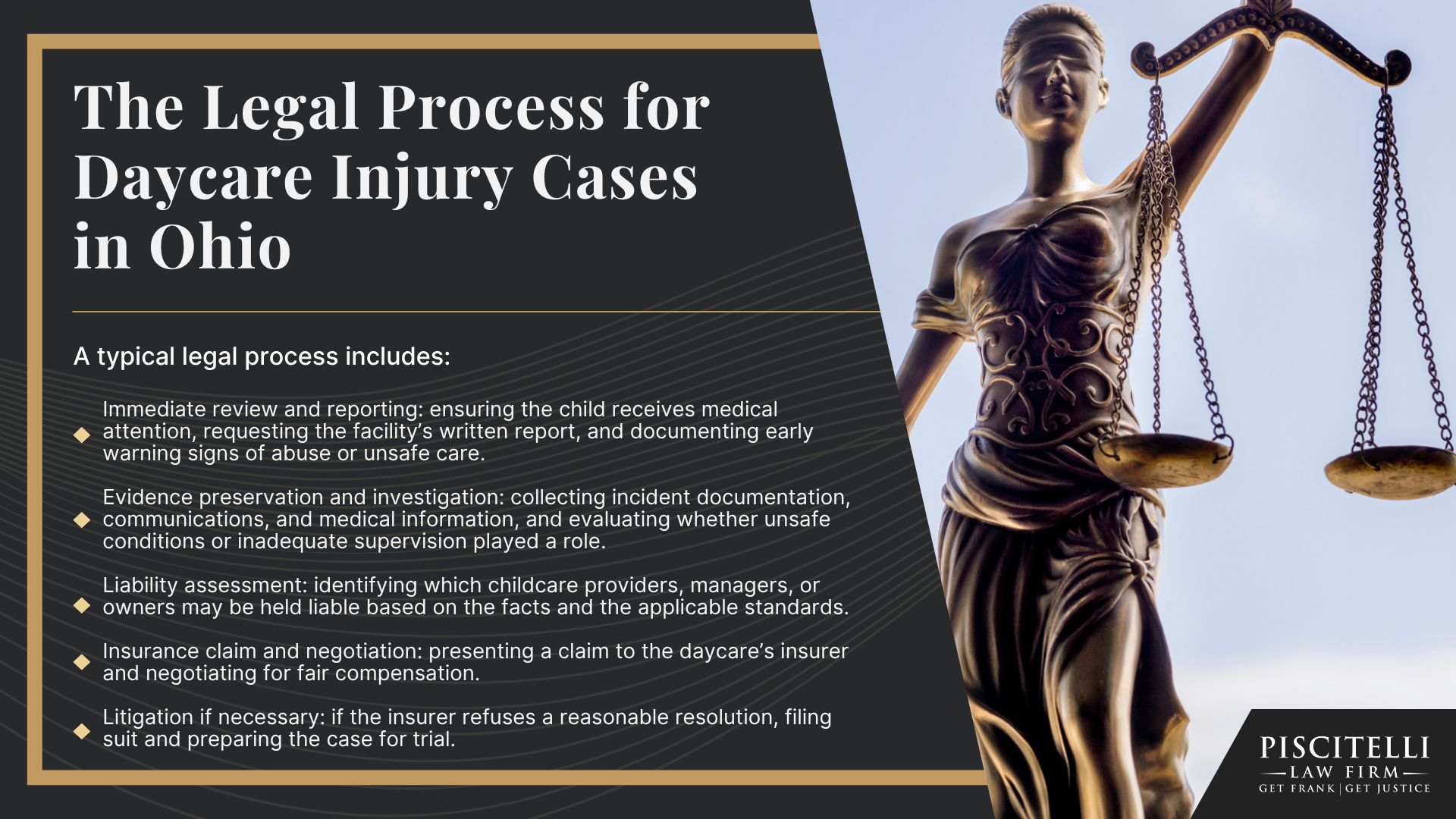
The Legal Process for Daycare Injury Cases in Ohio
Daycare injury cases usually start with medical care and fact preservation, then move into a structured review of what happened, who was responsible for supervision, and whether the day care facility followed Ohio requirements designed to keep children safe.
Ohio law requires child care centers to ensure no child is left alone or unsupervised, and centers must maintain staffing and group requirements as part of safe operation.
When a young child is hurt or injured, families often need clarity quickly because records, video, and staff recollections can change after an accident.
Immediate review and reporting: ensuring the child receives medical attention, requesting the facility’s written report, and documenting early warning signs of abuse or unsafe care.
Evidence preservation and investigation: collecting incident documentation, communications, and medical information, and evaluating whether unsafe conditions or inadequate supervision played a role.
Liability assessment: identifying which childcare providers, managers, or owners may be held liable based on the facts and the applicable standards.
Insurance claim and negotiation: presenting a claim to the daycare’s insurer and negotiating for fair compensation.
Litigation if necessary: if the insurer refuses a reasonable resolution, filing suit and preparing the case for trial.
Ohio also has a two-year statute of limitations for many personal injury actions, which can affect legal options if families wait too long to act.
Your lawyer should explain the timeline, what documents matter most, and what a realistic path to a successful outcome looks like based on proof.
Many parents expect a nurturing environment in early education settings, but injuries can occur when a facility fails to address known dangers or when policies are not followed consistently.
Some daycare injuries are accidents even when care is reasonable, but others involve negligence, including preventable breakdowns in supervision and safety.
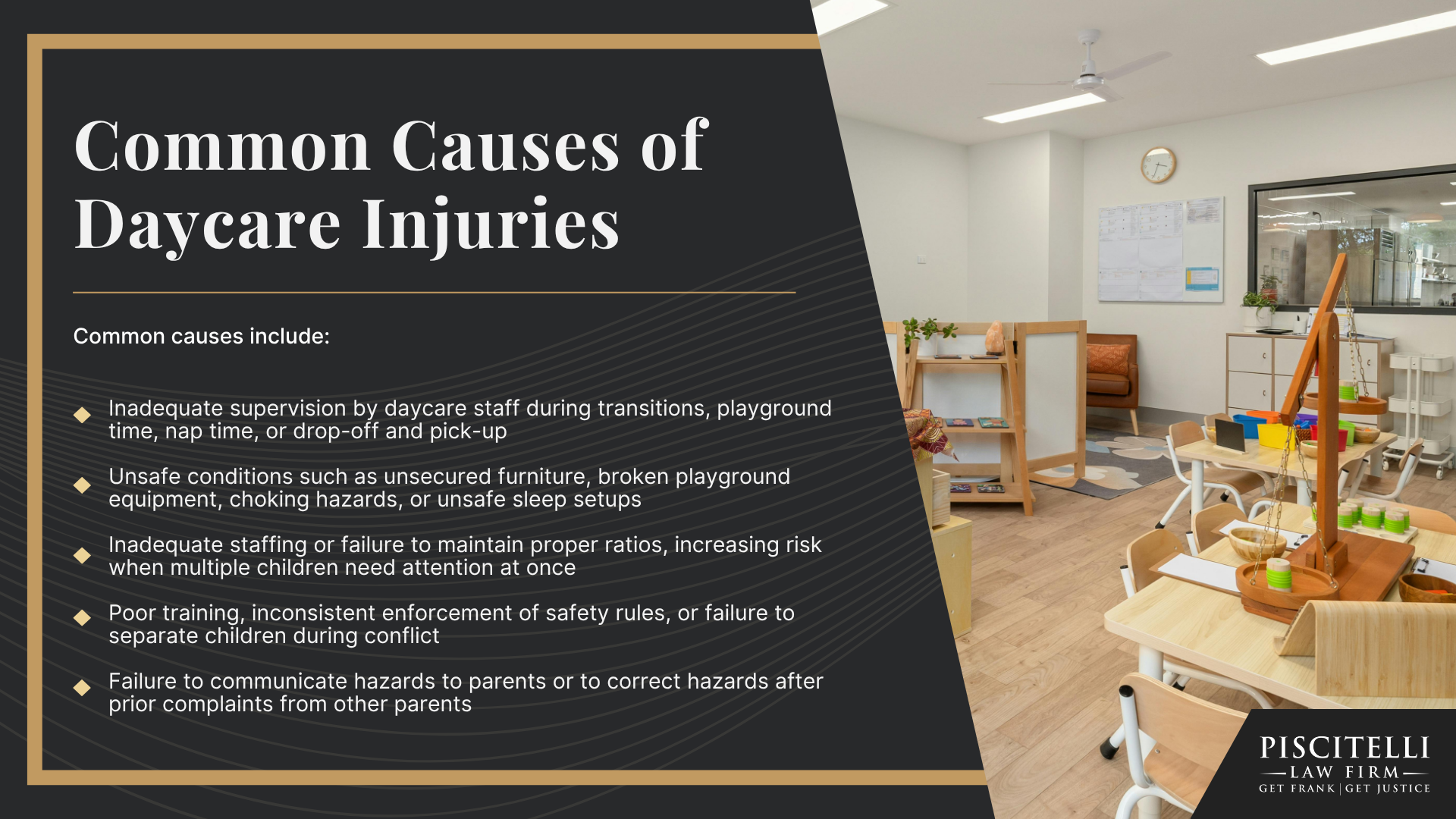
Common causes include:
Inadequate supervision by daycare staff during transitions, playground time, nap time, or drop-off and pick-up
Unsafe conditions such as unsecured furniture, broken playground equipment, choking hazards, or unsafe sleep setups
Inadequate staffing or failure to maintain proper ratios, increasing risk when multiple children need attention at once
Poor training, inconsistent enforcement of safety rules, or failure to separate children during conflict
Failure to communicate hazards to parents or to correct hazards after prior complaints from other parents
Daycare injuries range from minor to serious, and the severity often depends on the child’s age, the mechanism of injury, and how quickly staff responds.
When an injury is significant, families should focus on prompt evaluation, because medical providers may identify issues that are not obvious at first.
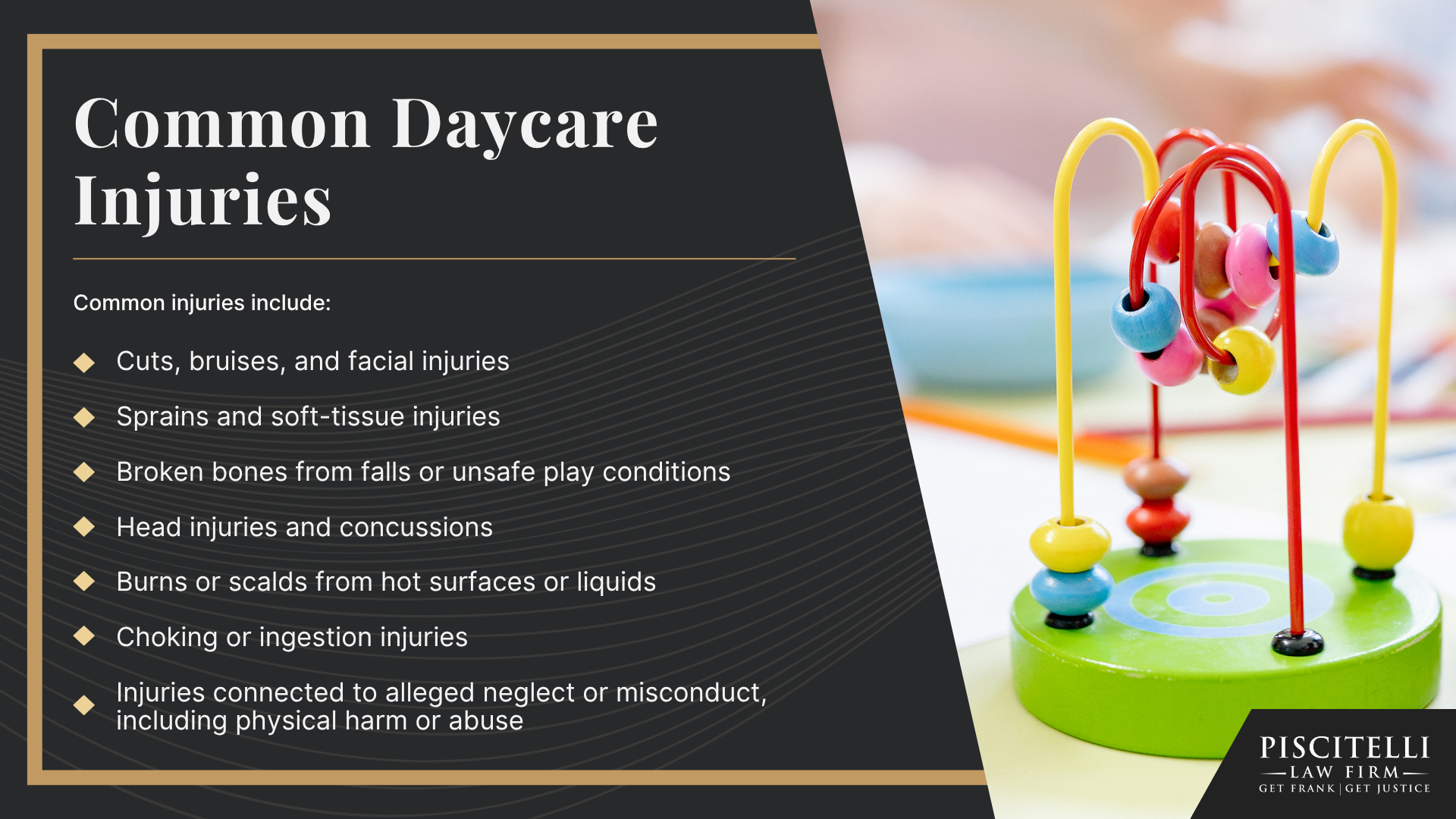
Common injuries include:
Cuts, bruises, and facial injuries
Sprains and soft-tissue injuries
Broken bones from falls or unsafe play conditions
Head injuries and concussions
Burns or scalds from hot surfaces or liquids
Choking or ingestion injuries
Injuries connected to alleged neglect or misconduct, including physical harm or abuse
If the injury required first aid, emergency care, or involved a head bump or blow, Ohio’s incident/injury reporting rules may apply and the center should complete the standard form and provide it to the parent.
Families often contact Frank Piscitelli when they feel a daycare’s explanation does not match the child’s injuries, when they see warning signs that something is being minimized, or when they want an objective assessment of what the best interest of the child requires next.
Many parents also want reassurance that the legal process will be handled with care, because these cases can feel personal in a way that is different from a typical car accident claim.
Injury lawyers who regularly handle serious matters know that a daycare case needs clear documentation, disciplined communication with insurers, and a plan that accounts for both immediate treatment and longer-term impacts.
Frank Piscitelli focuses on careful investigation and practical guidance for families.
That includes reviewing records, identifying responsible parties, and explaining legal options in plain language so parents can make decisions that protect their child and their loved one’s well-being.
The Piscitelli Law Firm: Your Cleveland Daycare Injury Lawyer
If your child was injured in a daycare setting, Piscitelli Law Firm can review what happened, explain what information matters most, and help you pursue accountability when negligence or unsafe conditions caused preventable harm.
The firm works with families to gather records, document injuries, and deal directly with the daycare’s insurer so parents are not pressured into decisions before the full picture is clear.
To discuss your situation and learn whether you may be able to obtain compensation, contact Piscitelli Law Firm to speak with a Cleveland daycare injury lawyer.
You can also use the chatbot on this page to see if you qualify today.
Start with medical attention, even if the injury looks minor, because symptoms can develop after you leave the daycare.
Ask the daycare to complete an incident report and request a copy the same day, then take photos of visible injuries and write down what staff told you about how the accident happened.
If you suspect abuse, serious neglect, or immediate danger, contact the appropriate authorities right away and do not wait for the daycare’s insurance company to “look into it.”
A daycare injury case usually depends on whether the harm was preventable and whether the daycare provider failed to use proper safety measures, provide adequate supervision, or maintain appropriate staffing.
When the explanation does not match the injury, when there are warning signs of negligent supervision, or when the daycare cannot clearly explain who was supervising and what safeguards were in place, it may indicate daycare negligence.
A daycare injury lawyer can review the facts and records to determine whether the daycare’s conduct fell below what a child deserves in a safe childcare environment.
Liability is not always limited to one staff member, and responsible parties can include the daycare center itself, management or ownership, and individual daycare staff depending on what happened.
Some cases involve unsafe conditions in the facility, inadequate staffing, or failures in supervision policies, while others involve direct misconduct or suspected abuse.
An experienced attorney will look at who controlled the environment, who had the duty to supervise, and what documentation supports each theory of responsibility.
It is usually safer to be cautious, because the daycare’s insurance company may push for a quick resolution before you understand the full scope of the child’s injury and future needs.
Adjusters may ask questions in a way that minimizes the incident or shifts blame, and early offers are often based on incomplete medical information.
Before you sign anything or accept payment, it helps to speak with daycare injury attorneys who can evaluate whether the offer accounts for medical expenses, follow-up care, and the broader impact on the child and family.
Compensation depends on the facts and the severity of injuries, but it may include medical expenses, future care needs, and the parents’ lost income from time missed to handle treatment and recovery.
It can also include non-economic harm, such as the child’s pain and suffering and emotional impacts that follow a frightening incident, especially when the child develops fear or anxiety about returning.
In the most serious cases, claims may involve catastrophic injury or, rarely, wrongful death, and the legal strategy changes accordingly.
Lack of supervision is one of the leading causes of daycare injuries, often tied to inadequate staffing or failures to follow required supervision standards.
State and federal regulations require daycare facilities to remove known hazards and maintain proper oversight, but lapses can go unnoticed until a child is hurt.
Even brief gaps in supervision can lead to serious outcomes, including choking incidents when children access unsafe objects without monitoring.
Daycare injuries may range in severity depending on how the incident occurred and how quickly staff responded.
Common types of harm seen in these cases include:
Broken bones and fractures: Often linked to falls, unsafe play areas, or lack of supervision during active play.
Lacerations and cuts: May result from sharp objects, broken equipment, or unsafe facility conditions.
Head injuries: Including concussions or more serious trauma from falls or impacts.
Choking incidents: Can occur when small objects or unsafe food are accessible without proper monitoring.
Allergic reactions: May arise when staff fail to follow dietary restrictions or properly manage food exposure.
Emotional trauma: Some children develop anxiety, behavioral changes, or fear after neglect or abuse.
Abuse-related injuries: In more serious cases, injuries may result from intentional physical or sexual abuse by caregivers.
The legal focus in these cases is whether the injury could have been prevented if the daycare followed required supervision, safety, and staffing standards.
Parents should seek medical care first, either through a pediatrician or emergency room, so the child’s injuries are evaluated and documented.
They should also photograph visible injuries, document the scene when possible, write down the names of employees on duty, preserve all daycare communications, and keep signed enrollment contracts.
Serious injuries or suspected abuse may also be reported through the Ohio Child Licensing and Quality System (OCLQS).
These records can become critical if the family later files a personal injury claim against the daycare.
Parents may have the right to file a claim if a daycare breached its duty of care and that failure directly caused the child’s injury.
Daycare negligence claims may seek compensation for medical expenses, future care, pain and suffering, parents’ lost wages, and, in limited cases, punitive damages.
Ohio’s personal injury statute of limitations is generally two years, but claims for minors are typically tolled until the child’s 20th birthday.
Public daycares may have limited immunity under the Ohio Political Subdivision Tort Liability Act, while commercial for-profit daycares generally cannot use waivers to avoid responsibility for negligence, reckless acts, or safety-law violations.
Member of the Ohio State Bar Association since 1993. With 30+ years of legal experience, Attorney Frank Piscitelli has secured over $55 million in compensation for Ohio injury victims, car accident victims, and surviving family members of Ohio wrongful death victims.
Legally Reviewed
This article has been written and reviewed for legal accuracy and clarity by the team of writers and attorneys at Piscitelli Law Firm and is as accurate as possible. This content should not be taken as legal advice from an attorney. If you would like to learn more about our owner and experienced Ohio personal injury lawyer, Frank Piscitelli, you can do so here.
Fact-Checked
Piscitelli Law Firm does everything possible to make sure the information in this article is up to date and accurate. If you need specific legal advice about your case, contact us. This article should not be taken as advice from an attorney.