An Uber accident is not always handled like a standard car accident.
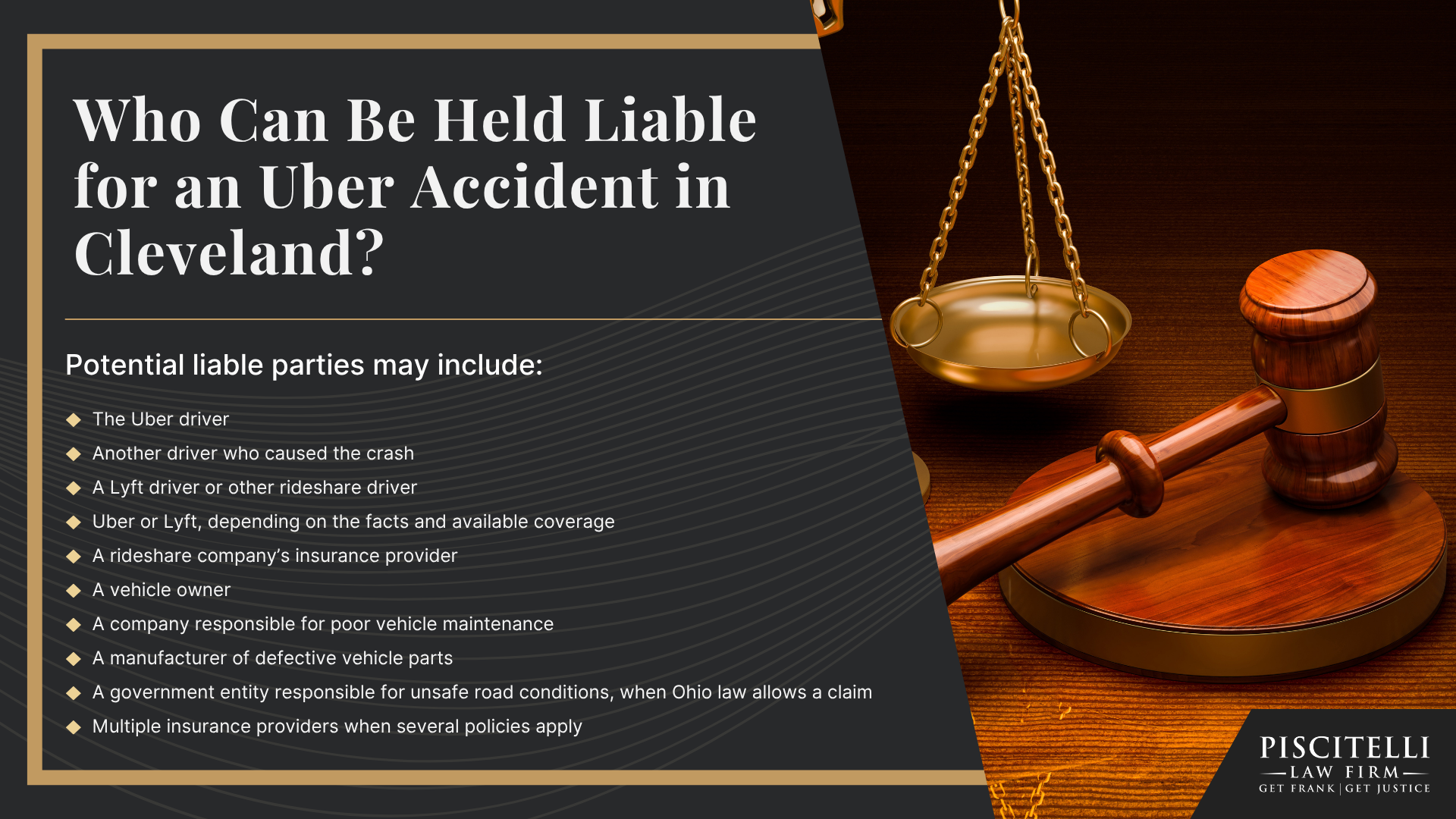
These cases may involve the Uber driver, another driver, Uber or Lyft insurance coverage, the driver’s personal auto insurance, and multiple insurance policies that may apply at different points in the trip.
Insurance coverage depends on the driver’s app status when the accident occurs.
A claim may be handled differently if the Uber driver was offline, logged into the app, waiting for a ride request, driving to pick up a passenger, or transporting an injured passenger during an active trip.
Because Uber and Lyft drivers are generally treated as independent contractors, determining liability can be more complicated than in other personal injury cases.
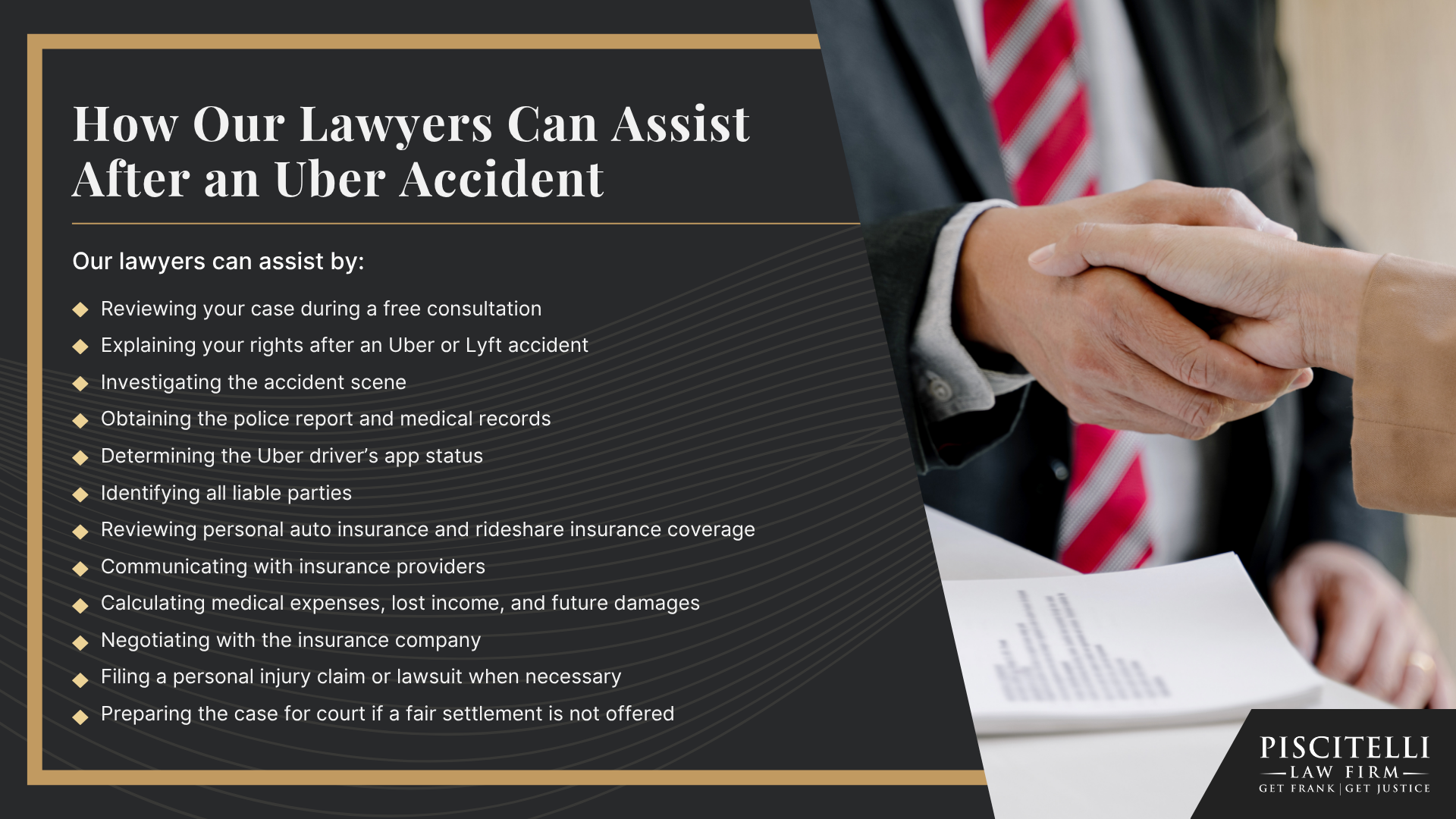
A Cleveland Uber accident lawyer can review the driver’s status, insurance policies, police report, medical records, and parties involved to determine who may be responsible for your injuries.
Common Causes of Uber Accidents in Cleveland
Uber accident cases often involve the same dangerous conduct seen in other motor vehicle crashes, but they can also involve rideshare-specific distractions and time pressure.
Rideshare drivers may be checking the app, accepting requests, navigating unfamiliar roads, looking for passengers, or trying to complete trips quickly.
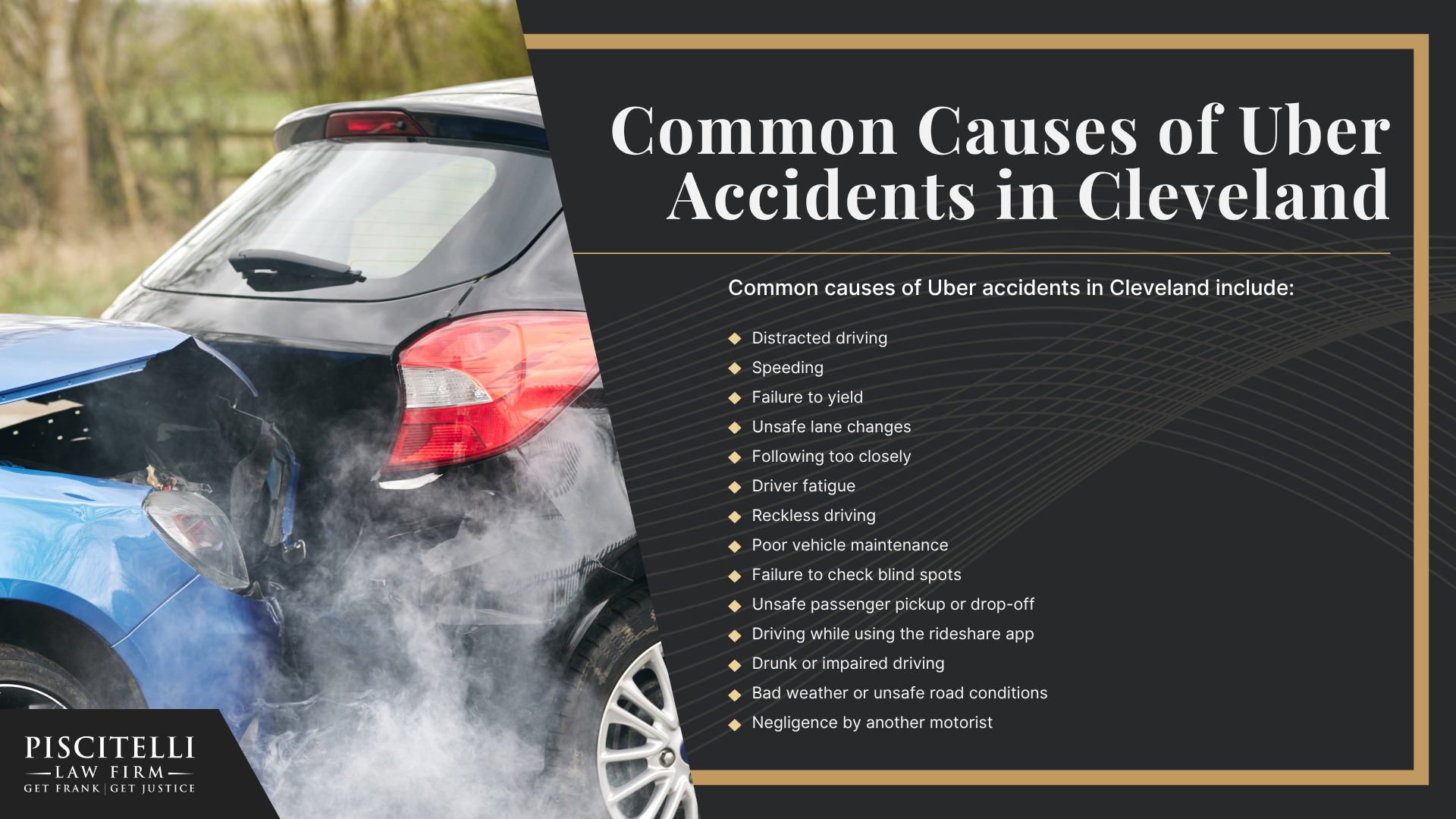
Common causes of Uber accidents in Cleveland include:
- Distracted driving
- Speeding
- Failure to yield
- Unsafe lane changes
- Following too closely
- Driver fatigue
- Reckless driving
- Poor vehicle maintenance
- Failure to check blind spots
- Unsafe passenger pickup or drop-off
- Driving while using the rideshare app
- Drunk or impaired driving
- Bad weather or unsafe road conditions
- Negligence by another motorist
A rideshare accident lawyer can investigate whether the Uber or Lyft driver, another driver, the rideshare company, or another party caused the crash.
In some Uber and Lyft accidents, multiple parties may share liability.
Common Injuries After an Uber Accident
Uber accident victims can suffer serious injuries whether they were passengers, drivers, pedestrians, bicyclists, or occupants of another vehicle.
Some injuries are visible injuries at the accident scene, while others may appear hours or days later.
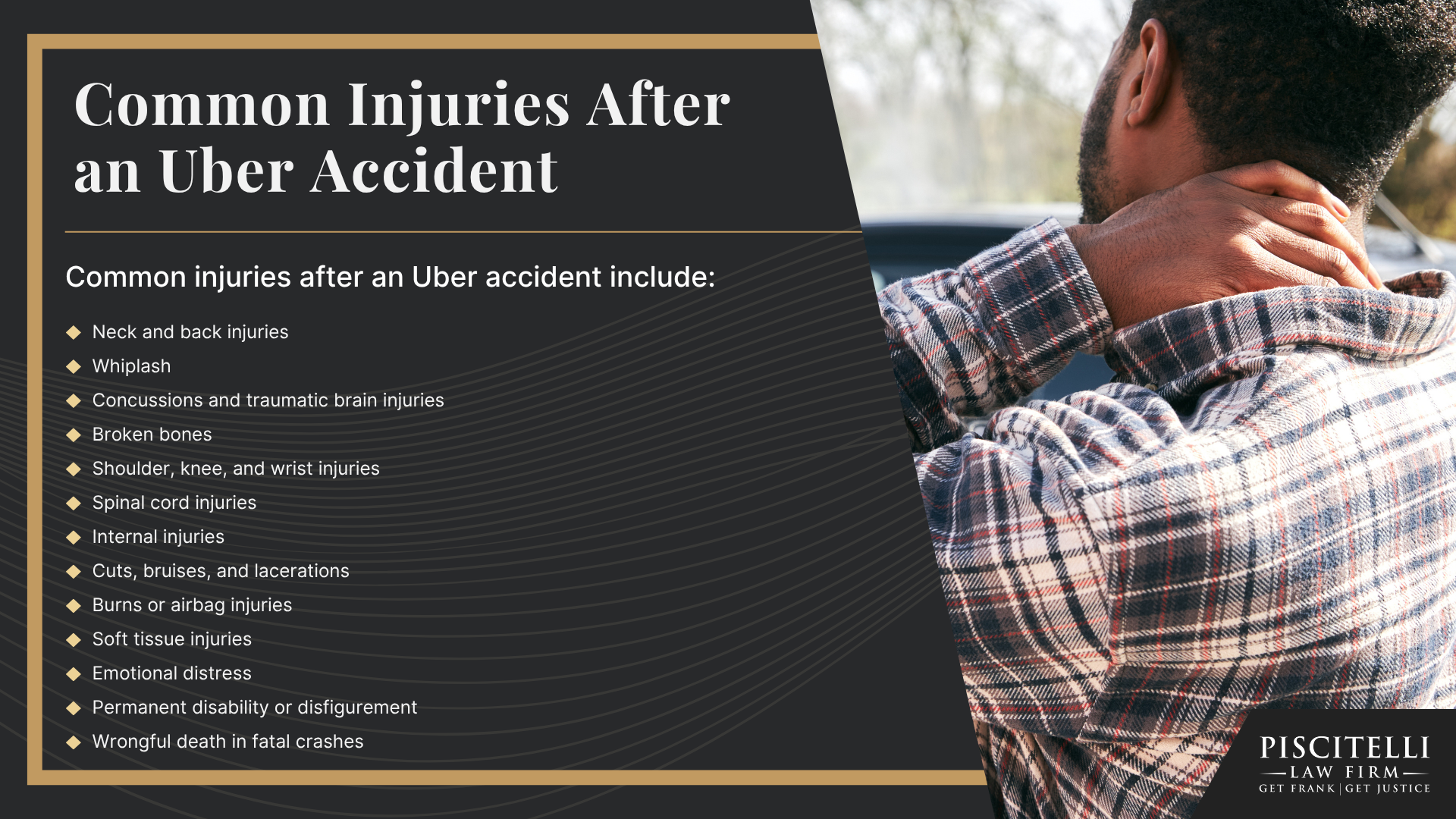
Common injuries after an Uber accident include:
- Neck and back injuries
- Whiplash
- Concussions and traumatic brain injuries
- Broken bones
- Shoulder, knee, and wrist injuries
- Spinal cord injuries
- Internal injuries
- Cuts, bruises, and lacerations
- Burns or airbag injuries
- Soft tissue injuries
- Emotional distress
- Permanent disability or disfigurement
- Wrongful death in fatal crashes
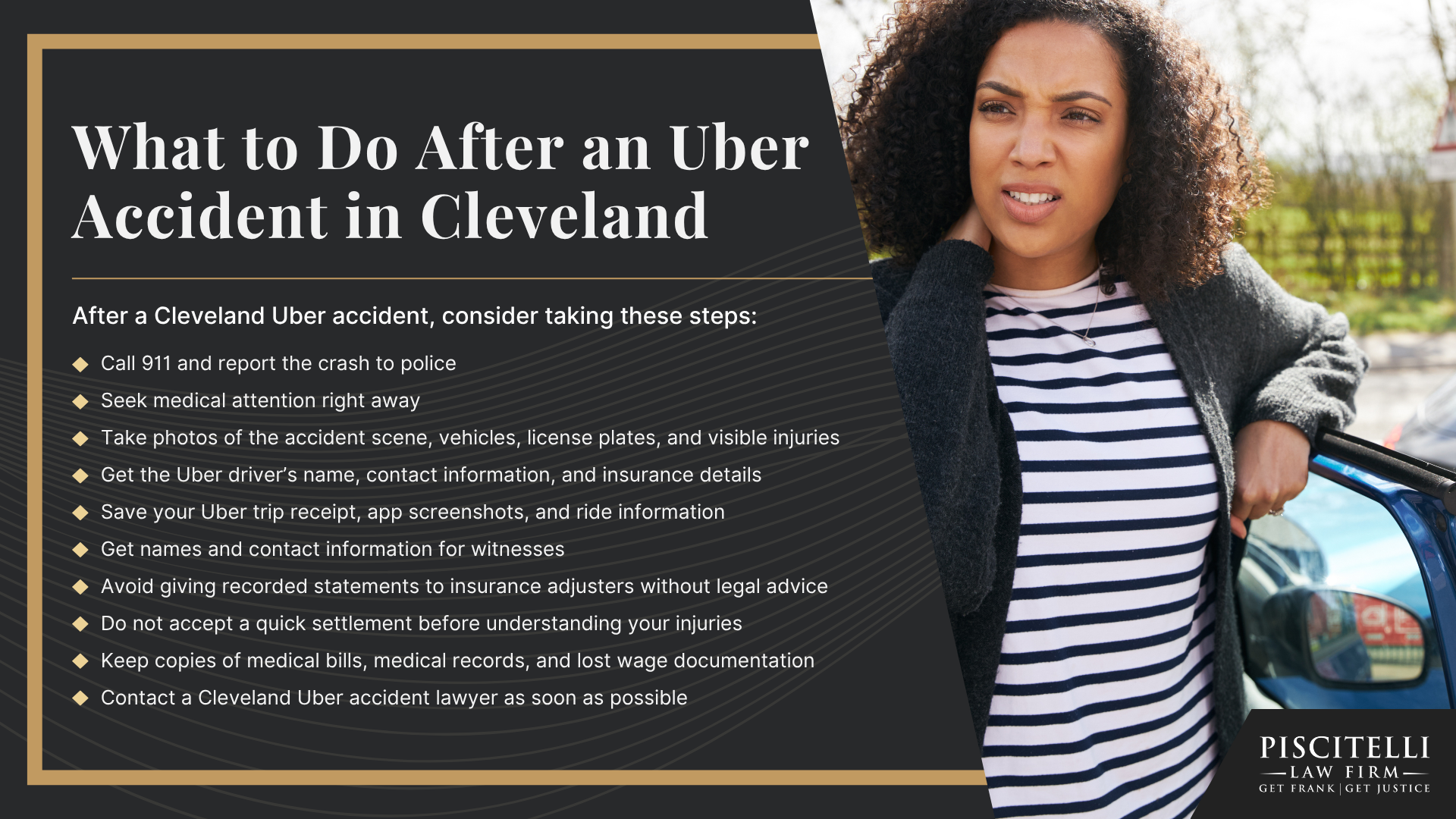
After any rideshare accident, injured victims should seek medical attention as soon as possible.
Medical treatment creates records that connect the injuries sustained to the crash and helps protect the value of a personal injury claim.