Cleveland Lyft accident claims are often less straightforward than ordinary car accident cases because rideshare crashes involve complicated insurance rules.
Coverage may depend on whether the Lyft driver was offline, logged into the app and waiting for a request, traveling to pick up a passenger, or actively transporting someone when the collision occurred.
More than one policy may apply.
The driver’s personal auto insurer, Lyft’s rideshare coverage, another motorist’s insurer, and uninsured or underinsured motorist coverage may each become relevant.
Insurance companies may dispute the driver’s app status, deny that a particular policy applies, or attempt to shift responsibility to another carrier.
Lyft drivers are generally treated as independent contractors rather than traditional employees.
As a result, Lyft is not automatically responsible for every crash caused by a driver using the platform, although the company may provide applicable insurance coverage.
A direct claim against Lyft depends on the specific facts and whether the evidence supports a separate legal basis for liability.
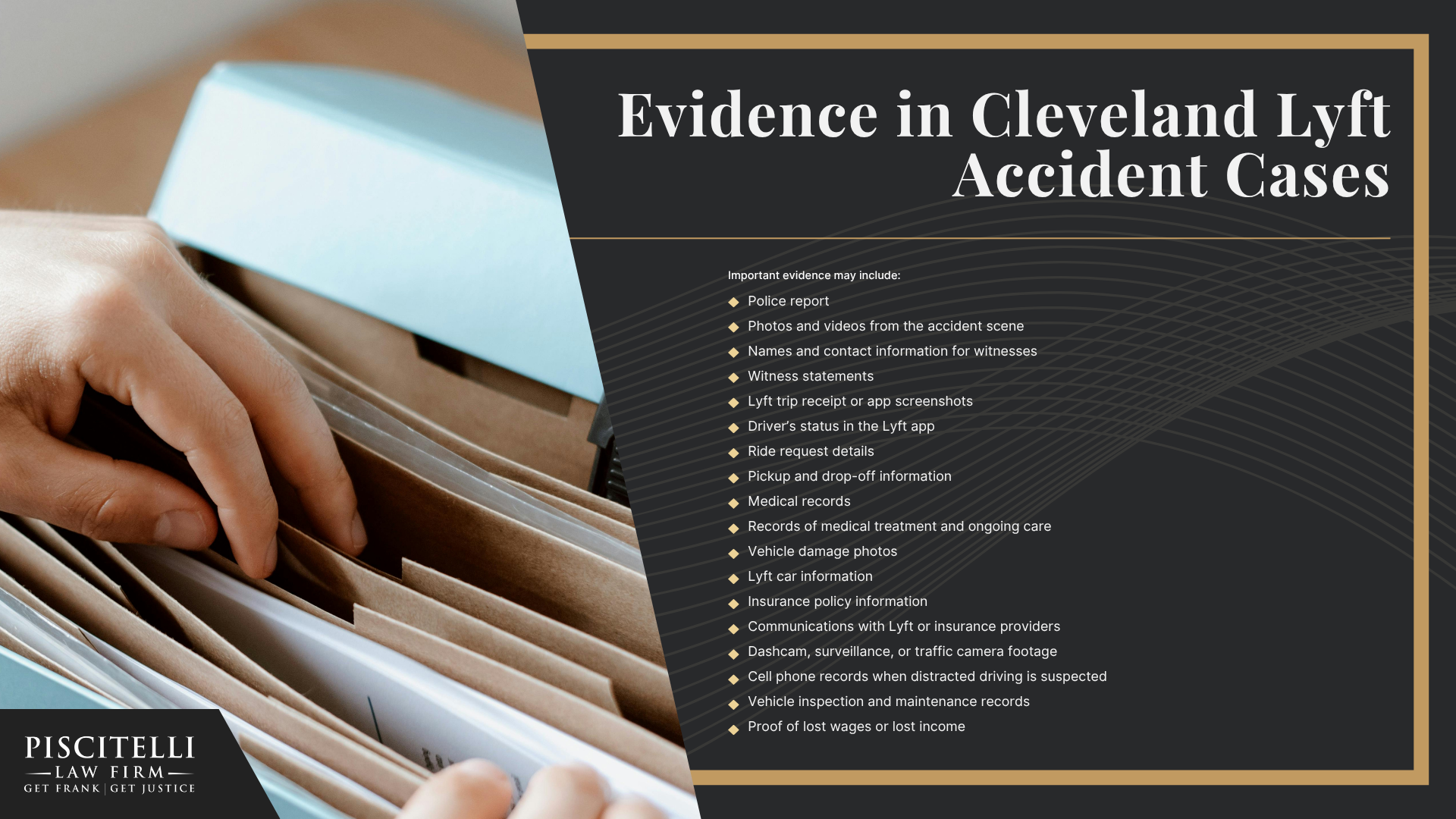
App records, trip receipts, pickup information, driver activity, insurance policies, and electronic communications may be needed to determine which coverage applies and who may be responsible.
A Cleveland Lyft accident lawyer can preserve this evidence, review the available policies, and pursue compensation from the appropriate parties.
How Lyft Insurance Works After an Accident in Cleveland
Lyft accidents often involve multiple insurance policies because the available coverage depends on the driver’s status in the Lyft app when the collision occurred.
The driver’s personal insurer, Lyft’s rideshare policy, another negligent driver’s insurer, and uninsured or underinsured motorist coverage may each become relevant.
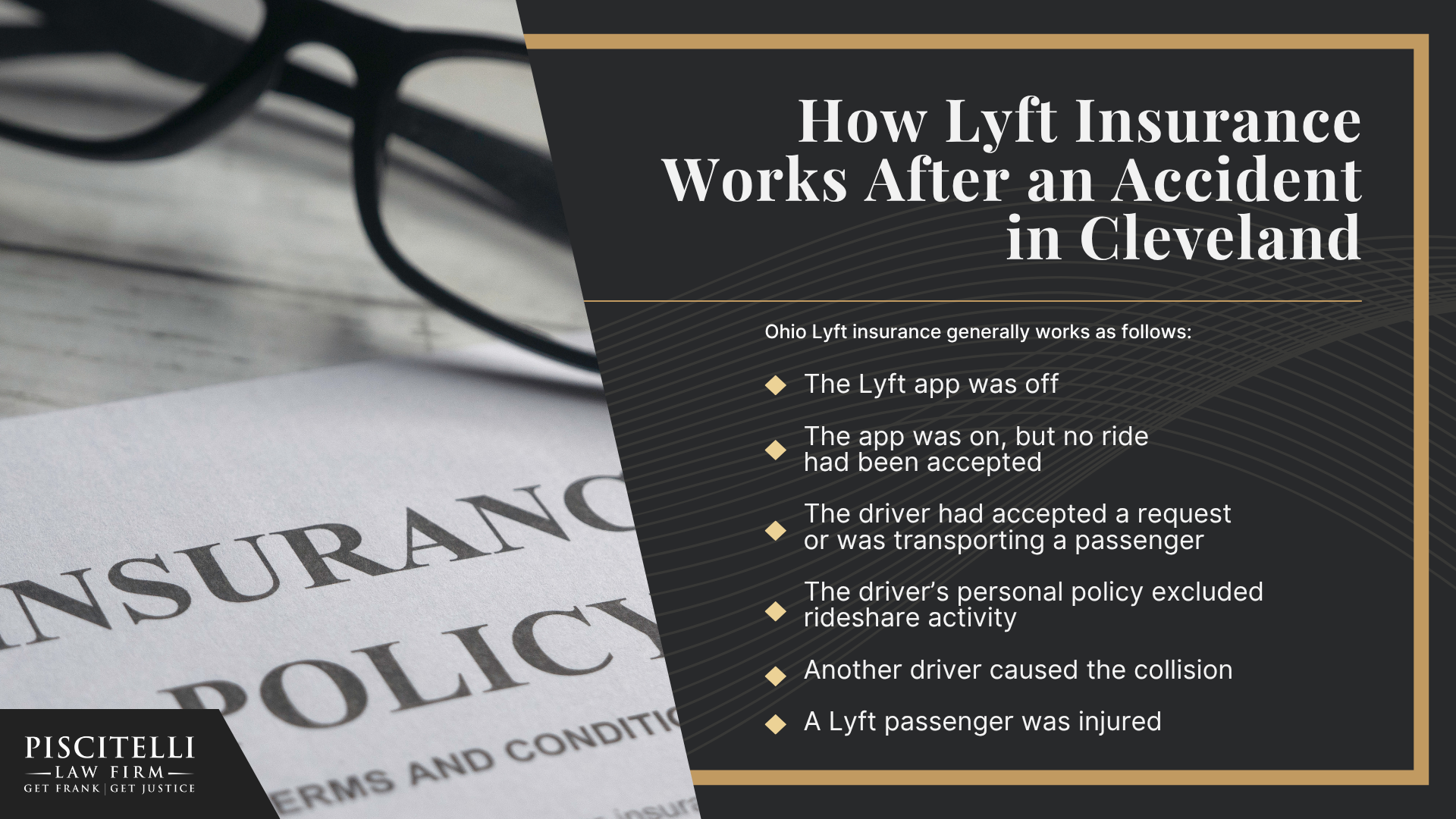
Ohio Lyft insurance generally works as follows:
- The Lyft app was off: Lyft does not provide rideshare coverage while the driver is offline. The driver’s personal automobile policy generally applies, subject to the terms, exclusions, and limits of that policy.
- The app was on, but no ride had been accepted: Ohio requires primary liability coverage of at least $50,000 for bodily injury or death to one person, $100,000 for injuries or deaths involving multiple people, and $25,000 for property damage. Lyft maintains coverage at those limits for covered accidents when the driver’s personal insurance does not apply.
- The driver had accepted a request or was transporting a passenger: From the time a driver accepts a ride request until the last passenger exits, Ohio requires at least $1 million in primary liability coverage for bodily injury, death, and property damage arising from one accident. Lyft states that it maintains at least $1 million in third-party liability coverage during this period.
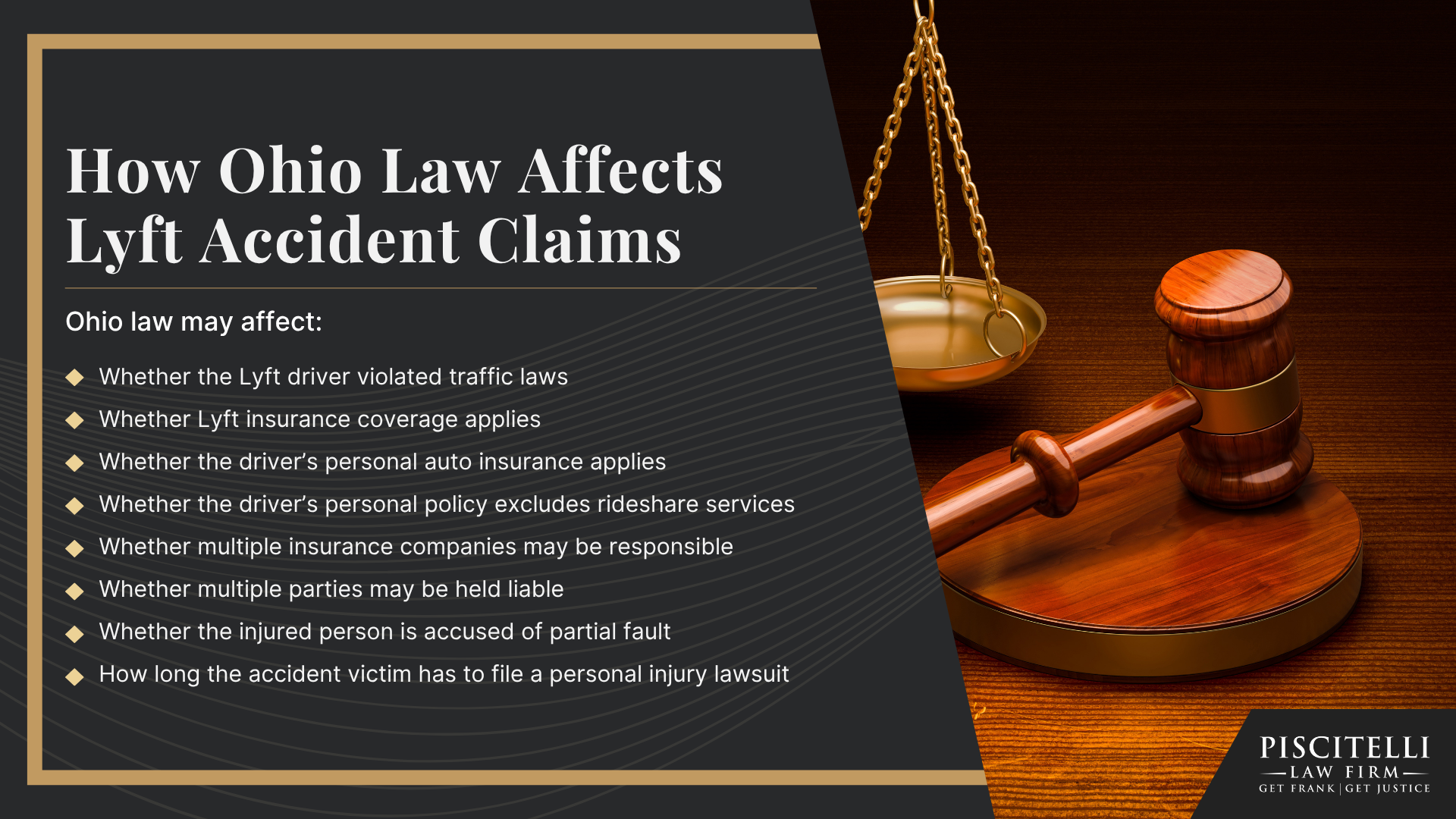
- The driver’s personal policy excluded rideshare activity: Ohio permits personal automobile insurers to exclude losses occurring while a driver is logged into a transportation network company’s platform or providing rideshare services. When the driver’s policy does not provide the legally required liability coverage, the policy maintained by Lyft must provide the required coverage without first requiring a formal denial from the personal insurer.
- Another driver caused the collision: The claim may begin against the negligent driver’s liability policy. Lyft’s policy or available uninsured or underinsured motorist coverage may also require review when the responsible driver has no insurance or insufficient coverage.
- A Lyft passenger was injured: Passengers are ordinarily not responsible for causing a rideshare collision because they are not operating either vehicle. Liability typically centers on the Lyft driver, another motorist, or another party whose conduct contributed to the crash. A passenger’s conduct could become relevant in unusual circumstances, such as intentionally interfering with the driver.
Lyft drivers must provide proof of automobile insurance before being approved to drive.
Ohio does not require every driver to purchase a separate commercial policy personally, because the statutory coverage may be maintained by the driver, Lyft, or a combination of both.
A standard personal policy may still exclude rideshare activity, making the applicable Lyft policy central to the claim.
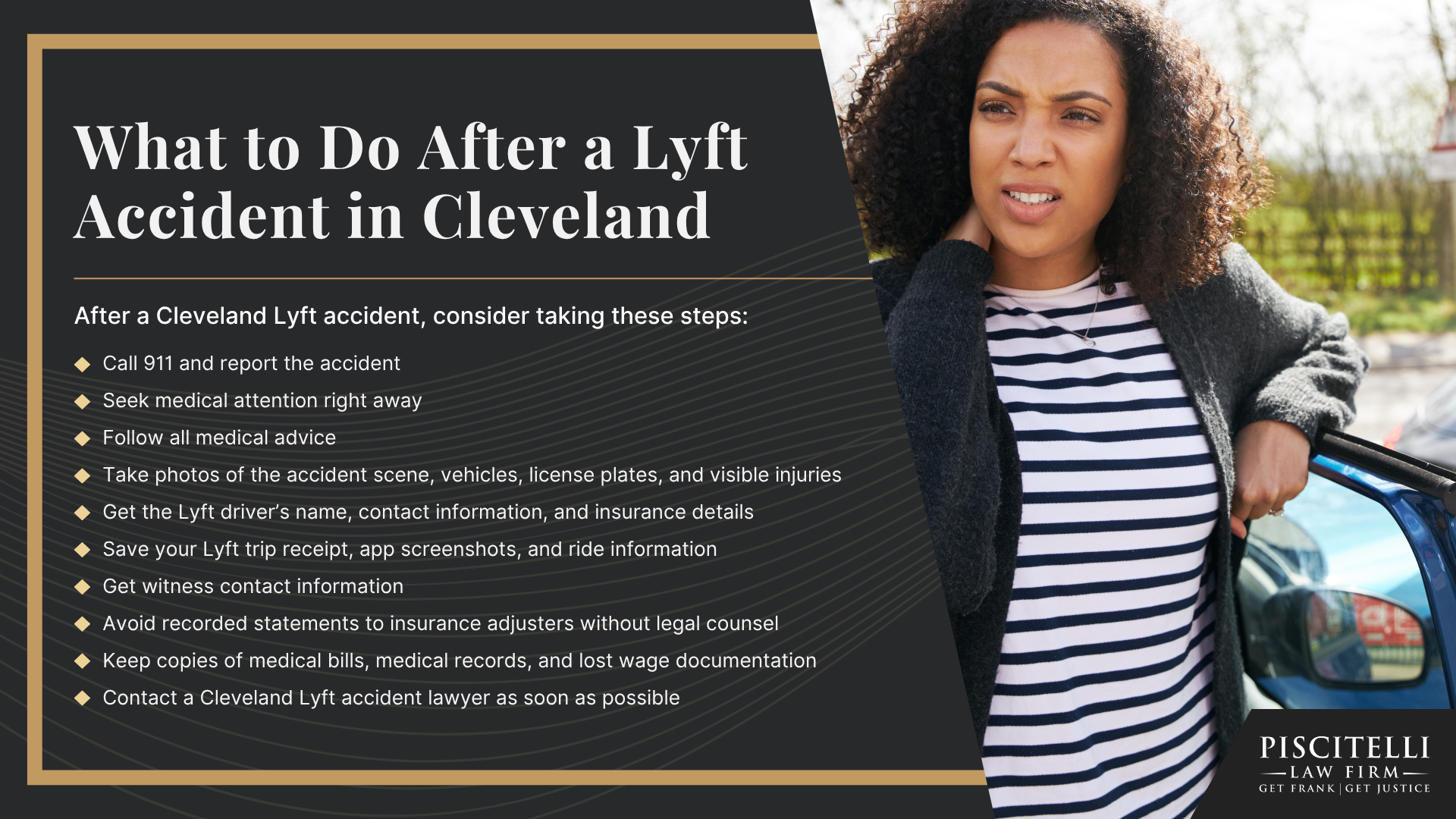
App records and accident-scene evidence should be preserved as soon as possible.
Photographs of the vehicles, license plates, roadway, visible injuries, and insurance cards can help document the collision.
Passengers should also save the Lyft trip receipt, screenshots, driver information, pickup and destination details, messages, and the accident report.
Ohio law requires the driver to disclose whether the driver was logged into the platform or providing rideshare services, and insurers must exchange relevant log-on and log-off information during a coverage investigation.
A Cleveland Lyft accident lawyer can use this information to determine which coverage period applied, identify the insurers involved, and pursue compensation from the appropriate source.