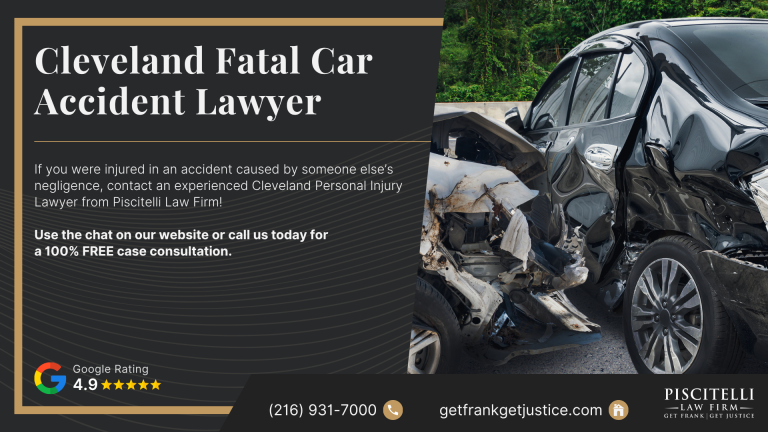
After a fatal accident, the immediate priority is safety, medical response, and documentation.
Call 911, cooperate with law enforcement, and request the report number so there is a clear starting point for the investigation and later insurance issues.
If you are a close family member, avoid detailed conversations with the other driver’s insurer until you have legal guidance, because early statements can be used to dispute party’s negligence and reduce what is paid.
Practical steps that often help surviving family members protect the case include:
- Request the crash report number and the investigating agency’s contact information, then follow up for the final report when it is available.
- Preserve photos, dash-cam footage, texts, and call logs tied to the crash and the hours leading up to it.
- Keep copies of hospital records, bills, and any communications from insurers or investigators, including medical records tied to the deceased person’s final care.
- Avoid signing releases or accepting payments until the family understands whether the claim will be a wrongful death case, a survival action, or both under Ohio law.
- Speak with a wrongful death lawyer if the family needs help tracking deadlines, preserving evidence, or understanding whether the case involves wrongful death, survival claims, or both. (Ohio’s wrongful death action generally must be filed within two years of death.)
- Ask where the vehicle is being stored
- Preserve the decedent’s phone, vehicle data, and dashcam footage if available
- Keep all letters from insurers, hospitals, funeral homes, and investigators
- Save obituary, funeral, and burial expense records
- Identify whether probate has been opened
Gather Evidence for Your Fatal Car Accident Claim
A fatal car accident claim is built on proof of fault and proof of losses.
Because the deceased person cannot tell their story, the case often depends on objective evidence collected early and organized around the defendant’s breach of duty.
Common evidence includes:
- Police reports, witness statements, 911 recordings, and any citations issued
- Scene photos, vehicle damage documentation, and available surveillance or dashcam video
- Cell phone and vehicle data when distraction or speed is disputed
- Toxicology information when impairment is suspected
- Medical records and billing statements tied to the emergency response and final treatment
- Employment and income documentation to prove the financial impact on the surviving family
- Funeral invoices and receipts supporting funeral and burial expenses(Ohio law requires funeral and burial amounts to be set out separately in the verdict).
Evidence may also include event data recorder information, crash reconstruction analysis, autopsy findings, coroner or medical examiner records, traffic-camera footage, and commercial driver logs when relevant.
Common Damages in Fatal Car Accident Claims
In Ohio, fatal crash cases commonly involve two related claims: a wrongful death claim for surviving family members, and a survival action brought on behalf of the deceased’s estate for losses the deceased person could have pursued if they had lived.
The right damages depend on how the case is structured and what the evidence supports.
Damages commonly pursued can include:
- Reasonable funeral and burial expenses (treated as a distinct item in wrongful death verdicts)
- Loss-based damages suffered by survivors under Ohio’s wrongful death statute, including mental anguish and loss of support/services (fact-specific and tied to the family relationship)
- In a survival action, the estate’s damages that accrued before death, which can include medical expenses and other losses the deceased person incurred prior to passing
- Case-specific economic impacts supported by records, such as the household financial disruption tied to the death
A lawyer’s role is to document the losses suffered by the statutory beneficiaries and any separate damages that belong to the deceased person’s estate.
The damages presentation should match the evidence, Ohio law, and the distinct roles of the wrongful death claim and any survival action.