
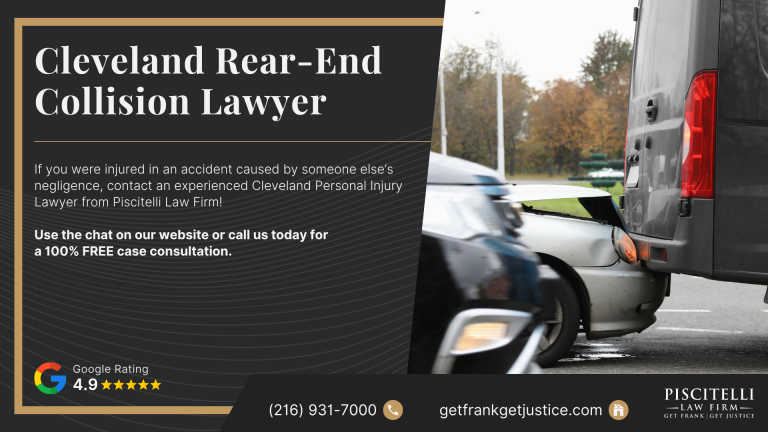
The steps you take after a rear-end collision can affect both your health and a potential injury claim.
Tailgating is a common cause of these crashes, but evidence from the crash scene may be necessary to establish how the collision occurred and who was responsible.
If you are able, document the accident and preserve information that may become important during an insurance claim or lawsuit.
You should also seek medical attention promptly, even if your injuries do not initially seem severe.
Steps to take after a rear-end collision include:
- Call 911 and report the accident. Contact emergency services immediately if anyone is injured or the vehicles are significantly damaged, and make sure the collision is reported to law enforcement.
- Seek medical attention. Get appropriate medical care as soon as possible after the accident, particularly if you experience head, neck, back, or other symptoms that could indicate an injury.
- Document the crash scene. Take photographs or video of the vehicles, damage, roadway, traffic signals, skid marks, and surrounding conditions if you can do so safely.
- Exchange information with the other driver. Obtain the other driver’s name, contact information, driver’s license details, vehicle information, and insurance information.
- Gather witness information. Ask anyone who saw the collision for their name and contact information, as independent witnesses may help establish how the crash happened.
- Preserve medical and financial records. Keep medical records, bills, repair estimates, wage documentation, insurance correspondence, and other records related to the accident and your losses.
- Speak with a rear-end collision lawyer. An attorney can evaluate fault, communicate with insurers, preserve additional evidence, and determine whether filing a lawsuit may be necessary.
Ohio generally imposes a deadline for filing a personal injury lawsuit, and missing the applicable statute of limitations can result in losing the right to pursue the claim.
If a settlement cannot be reached, the legal process may include filing a lawsuit, discovery, expert testimony, settlement negotiations, and potentially trial.
Speaking with an attorney early can provide more time to preserve evidence, evaluate your damages, and determine the appropriate course of action.