A premises liability accident can leave you dealing with serious injuries, medical bills, lost income, pain, and uncertainty about what to do next.
Ohio law may require property owners and occupiers to take reasonable precautions against dangerous property conditions, depending on the injured person’s legal status and the circumstances of the accident.
When a property owner fails to fix a dangerous condition, warn people about a known hazard, or take reasonable steps to prevent injuries, they may be held responsible for the harm caused.
A Mentor premises liability lawyer can investigate what happened, determine whether the property owner was negligent, and pursue compensation from the parties responsible for your injuries.
Piscitelli Law Firm represents injured people in Mentor and throughout Northeast Ohio, helping premises liability victims seek accountability, financial compensation, and the support they need to move forward after a serious injury.
Do You Need Help From an Experienced Mentor Premises Liability Lawyer?
Premises liability accidents can happen at grocery stores, restaurants, shopping centers, apartment complexes, rental properties, hotels, motels, parking lots, sidewalks, office buildings, medical offices, and other properties throughout Mentor and Lake County.
These cases are different from many other personal injury claims because proving liability often depends on showing that a property owner knew, should have known about, or directly created a dangerous condition and failed to correct it.
A premises liability case may involve a wet floor, uneven pavement, broken stairs, poor lighting, snow and ice, negligent security, dog bites, unsafe parking areas, or other hazardous property conditions.
Determining liability often requires reviewing photos, videos, incident reports, maintenance records, inspection logs, witness statements, prior complaints, medical records, and other evidence showing how the injury happened and whether the hazard should have been fixed.
A Mentor premises liability attorney at Piscitelli Law Firm can investigate the accident, identify the parties responsible, and help injured victims pursue recovery for medical expenses, lost income, pain and suffering, and other damages.
Frank Piscitelli has over 30 years of experience helping injured Ohioans pursue justice, and he prepares every serious injury case with the care, attention, and resources it deserves.
You should not have to face medical bills, lost income, pain, and insurance pressure alone after being injured on unsafe property.
Contact Piscitelli Law Firm today for a free consultation, or use the chat feature on this page to get help from a Mentor premises liability attorney.
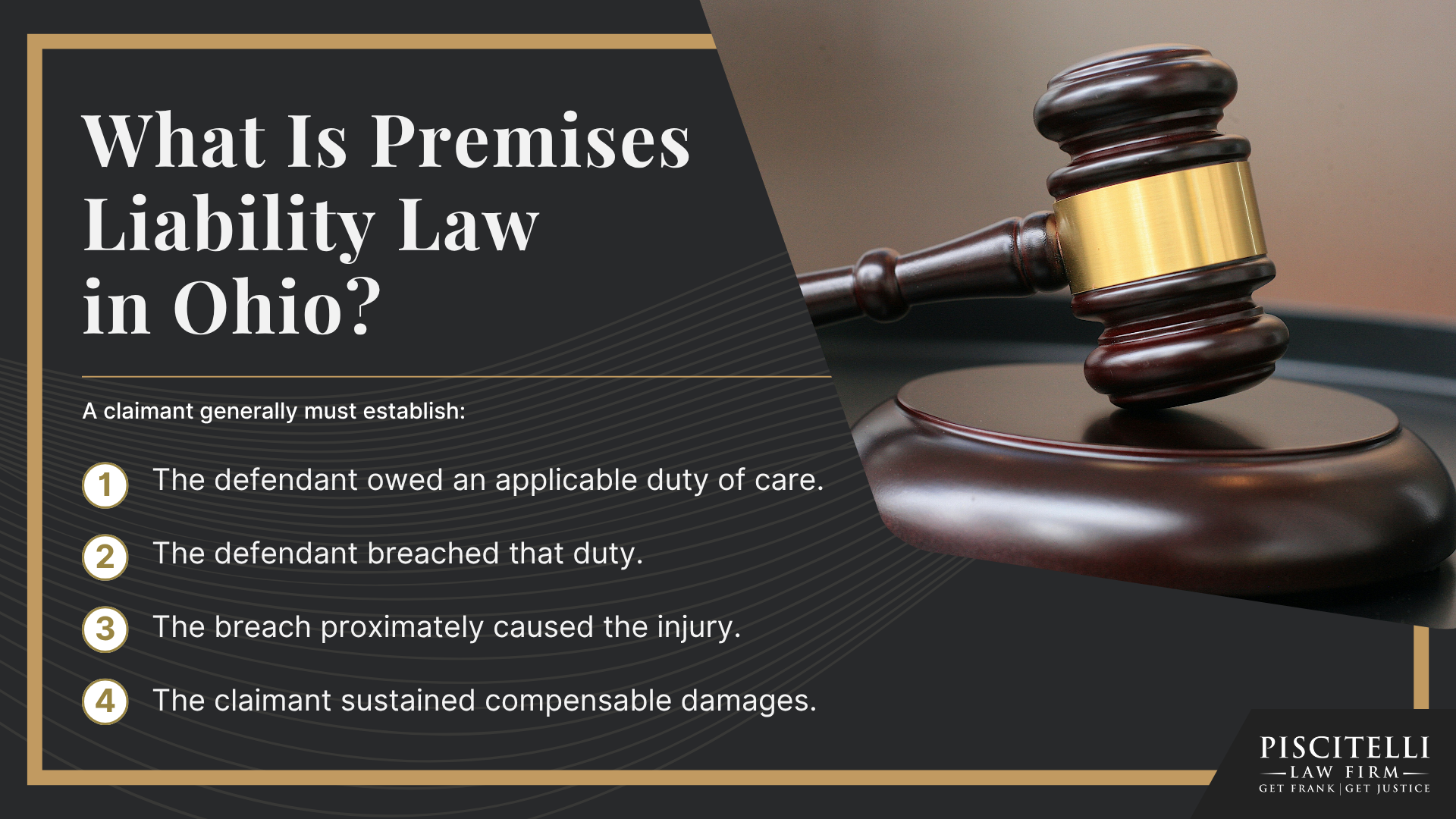
Premises liability is an area of negligence law involving injuries caused by conditions or activities on property possessed or controlled by another person or company.
A claimant generally must establish:
The defendant owed an applicable duty of care.
The defendant breached that duty.
The breach proximately caused the injury.
The claimant sustained compensable damages.
The duty depends partly on whether the injured person was an invitee, licensee, social guest, or trespasser.
It may also depend on who controlled the area, whether the danger was open and obvious, and whether the defendant created or had notice of the condition.
Ohio continues to use entrant classifications to determine the scope of the duty.
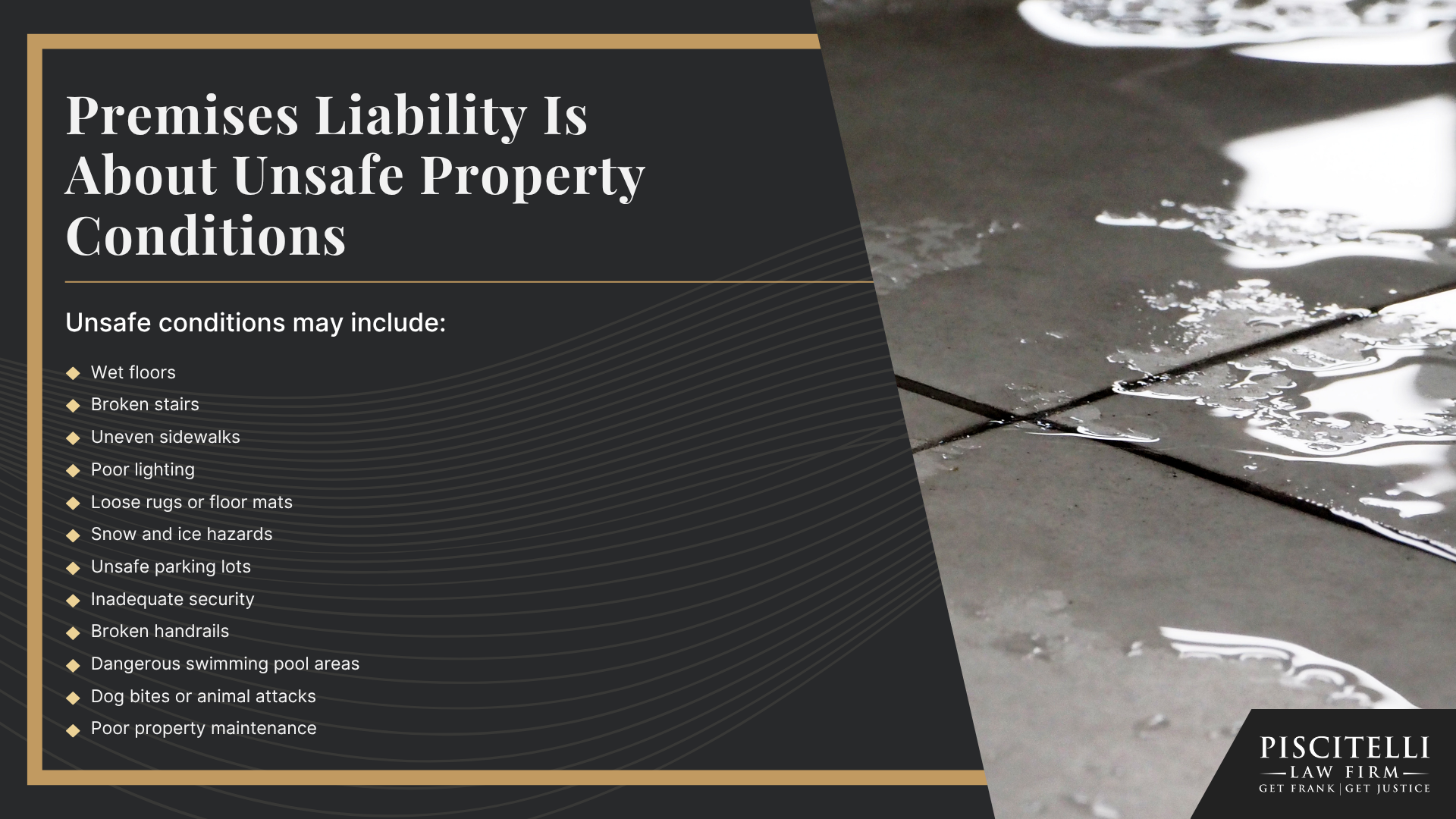
Premises Liability Is About Unsafe Property Conditions
Premises liability cases are about unsafe conditions that should have been fixed, cleaned up, blocked off, or warned about before someone got hurt.
These cases do not require proof that the property owner intended to harm anyone.
They require proof that the property owner’s failure to use reasonable care caused actual damages.
Unsafe conditions may include:
Wet floors
Broken stairs
Uneven sidewalks
Poor lighting
Loose rugs or floor mats
Snow and ice hazards
Unsafe parking lots
Inadequate security
Broken handrails
Dangerous swimming pool areas
Dog bites or animal attacks
Poor property maintenance
Most premises liability cases depend on the facts.
A liability lawyer can review the scene, gather evidence, identify liable parties, and determine whether a premises liability lawsuit may be available.
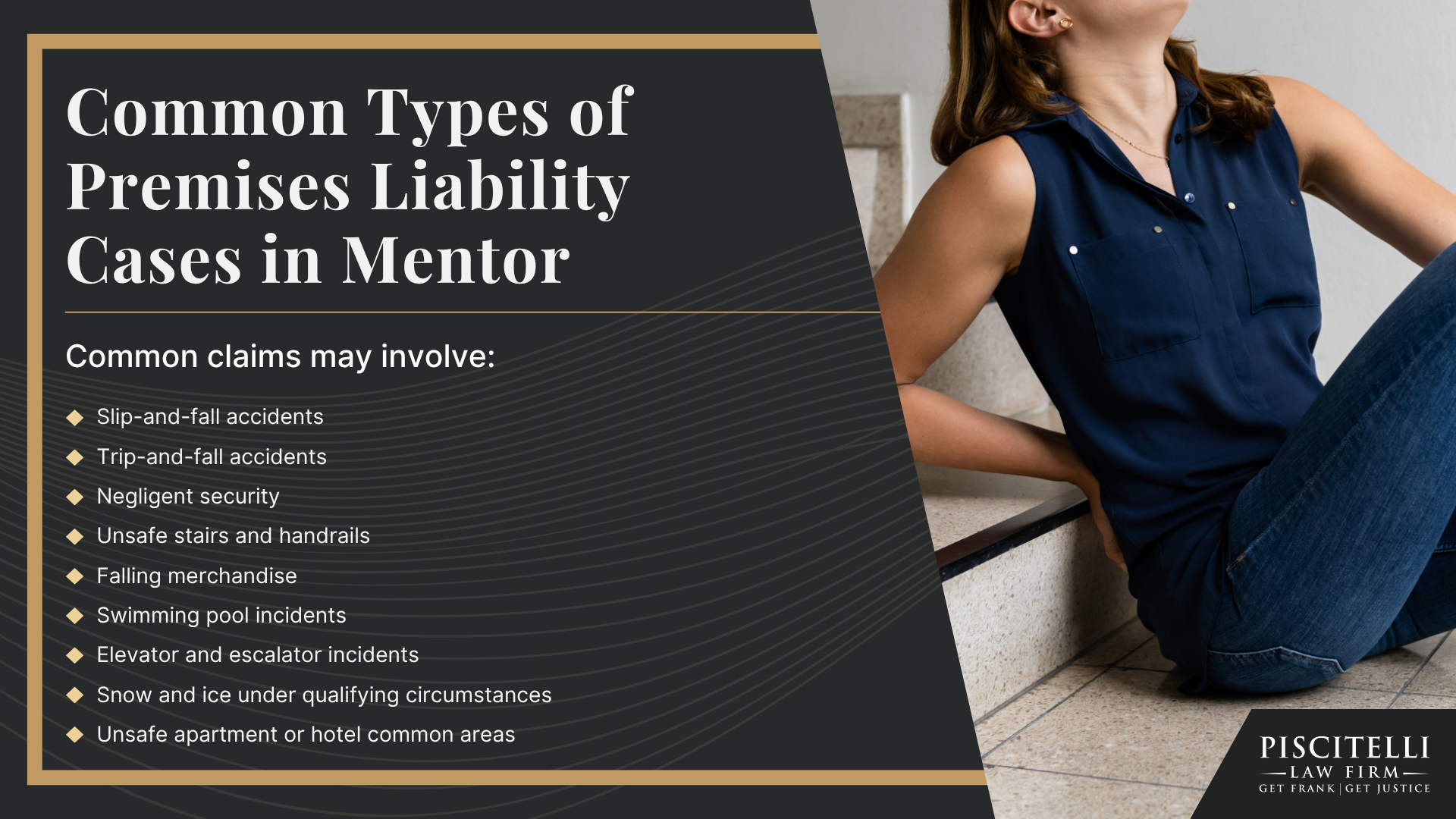
Common Types of Premises Liability Cases in Mentor
Premises liability claims may arise from falls, structural defects, negligent maintenance, inadequate security, pool hazards, defective elevators or escalators, and other unsafe conditions on property controlled by another party.
Common claims may involve:
Slip-and-fall accidents
Trip-and-fall accidents
Negligent security
Unsafe stairs and handrails
Falling merchandise
Swimming pool incidents
Elevator and escalator incidents
Snow and ice under qualifying circumstances
Unsafe apartment or hotel common areas
A dog-bite claim may arise on someone else’s property, but Ohio dog-liability law should be analyzed separately.
Slip and Fall Accidents and Trip and Fall Accidents
Slip and fall accidents are among the most common types of premises liability cases.
A slip and fall may happen when a person loses traction because of a wet floor, spilled liquid, snow, ice, grease, loose flooring, or another unsafe surface.
A slip and fall accident may occur in:
Grocery stores
Restaurants
Retail stores
Apartment buildings
Hotels
Parking lots
Medical offices
Sidewalks
Office buildings
Shopping centers
A property owner may be liable if they knew or should have known about the hazard and failed to fix it or warn visitors.
A Mentor premises liability lawyer can investigate whether the property owner’s negligence caused the fall accident.
Trip-and-fall claims may involve uneven pavement, raised thresholds, broken stairs, damaged flooring, loose carpeting, debris, or an unexpected change in elevation.
Liability depends on control, the visibility of the condition, notice, and whether the hazard was open and obvious.
Negligent Security Incidents
Negligent security is a premises liability theory involving injuries caused by third-party criminal acts.
Ohio does not make a business or property owner responsible for every assault, robbery, or shooting that occurs on the premises.
The claimant generally must show that the defendant possessed or controlled the area, knew or should have known of a substantial and foreseeable risk, failed to take reasonable precautions, and contributed to the injury.
Ohio courts require a demanding totality-of-the-circumstances analysis when deciding whether criminal conduct was foreseeable.
General neighborhood crime or isolated, dissimilar incidents may not be sufficient.
Dog Bites and Animal Attacks
Ohio dog-injury claims may proceed under the state’s strict-liability statute, common-law negligence, or both.
Ohio Revised Code Section 955.28 generally imposes strict liability on a dog’s owner, keeper, or harborer for injury, death, or property loss caused by the dog, subject to statutory exceptions involving certain criminal conduct, trespassing, or teasing, tormenting, or abusing the dog.
A statutory claimant generally must prove ownership, keepership, or harborship, causation, and damages.
A landlord, mobile-home community, or property owner is not automatically a “harborer” merely because a tenant or resident owns a dog.
In a June 17, 2026 decision, the Supreme Court of Ohio held that harborship requires sheltering, protecting, or exercising control over the dog.
These claims may involve apartment pools, hotel pools, private pools, community pools, fitness centers, or other recreational properties.
Swimming pool accidents may involve:
Lack of fencing or barriers
Unsafe gates
Poor supervision
Slippery pool decks
Missing safety equipment
Dangerous diving areas
Poor lighting
Failure to warn about hazards
Entrapment or drain-related injuries
When property owners fail to maintain a reasonably safe pool area, injured people and grieving families may have legal options.
A premises liability lawyer can investigate whether the property owner’s failure caused the injury.
Elevator and Escalator Accidents
Elevator and escalator accidents can happen in office buildings, hotels, medical facilities, retail stores, apartment buildings, and commercial properties.
These accidents may involve sudden drops, misleveling, door malfunctions, abrupt stops, defective escalator steps, or poor maintenance.
Potentially liable parties may include property owners, business owners, maintenance companies, repair contractors, or equipment manufacturers.
Determining liability may require maintenance records, inspection logs, repair history, surveillance footage, and expert review.
A Mentor premises liability attorney can gather evidence and determine whether poor maintenance, negligent repair, or another unsafe condition caused the accident.
Snow and Ice Accidents
Ohio generally does not require a homeowner or business occupier to remove or warn about natural accumulations of snow and ice.
Ohio courts reason that people are ordinarily expected to recognize and protect themselves against the inherent risks of naturally accumulated winter precipitation.
A claim may still require investigation when evidence suggests:
The ice or snow was an unnatural accumulation
Defective drainage, a downspout, plowing, or another condition altered the accumulation
The defendant had superior knowledge that the condition was substantially more dangerous than an invitee should reasonably expect
A contract or statutory duty imposed a separate obligation
The defendant’s own conduct created or worsened the hazard
Evidence must connect a legally actionable condition to the fall.
Injuries at Stores, Restaurants, and Shopping Centers
Stores, restaurants, and shopping centers in Mentor must take reasonable steps to keep customers safe.
A business owner may be responsible when poor property maintenance, unsafe walkways, spills, cluttered aisles, defective flooring, or inadequate security causes injuries.
Accidents at commercial properties may involve:
Wet floors
Spilled food or drinks
Broken shelves
Loose floor mats
Falling merchandise
Unsafe entrances
Parking lot hazards
Poor lighting
Negligent security
Snow and ice near entrances
A premises liability claim against a business often requires evidence showing that the business knew or should have known about the hazard.
Photos, videos, incident reports, witness statements, inspection logs, and maintenance records may be important.
Injuries at Apartment Complexes and Rental Properties
Ohio landlords have statutory duties that include complying with applicable health and safety codes, making necessary repairs, keeping common areas safe and sanitary, and maintaining supplied elevators and specified building systems in safe working order.
A rental-property claim may depend on:
Whether the landlord controlled the area
Whether the condition was in a common area or tenant-controlled unit
Whether the landlord received notice
The lease and property-management agreements
Applicable housing or building codes
Whether the landlord had a reasonable opportunity to repair the condition
Potential evidence may include repair requests, tenant complaints, inspection reports, work orders, lease provisions, management contracts, and photographs.
Injuries at Hotels, Motels, and Parking Lots
Hotel and parking-area claims may involve uneven pavement, defective curbs, inadequate lighting, snow or ice, broken stairs, access-control failures, or other conditions within the defendant’s control.
Guests may suffer injuries from falls, assaults, broken stairs, unsafe walkways, defective locks, poor lighting, or negligent security.
Parking lots are common locations for premises liability accidents because they often involve vehicle traffic, pedestrians, uneven pavement, snow, ice, poor lighting, and limited visibility.
A person injured in a hotel, motel, or parking lot may have a claim when the property owner or operator created a dangerous condition, knew about it, or should have discovered and addressed it through reasonable care.
A Mentor premises liability lawyer can determine whether the hotel owner, business owner, maintenance company, parking lot operator, or another party may be responsible.
Public Sidewalks and Government Property
A private property owner is not ordinarily liable merely because the person owns property next to a defective public sidewalk.
A city ordinance requiring an abutting owner to maintain a sidewalk does not necessarily create a civil duty to pedestrians.
Potential exceptions may involve a condition created or negligently maintained by the property owner, a condition kept for the owner’s private use or benefit, or another specific legal duty.
Claims involving a city, county, township, school district, or another political subdivision may be affected by Ohio’s governmental-immunity statute and its exceptions.
Claims against the State of Ohio may need to be filed in the Ohio Court of Claims.
Who May Be Liable in a Mentor Premises Liability Case?
More than one party may be liable in a Mentor premises liability case.
Liability depends on who controlled the property, who had the legal duty to maintain it, and whose negligence caused the injury.
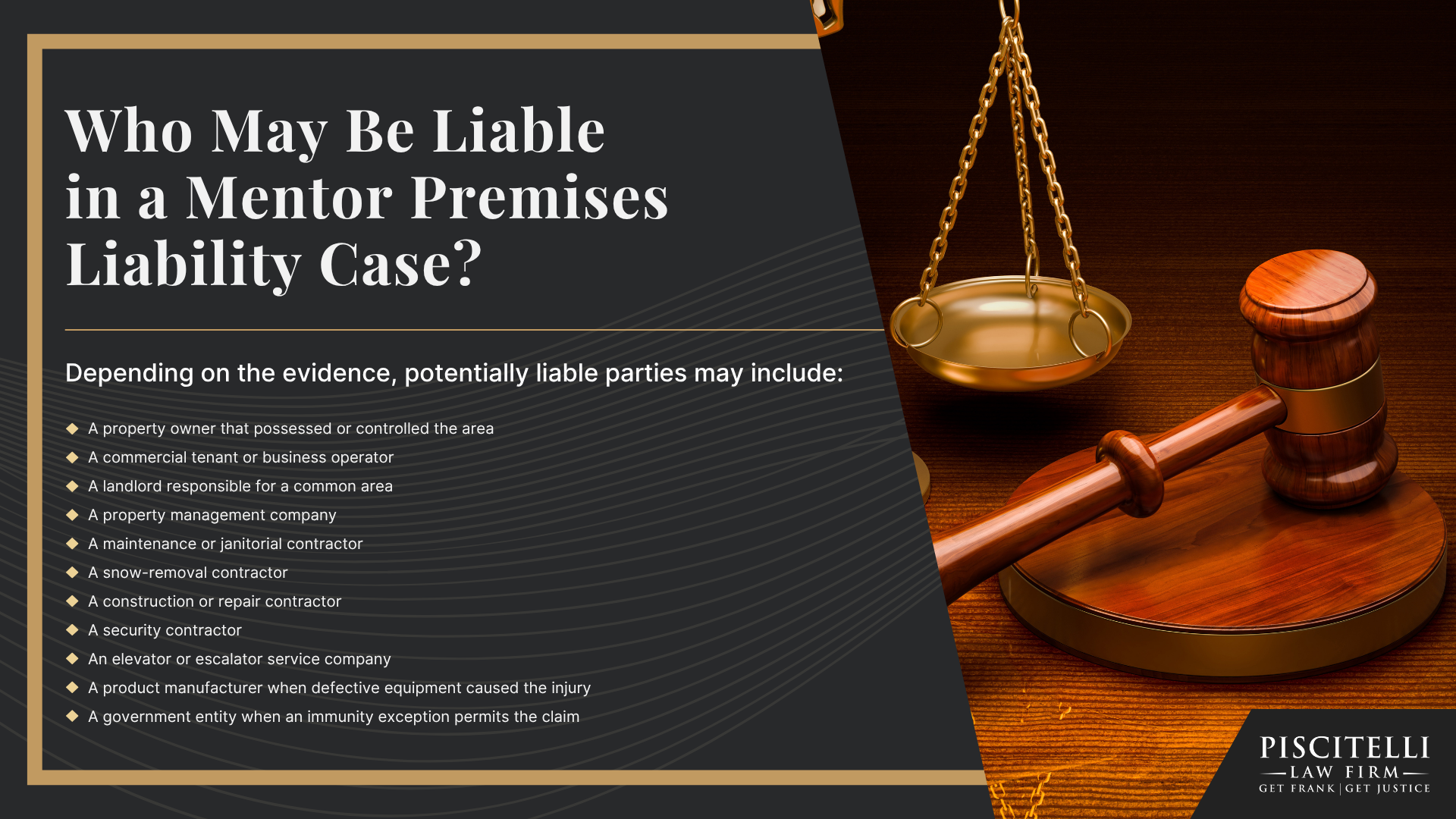
Depending on the evidence, potentially liable parties may include:
A property owner that possessed or controlled the area
A commercial tenant or business operator
A landlord responsible for a common area
A property management company
A maintenance or janitorial contractor
A snow-removal contractor
A construction or repair contractor
A security contractor
An elevator or escalator service company
A product manufacturer when defective equipment caused the injury
A government entity when an immunity exception permits the claim
A Mentor premises liability lawyer can investigate the facts and determine who may be held liable for your injuries.
Property Owner Duties Under Ohio Law
Under Ohio personal injury law, the duty a property owner owes generally depends on the injured person’s legal status on the premises.
Business customers and others who enter property by invitation for a purpose benefiting the owner are generally considered invitees, and property owners owe invitees a duty of ordinary care to maintain the premises in a reasonably safe condition.
Licensees and trespassers are generally owed more limited duties, although the specific circumstances can affect the analysis.
Ohio law generally requires a landowner to refrain from willful, wanton, or reckless conduct likely to injure a licensee or trespasser.
Property owners may also have separate duties imposed by statute, contract, or their control over a particular area of the premises.
For example, Ohio landlords must comply with applicable health and safety codes, make necessary repairs, keep common areas safe and sanitary, and maintain specified building systems in safe working order.
A property owner is not automatically held legally responsible whenever someone is injured on the premises.
A premises liability claim requires an analysis of the injured person’s legal status, the owner’s control over the property, the nature of the dangerous condition, the owner’s knowledge or notice of the hazard, and any defenses that apply.
Open and Obvious Hazards Under Ohio Law
Ohio law recognizes the open-and-obvious doctrine in premises liability cases.
Under the doctrine, a property owner generally does not have a duty to warn or protect a lawful visitor from a dangerous condition that is readily observable to a person exercising ordinary care.
The analysis focuses on whether the condition was objectively observable under the circumstances, not necessarily whether the injured person actually saw it before the accident.
An open and obvious hazard can prevent a claimant from establishing the duty required for an ordinary negligence claim.
Whether the doctrine applies depends on the condition itself and the circumstances surrounding the accident.
When Property Owners May Be Responsible for Unsafe Conditions
Property owners may be responsible when they fail to act reasonably and their negligence causes injury.
In many premises liability claims, the key question is whether the property owner knew or should have known about the dangerous condition.
A property owner may be liable when:
The property owner created the hazard
Employees knew about the hazard but failed to fix it
The hazard existed long enough that reasonable inspections should have found it
The property owner failed to warn visitors
The property owner failed to repair broken stairs, lighting, flooring, or handrails
Poor property maintenance caused the injury
Inadequate security allowed foreseeable harm
The property owner’s failure caused actual damages
Experienced premises liability lawyers can help determine whether the property owner’s negligence led to the accident.
Notice and Knowledge of a Dangerous Property Condition
Notice is one of the most important issues in many premises liability cases.
A property owner may argue that they did not know about the unsafe condition before the accident occurred.
Notice may be shown by evidence that:
The property owner created the hazard
Employees saw the hazard before the accident
Customers or tenants complained about the hazard
The hazard existed for a long time
Similar incidents happened before
Inspection logs were missing or incomplete
Maintenance records show delayed repairs
Video footage shows when the hazard appeared
A premises liability lawyer can gather evidence to show whether the property owner knew or should have known about the hazard and failed to take reasonable steps to protect visitors.
What If You Were Partly at Fault for the Accident?
Insurance companies often try to blame the injured party in premises liability cases.
They may argue that you should have seen the hazard, were distracted, wore unsafe shoes, ignored warning signs, or failed to use reasonable care.
Ohio uses a comparative fault rule.
Under Ohio Revised Code Section 2315.33, compensatory damages may be reduced by the injured person’s percentage of fault, and recovery may be barred if the injured person’s fault is greater than the combined fault of the other parties.
Being partly at fault does not always mean you have no case.
A Mentor premises liability lawyer can push back against disputed liability arguments and fight for a fair settlement based on the evidence.
What To Do After Being Injured on Someone Else’s Property
What you do after a premises liability accident can affect both your health and your legal options.
Your first priority should be getting medical attention and making sure the incident is documented.
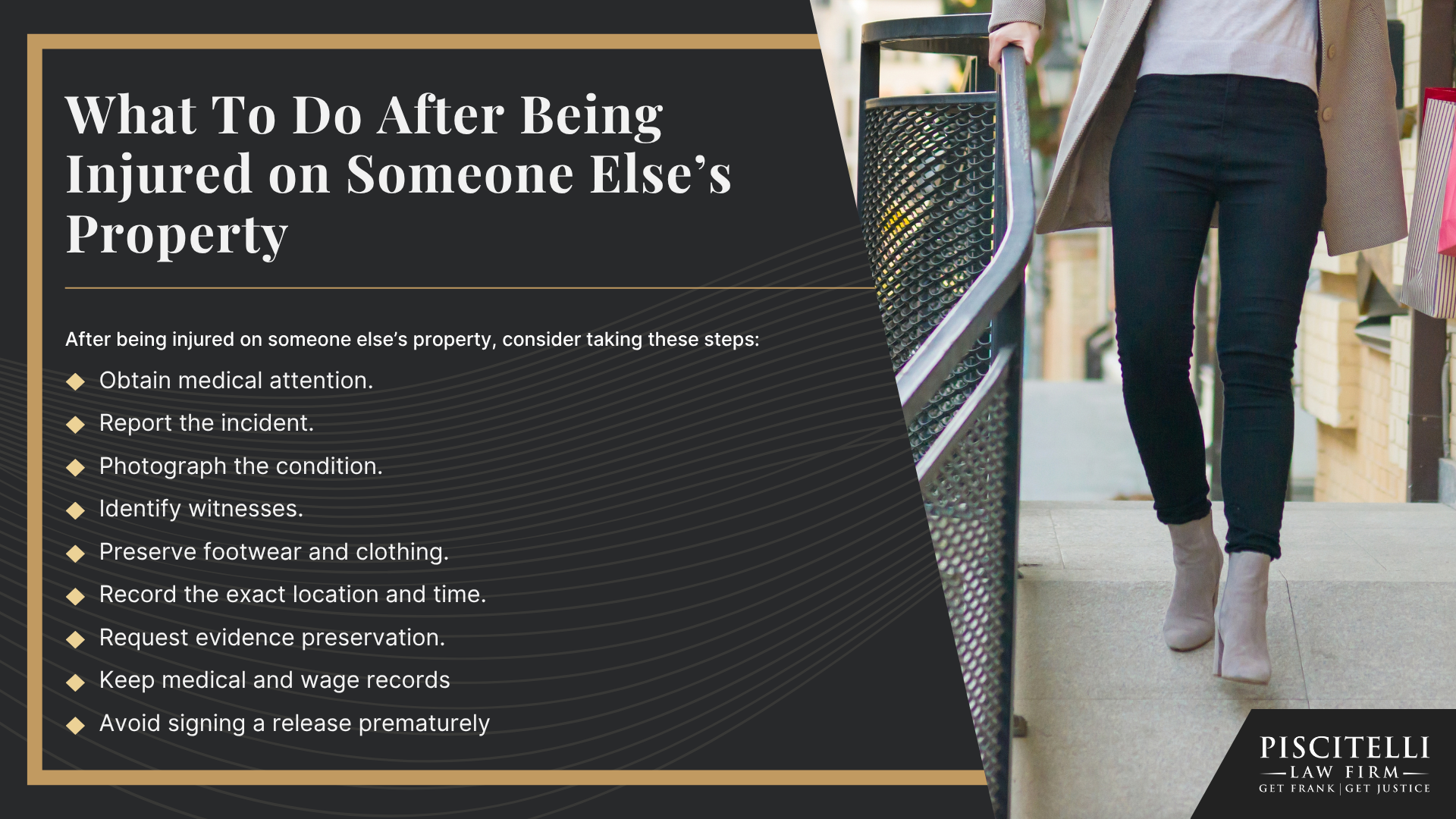
After being injured on someone else’s property, consider taking these steps:
Obtain medical attention. Address urgent injuries and follow the treatment instructions provided.
Report the incident. Notify the owner, manager, landlord, or business and request a written incident report.
Photograph the condition. Capture the hazard, surrounding area, lighting, warnings, and possible causes.
Identify witnesses. Record names, phone numbers, and what each person observed.
Preserve footwear and clothing. Do not clean, repair, discard, or alter them.
Record the exact location and time. Identify the aisle, entrance, staircase, parking area, unit, or other specific area.
Request evidence preservation. Ask that surveillance footage, inspection records, and incident documents be retained.
Keep medical and wage records. Preserve bills, discharge instructions, employment records, and receipts.
Avoid signing a release prematurely. Consider obtaining legal advice before resolving the claim.
The sooner you act, the easier it may be to preserve evidence before the property owner repairs the hazard or security footage is erased.
Evidence That Can Help Support a Premises Liability Claim
Evidence is critical in premises liability cases because property owners and insurance companies often dispute what happened, who was responsible, and whether the hazard should have been fixed.
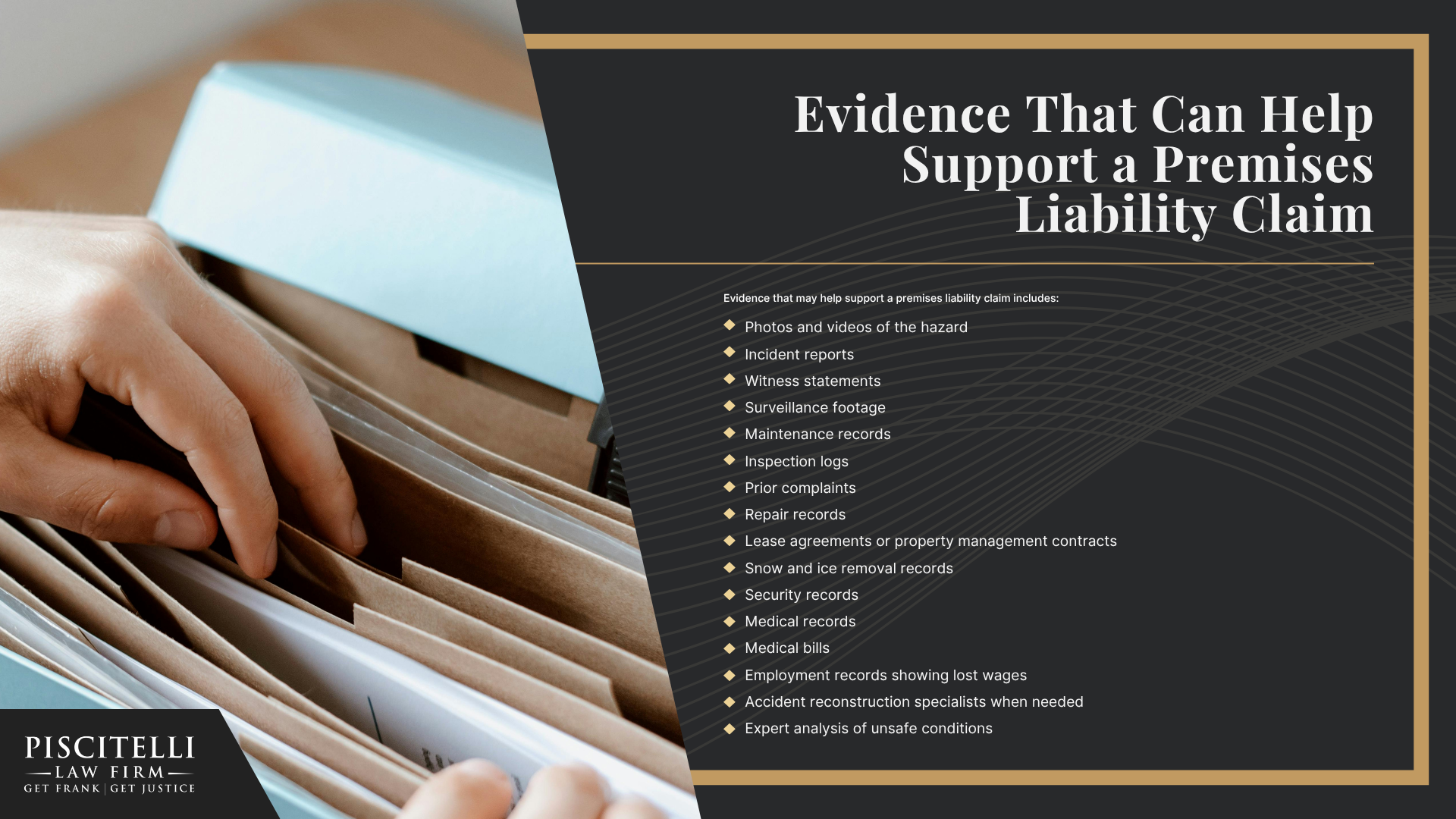
Evidence that may help support a premises liability claim includes:
Photos and videos of the hazard
Incident reports
Witness statements
Surveillance footage
Maintenance records
Inspection logs
Prior complaints
Repair records
Lease agreements or property management contracts
Snow and ice removal records
Security records
Medical records
Medical bills
Employment records showing lost wages
Accident reconstruction specialists when needed
Expert analysis of unsafe conditions
A Mentor premises liability attorney can gather evidence, identify liable parties, and build a claim for maximum compensation.
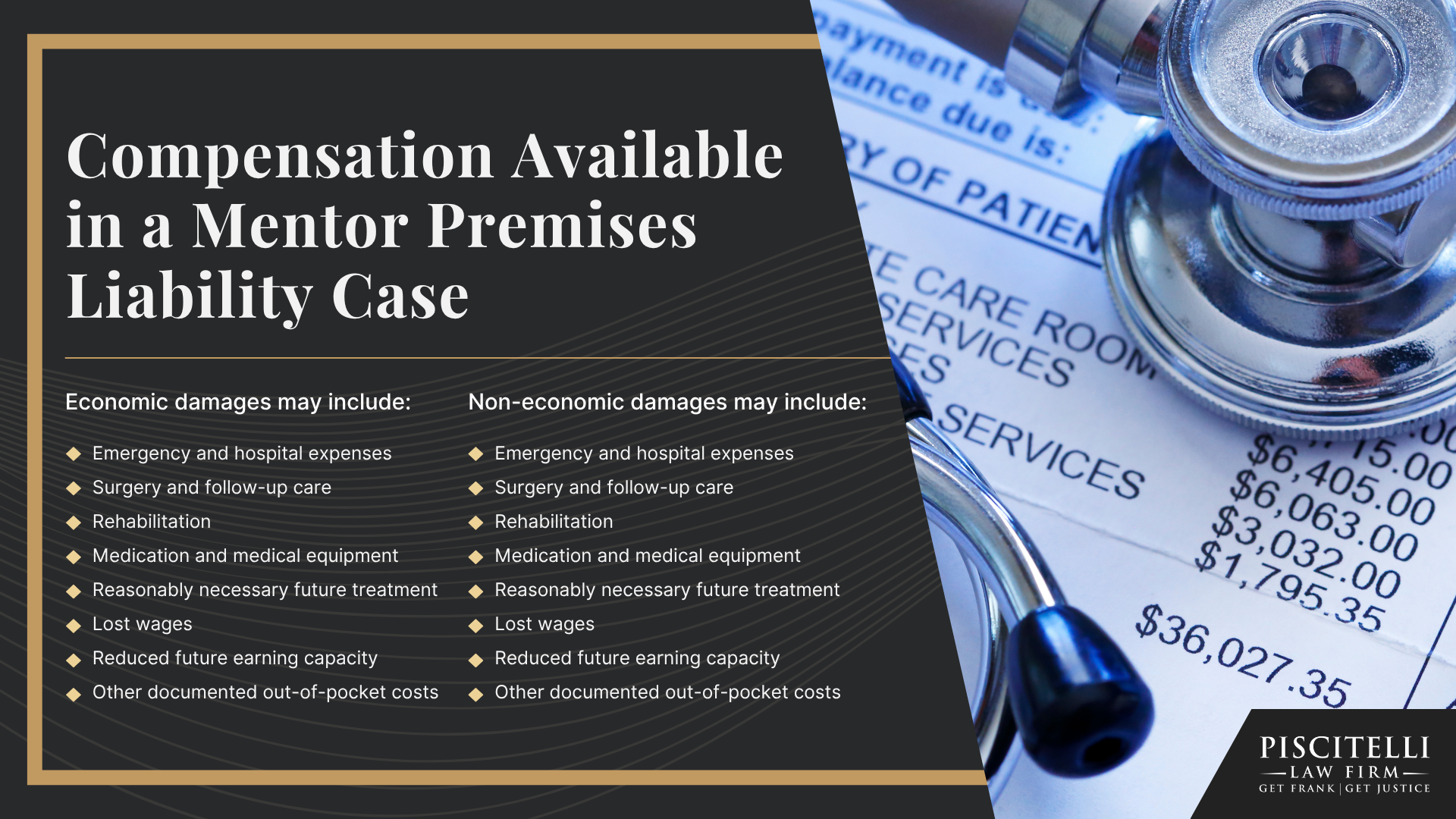
Compensation Available in a Mentor Premises Liability Case
Compensation depends on liability, comparative fault, medical evidence, insurance coverage, and the documented consequences of the injury.
Economic damages may include:
Emergency and hospital expenses
Surgery and follow-up care
Rehabilitation
Medication and medical equipment
Reasonably necessary future treatment
Lost wages
Reduced future earning capacity
Other documented out-of-pocket costs
Noneconomic damages may include:
Pain and suffering
Emotional distress
Disability
Disfigurement
Loss of enjoyment of life
Loss of consortium when legally available
How Long Do You Have To File a Premises Liability Lawsuit in Ohio?
Ohio has strict deadlines for premises liability lawsuits.
Under Ohio Revised Code Section 2305.10, actions for bodily injury or injury to personal property generally must be brought within two years after the cause of action accrues.
This deadline may apply to many premises liability claims, including slip and fall accidents, negligent security claims, dog bite cases, and other personal injury cases involving unsafe conditions.
The exact deadline can depend on the facts, the type of claim, the injured person’s age, and whether a government entity or wrongful death claim is involved.
Waiting too long can hurt your case.
Evidence may disappear, witnesses may become harder to find, and property owners may repair the dangerous condition before it is documented.
Speaking with a premises liability lawyer early can help protect your claim.
Piscitelli Law Firm: Talk to a Mentor Premises Liability Lawyer Today
Premises liability claims often depend on proving negligence through evidence showing who controlled the property, how the dangerous condition developed, and whether the responsible party knew or should have known about the hazard.
Frank Piscitelli can investigate the accident, obtain maintenance and inspection records, preserve surveillance footage, interview witnesses, and evaluate whether the evidence supports a claim against a property owner, business, landlord, contractor, or other responsible party.
An injured person must also show that the alleged negligence caused the accident and that they suffered actual damages, such as medical expenses, lost income, pain and suffering, or permanent impairment.
Piscitelli Law Firm can document those losses and pursue the compensation available under Ohio law to help clients recover damages supported by the evidence.
Piscitelli Law Firm handles accepted personal injury cases on a contingency fee basis, meaning clients do not pay upfront attorney fees and legal fees are owed only if compensation is recovered, subject to the written fee agreement.
If you were injured because of an unsafe condition on someone else’s property in Mentor, contact Piscitelli Law Firm today for a free consultation or use the chat feature on this page to discuss your potential claim.
A property owner may be liable for injuries when the owner or other person controlling the premises owed the injured person a legal duty and failed to meet that duty.
The duty can depend on the injured person’s legal status, who controlled the property, whether the defendant created or knew about the dangerous condition, and whether the hazard should have been discovered through reasonable care.
Ohio law also recognizes more limited duties toward trespassers under Ohio Revised Code § 2305.402.
To recover compensation, the injured person generally must show that the defendant’s breach of duty proximately caused the injury and resulting damages.
Common premises liability cases involve injuries caused by dangerous property conditions, inadequate maintenance, or failures to address known hazards.
Experienced premises liability attorneys may investigate the property, determine who controlled the area, review prior complaints, and gather evidence showing how long the dangerous condition existed.
At Piscitelli Law Firm, Frank Piscitelli evaluates the circumstances of each accident to determine whether a property owner, business, landlord, contractor, or another party may be legally responsible.
Common premises liability cases may involve:
Slip and fall accidents
Trip and fall accidents
Negligent security
Unsafe stairs or handrails
Snow and ice hazards
Swimming pool accidents
Elevator or escalator accidents
Dangerous apartment common areas
Poorly maintained parking lots or sidewalks
Falling merchandise or other unsafe store conditions
After being injured on another person’s property, you should seek medical attention, report the incident to the property owner or manager, ask for an incident report, and take photos or videos of the unsafe condition.
You should also get witness information, save medical bills and treatment records, and avoid giving recorded statements to insurance companies before understanding your legal options.
A Mentor premises liability lawyer can help preserve evidence and protect your right to recover compensation.
A premises liability lawsuit may seek compensation for medical bills, lost wages, lost income, pain and suffering, mental anguish, rehabilitation, property damage, and future medical costs.
Piscitelli Law Firm can evaluate your losses and fight for fair compensation from negligent property owners and other liable parties.
Piscitelli Law Firm handles accepted personal injury claims through a contingency fee arrangement.
Clients generally do not pay upfront attorney fees, and legal fees are collected only if compensation is recovered, subject to the written fee agreement.
The contingency fee arrangement allows an injured person to pursue a premises liability claim without paying hourly attorney fees while the case is being investigated and litigated.
Frank Piscitelli can explain the fee agreement, potential case expenses, and how fees are calculated during a free consultation.
Most premises liability cases settle within approximately 6 to 18 months, although the timeline depends on the facts and disputes involved.
A relatively simple case with clear liability, documented injuries, and sufficient insurance coverage may resolve more quickly.
Complex cases involving multiple defendants, disputed responsibility, severe injuries, extensive medical treatment, or expert testimony may take longer than 18 months to resolve.
A case may also take considerably longer if settlement negotiations are unsuccessful and a lawsuit proceeds through discovery and trial.
A premises liability claim may seek economic damages for measurable losses such as medical expenses, lost income, future treatment, and reduced earning capacity.
Non-economic damages address intangible harm from injuries, including pain and suffering, emotional distress, disability, disfigurement, and loss of enjoyment of life.
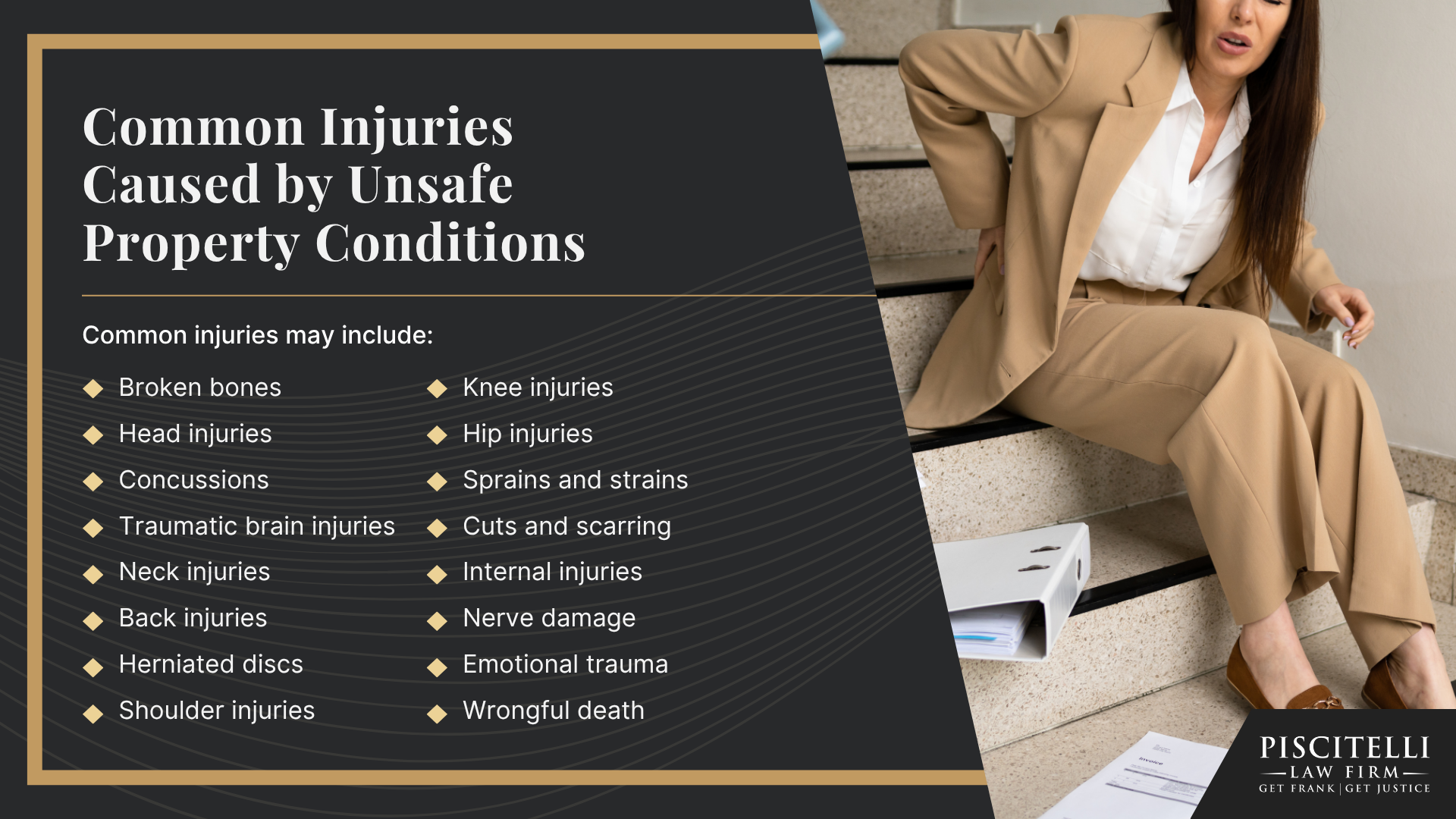
When unsafe property conditions allegedly contribute to a fatal accident, the decedent’s personal representative may bring a wrongful death action for the benefit of qualifying family members.
Ohio wrongful death damages may include reasonable funeral and burial expenses, lost financial support, loss of services, loss of companionship and other forms of society, prospective inheritance, and mental anguish.
Member of the Ohio State Bar Association since 1993. With 30+ years of legal experience, Attorney Frank Piscitelli has secured over $55 million in compensation for Ohio injury victims, car accident victims, and surviving family members of Ohio wrongful death victims.
Legally Reviewed
This article has been written and reviewed for legal accuracy and clarity by the team of writers and attorneys at Piscitelli Law Firm and is as accurate as possible. This content should not be taken as legal advice from an attorney. If you would like to learn more about our owner and experienced Ohio personal injury lawyer, Frank Piscitelli, you can do so here.
Fact-Checked
Piscitelli Law Firm does everything possible to make sure the information in this article is up to date and accurate. If you need specific legal advice about your case, contact us. This article should not be taken as advice from an attorney.