Injured in a Spinal Cord Accident in Mentor, Ohio?
A spinal cord injury can be a devastating injury that affects mobility, independence, employment, and long-term health.
Survivors may need surgery, rehabilitation, assistive equipment, home modifications, ongoing medical treatment, and help with daily activities.
When another person, business, property owner, healthcare provider, or other party caused the injury through legally actionable conduct, they may be held accountable for the resulting harm.
A Mentor spinal cord injury lawyer can investigate how the injury occurred, document current and future losses, and identify the parties and insurance coverage that may be responsible.
Piscitelli Law Firm helps injured people pursue claims to recover compensation for medical expenses, lost income, reduced earning capacity, pain and suffering, long-term care, and other damages supported by the evidence.
Have You or a Loved One Suffered a Spinal Injury Due to Negligence?
Spinal cord injuries can result from vehicle crashes, falls, acts of violence, sports accidents, medical negligence, and other traumatic events.
Vehicle crashes are the leading cause of traumatic spinal cord injuries, followed by falls, while gunshot wounds, other acts of violence, and sports injuries also account for a significant number of cases.
Spinal cord injury survivors may face paralysis, chronic physical pain, extensive medical costs, lost income, and a long-term need for rehabilitation, assistive equipment, home modifications, and financial support.
A negligence claim generally requires proof that another party owed a duty of care, breached that duty, and caused the injury and resulting damages.
An attorney can assist with proving negligence by gathering evidence, reviewing medical records, consulting specialists, and documenting current and future care needs.
Spinal cord injury cases require specialized knowledge of medical care as well as strong communication and negotiation skills when presenting complex injuries and pursuing the full compensation supported by the evidence.
Frank Piscitelli has over 30 years of experience representing injured Ohioans.
Piscitelli Law Firm handles accepted personal injury cases on a contingency fee basis, meaning clients do not pay upfront attorney fees and legal fees are owed only if compensation is recovered, subject to the written fee agreement.
Contact Piscitelli Law Firm today for a free consultation, or use the chat feature on this page to get help from a Mentor spinal cord injury attorney.
A spinal cord injury is damage to the bundle of nerves and nerve fibers that carries signals between the brain and the body.
The injury may result from direct trauma to the cord or damage to surrounding vertebrae and tissues that compresses or injures the cord.
The effects depend on the neurological level and severity of the injury.
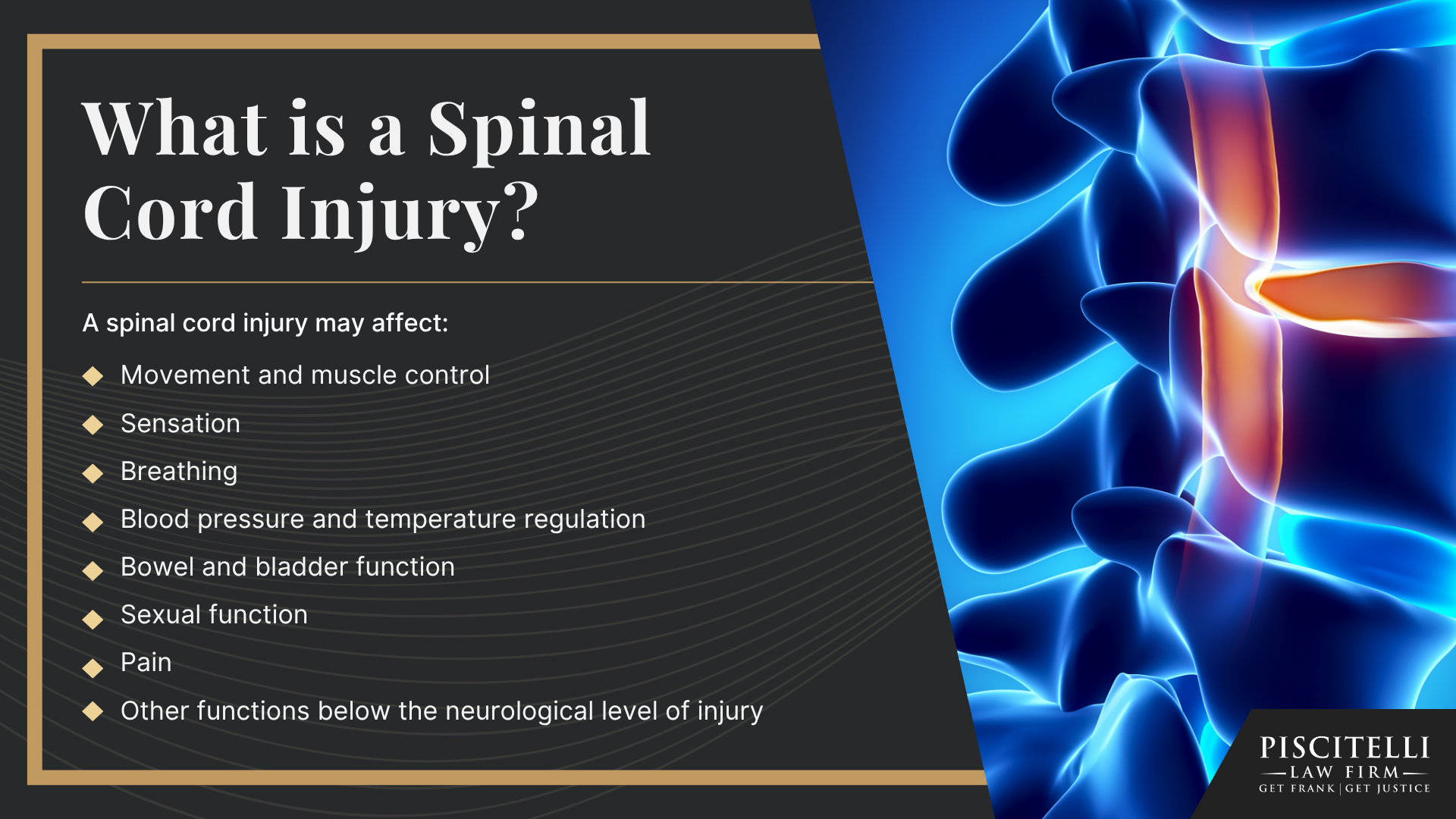
A spinal cord injury may affect:
Movement and muscle control
Sensation
Breathing
Blood pressure and temperature regulation
Bowel and bladder function
Sexual function
Pain
Other functions below the neurological level of injury
A spinal cord injury is different from a general back or neck injury.
A vertebral fracture, herniated disc, ligament injury, or soft-tissue condition may be serious without damaging the spinal cord.
Medical records, neurological examinations, imaging, operative reports, rehabilitation records, and functional assessments may be needed to document the injury and its effects.
Spinal cord injuries are often described by the level and severity of spinal cord damage.
The level refers to where the spinal cord injury occurred, such as the cervical spine, thoracic spine, lumbar spine, or sacral spine.
The severity refers to whether the injury is complete or incomplete.
The National Institute of Neurological Disorders and Stroke explains that injuries higher on the spinal cord generally affect more of the body, while lower injuries may affect the lower body and legs.
Upper spinal cord injuries may cause tetraplegia or quadriplegia, while lower spinal cord injuries may cause paraplegia.
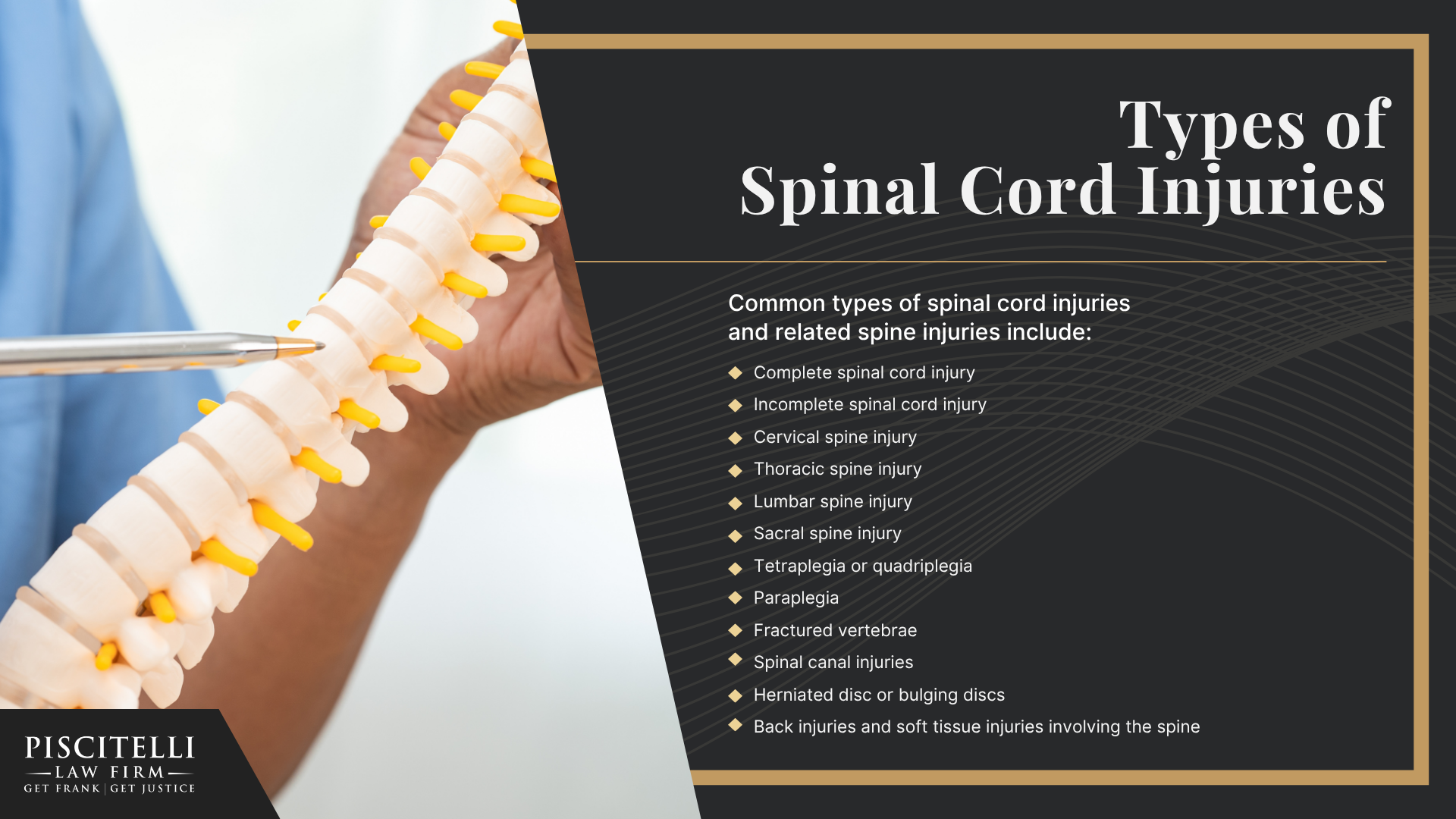
Common types of spinal cord injuries and related spine injuries include:
Complete spinal cord injury
Incomplete spinal cord injury
Cervical spine injury
Thoracic spine injury
Lumbar spine injury
Sacral spine injury
Tetraplegia or quadriplegia
Paraplegia
Fractured vertebrae
Spinal canal injuries
Herniated disc or bulging discs
Back injuries and soft tissue injuries involving the spine
A spinal cord injury attorney can review medical records, imaging, doctor’s appointments, and expert opinions to understand the full impact of the injury.
Complete Spinal Cord Injury
A neurologically complete spinal cord injury generally means that sensory and motor function are not preserved in the lowest sacral segments.
Medical professionals use sacral sparing, rather than a general statement that every function below the injury is absent, to distinguish complete from incomplete injuries.
A person with a complete injury may experience paralysis and substantial loss of sensation below the neurological level of injury.
The exact effects depend on the level of the injury and other medical factors.
Potential care needs may include:
Acute hospitalization and surgery
Inpatient and outpatient rehabilitation
Mobility equipment
Assistance with daily activities
Bowel and bladder management
Respiratory support for some high-level injuries
Pressure-injury prevention
Home and vehicle modifications
Long-term medical follow-up
Incomplete Spinal Cord Injury
An incomplete spinal cord injury means that some sensory or motor function remains in the lowest sacral segments. The amount and type of preserved function can vary widely.
A person may retain some movement or sensation below the neurological level of injury while continuing to experience:
Weakness or paralysis
Reduced sensation
Neuropathic pain
Difficulty walking
Impaired balance or coordination
Bowel or bladder dysfunction
Need for assistive equipment or personal care
People with incomplete injuries generally have greater potential for neurological recovery than people with complete injuries, but the amount and timing of improvement cannot be predicted from the word “incomplete” alone.
Tetraplegia and Quadriplegia
Tetraplegia and quadriplegia refer to paralysis affecting both the arms and legs.
These injuries often involve damage to the cervical spine, which is the neck region of the spinal cord.
A cervical spine injury may also affect breathing, arm and hand function, bladder function, bowel function, and independence.
Tetraplegia can require extensive medical care and specialized care, including breathing support, mobility equipment, home health assistance, physical therapy, occupational therapy, and ongoing doctor’s appointments.
The higher the injury occurs on the spinal cord, the greater the potential effect on the body.
A Mentor spinal cord injury attorney can work with doctors, rehabilitation specialists, and life care planning experts to show how the injury affects the survivor’s life now and in the future.
Paraplegia
Paraplegia describes impairment affecting the trunk, legs, and pelvic organs while generally preserving arm and hand function.
It commonly follows a thoracic spinal cord injury and may also be associated with injuries near the lower end of the spinal cord.
Lumbar or sacral trauma may instead affect the conus medullaris or cauda equina nerve roots because the spinal cord generally ends near the L1-L2 vertebral level.
Depending on the injury, a person may experience:
Partial or complete loss of leg movement
Altered sensation
Neuropathic pain
Bowel or bladder dysfunction
Muscle spasms
Pressure injuries
Mobility limitations
Need for a wheelchair, braces, or walking aids
Fractured Vertebrae and Spinal Canal Injuries
A vertebral fracture is a break in one or more bones of the spinal column.
The fracture may be stable or unstable and may occur with or without spinal cord or nerve damage.
Trauma may also cause:
Spinal cord compression
Epidural bleeding
Disc herniation
Ligament disruption
Spinal instability
Conus medullaris injury
Cauda equina injury
Individual nerve-root injury
A vertebral fracture, disc injury, or spinal stenosis diagnosis does not establish spinal cord damage by itself.
Imaging, neurological examinations, operative findings, and specialist opinions may be needed to distinguish the conditions.
Spinal cord injuries in Mentor can happen in many types of accidents.
Some are caused by sudden trauma, while others result from a medical mistake, unsafe property condition, or preventable act of violence.
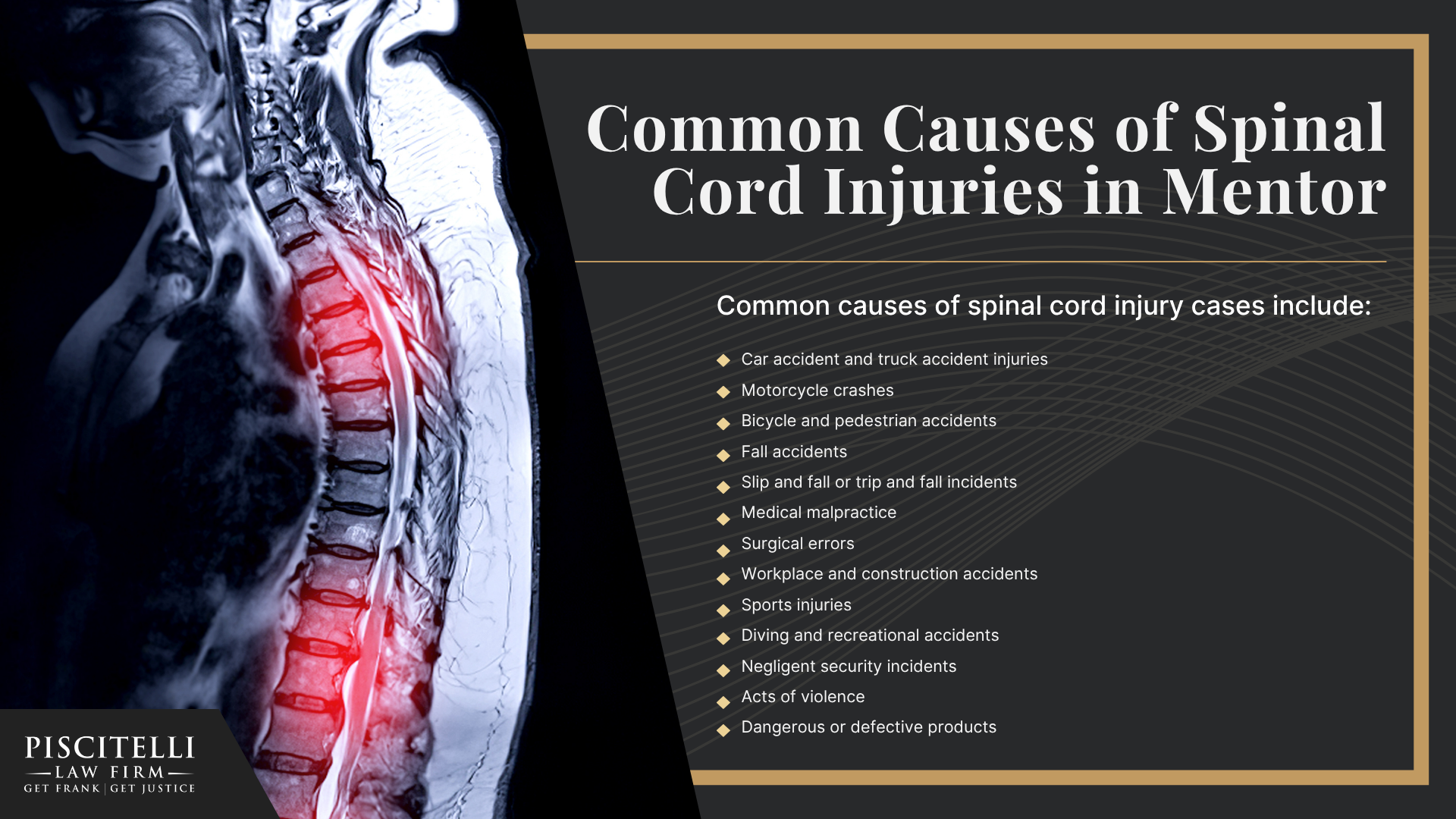
Common causes of spinal cord injury cases include:
Car accident and truck accident injuries
Motorcycle crashes
Bicycle and pedestrian accidents
Fall accidents
Slip and fall or trip and fall incidents
Medical malpractice
Surgical errors
Workplace and construction accidents
Sports injuries
Diving and recreational accidents
Negligent security incidents
Acts of violence
Dangerous or defective products
A Mentor spinal cord injury lawyer can investigate the causes of spinal cord injuries, identify the negligent party, and determine whether a personal injury case may be available.
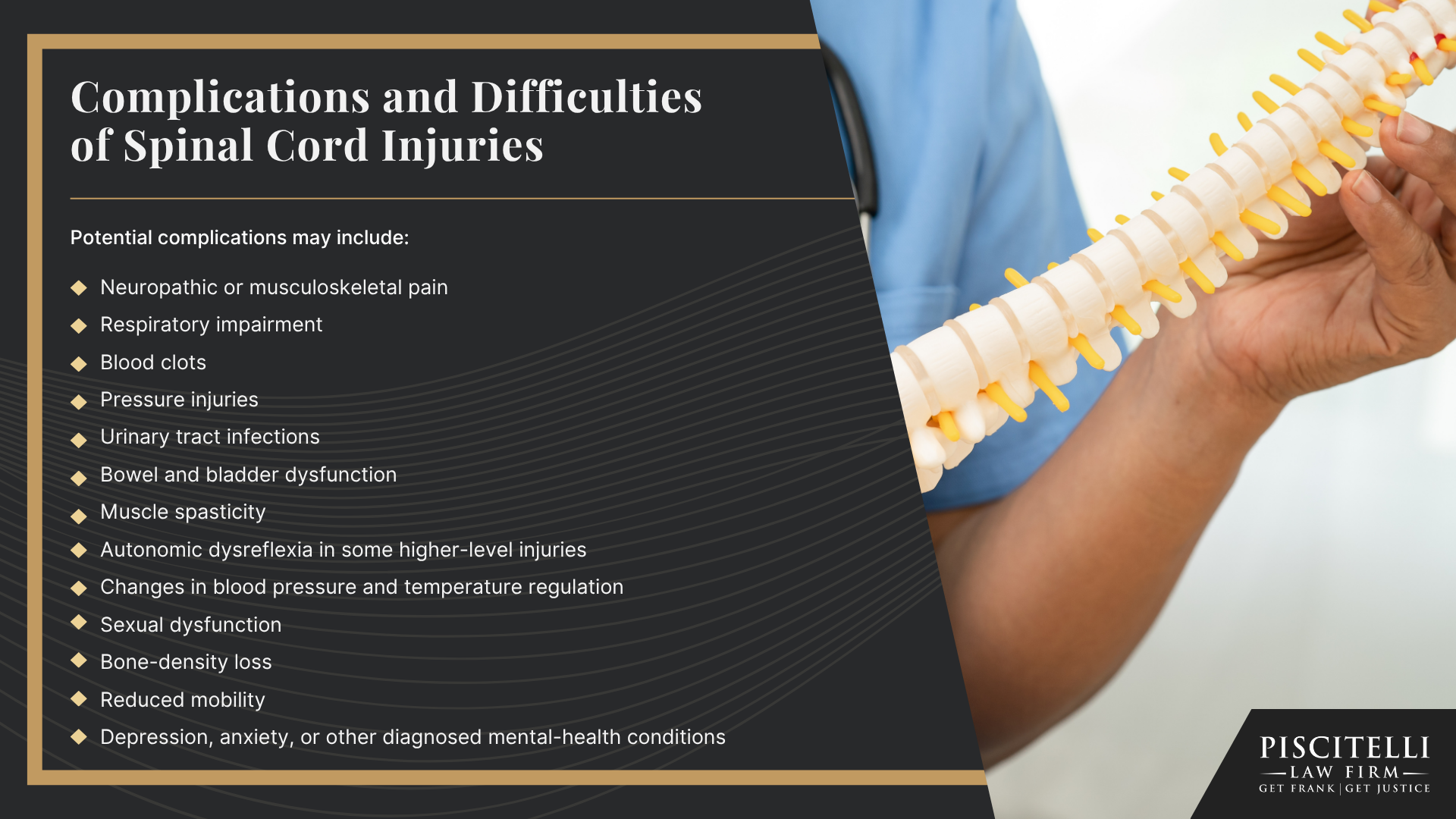
Complications and Difficulties of Spinal Cord Injuries
A spinal cord injury may affect multiple body systems.
The complications vary according to the neurological level, severity, mobility, medical history, and treatment.
Potential complications may include:
Neuropathic or musculoskeletal pain
Respiratory impairment
Blood clots
Pressure injuries
Urinary tract infections
Bowel and bladder dysfunction
Muscle spasticity
Autonomic dysreflexia in some higher-level injuries
Changes in blood pressure and temperature regulation
Sexual dysfunction
Bone-density loss
Reduced mobility
Depression, anxiety, or other diagnosed mental-health conditions
People with spinal cord injuries face a risk of serious secondary health conditions and may require rehabilitation and ongoing medical care.
A spinal cord injury lawsuit may be available when another person, business, healthcare provider, property owner, manufacturer, or other party is legally responsible for the conduct that caused the injury.
Eligibility depends on the underlying legal claim, such as negligence, medical malpractice, premises liability, product liability, or another applicable theory.
The evidence must connect the accident or wrongful conduct to the initial injury and document the medical, financial, and personal losses that followed.
Medical records, imaging studies, accident reports, witness testimony, and expert opinions may help establish causation and the severity of the spinal cord damage.
When seeking maximum compensation supported by the evidence, a claim should account for future medical treatment, rehabilitation, reduced earning capacity, assistive equipment, long-term care, and other expected losses.
Experienced personal injury lawyers represent clients by investigating liability, preserving evidence, evaluating insurance coverage, and documenting the full consequences of a serious spinal injury.
Your legal team can also work with medical, vocational, and financial specialists to determine whether the evidence supports a claim and calculate current and future damages.
Who May Be Liable for a Spinal Cord Injury in Mentor?
Liability depends on how the spinal injury happened.
In some cases, one negligent party is responsible.
In other cases, multiple parties may share responsibility for a catastrophic injury.
Depending on the evidence, potentially responsible parties may include:
A negligent motorist
A commercial driver or motor carrier
A property owner or occupier
A construction contractor or subcontractor
A third party responsible for workplace safety
A medical professional or healthcare entity
A product manufacturer or supplier
A security contractor
A business whose conduct contributed to the injury
A government entity when an exception to immunity permits the claim
A Mentor spinal cord injury lawyer can investigate the accident, identify every possible source of compensation, and work to hold the responsible parties accountable.
How To Prove Negligence in a Spinal Cord Injury Case
In a negligence-based spinal cord injury case, the injured person generally must prove that another party owed a duty of care, breached that duty, and proximately caused the injury and resulting damages.
Ohio courts apply those core elements when evaluating negligence claims.
Evidence may include accident reports, photographs, witness statements, surveillance footage, maintenance records, medical records, imaging studies, and expert opinions.
Medical evidence is especially important for connecting the accident to the spinal cord damage and distinguishing the initial injury from preexisting or unrelated conditions.
Serious spinal cord injury claims may also require testimony from physicians, rehabilitation specialists, vocational experts, life care planners, or financial professionals to document future treatment and long-term losses.
The defendant or insurance company may dispute fault, causation, the severity of the injury, or the amount of compensation being claimed.
A spinal cord injury lawyer can investigate those issues, preserve relevant evidence, and build a claim based on the negligence and damages that can be supported by the record.
Evidence That Can Help Support a Spinal Cord Injury Claim
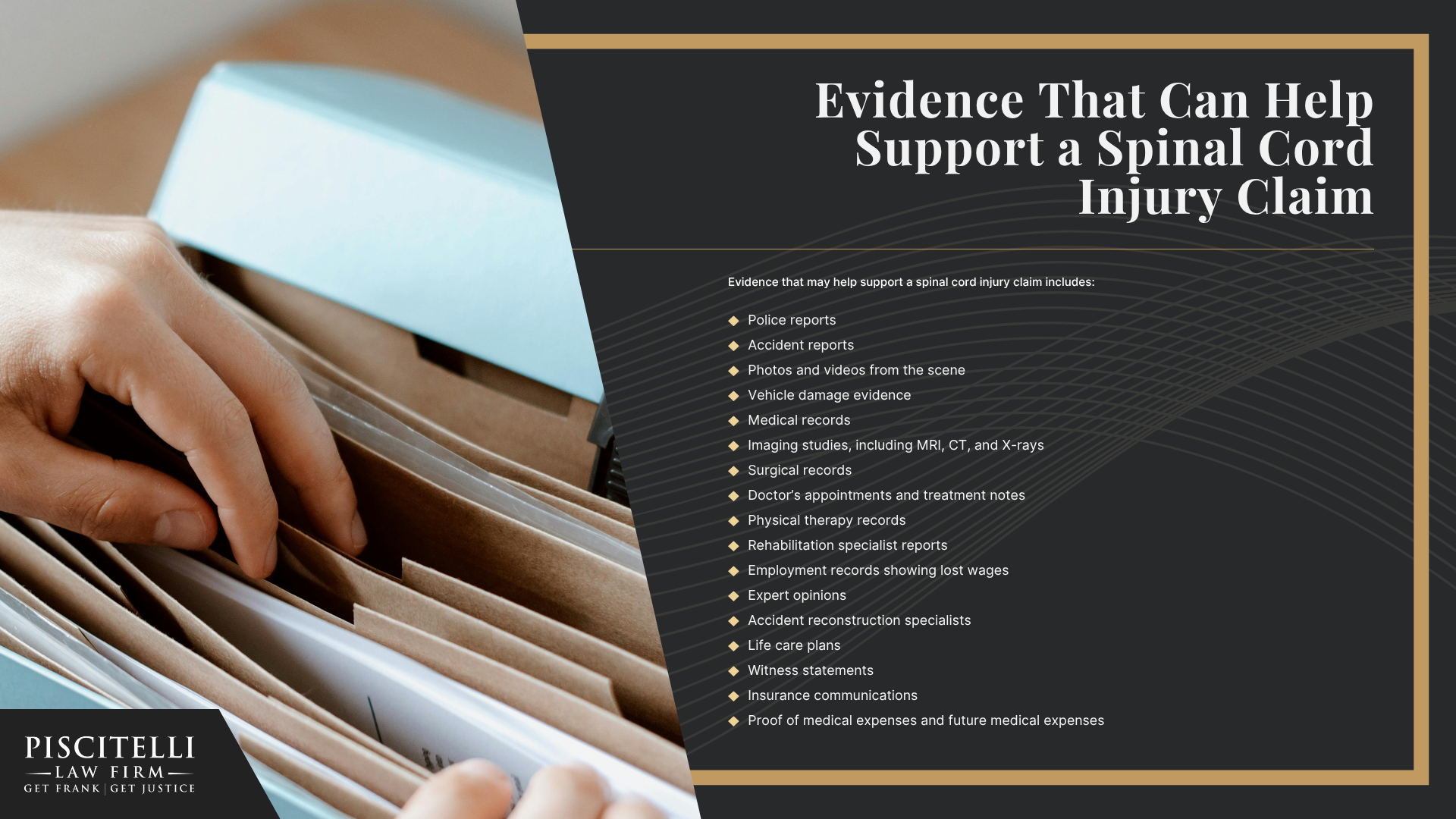
Evidence is critical in spinal cord injury cases because the damages are often significant and insurance companies may dispute the cause, severity, or value of the injury.
Evidence that may help support a spinal cord injury claim includes:
Police reports
Accident reports
Photos and videos from the scene
Vehicle damage evidence
Medical records
Imaging studies, including MRI, CT, and X-rays
Surgical records
Doctor’s appointments and treatment notes
Physical therapy records
Rehabilitation specialist reports
Employment records showing lost wages
Expert opinions
Accident reconstruction specialists
Life care plans
Witness statements
Insurance communications
Proof of medical expenses and future medical expenses
A spinal cord injury lawyer can gather evidence before it disappears and help show the full impact of the injury.
Medical Treatment and Rehabilitation After a Spinal Cord Injury
Initial care may include emergency stabilization, neurological examination, imaging, treatment of breathing or blood-pressure problems, surgery when indicated, and prevention of secondary damage.
Rehabilitation may involve:
Physical therapy
Occupational therapy
Mobility and transfer training
Bowel and bladder management
Respiratory therapy
Speech or swallowing therapy when needed
Pain and spasticity management
Skin and pressure-injury prevention
Psychological support
Education for patients and caregivers
Assistive technology
Rehabilitation and recovery vary significantly.
The neurological level, completeness of the injury, associated trauma, complications, age, health, and response to treatment may all affect function and care needs.
NINDS and the Spinal Cord Injury Model Systems emphasize that recovery cannot be predicted solely from the label attached to the injury.
Long-Term Care Needs After a Serious Spine Injury
A serious spinal cord injury may require medical treatment and personal assistance for months, years, or the rest of a person’s life.
Long-term care can include physical and occupational therapy, in-home nursing, mobility equipment, accessible transportation, home modifications, medication, and treatment for secondary complications.
Some survivors may also need help with bowel and bladder management, pressure-injury prevention, daily activities, and ongoing psychological support.
Life care planners and other specialists may be used to estimate the cost of future treatment, equipment replacement, attendant care, and other anticipated needs.
Documenting those projected expenses can be an important part of calculating future damages in a spinal cord injury claim.
Compensation Available in a Mentor Spinal Cord Injury Case
Damages in a spinal cord injury claim are intended to account for the financial, physical, and personal losses caused by the injury.
Because such an injury may require lifelong treatment, rehabilitation, assistive equipment, and personal care, the value of a claim should consider both current expenses and reasonably anticipated future needs.
Lawyers may work with medical providers, vocational experts, life care planners, and financial professionals to document the full effect of the injury on a survivor’s health, independence, and ability to work.
The goal is to pursue fair and just compensation based on the losses that can be supported by medical records, financial evidence, and expert analysis.
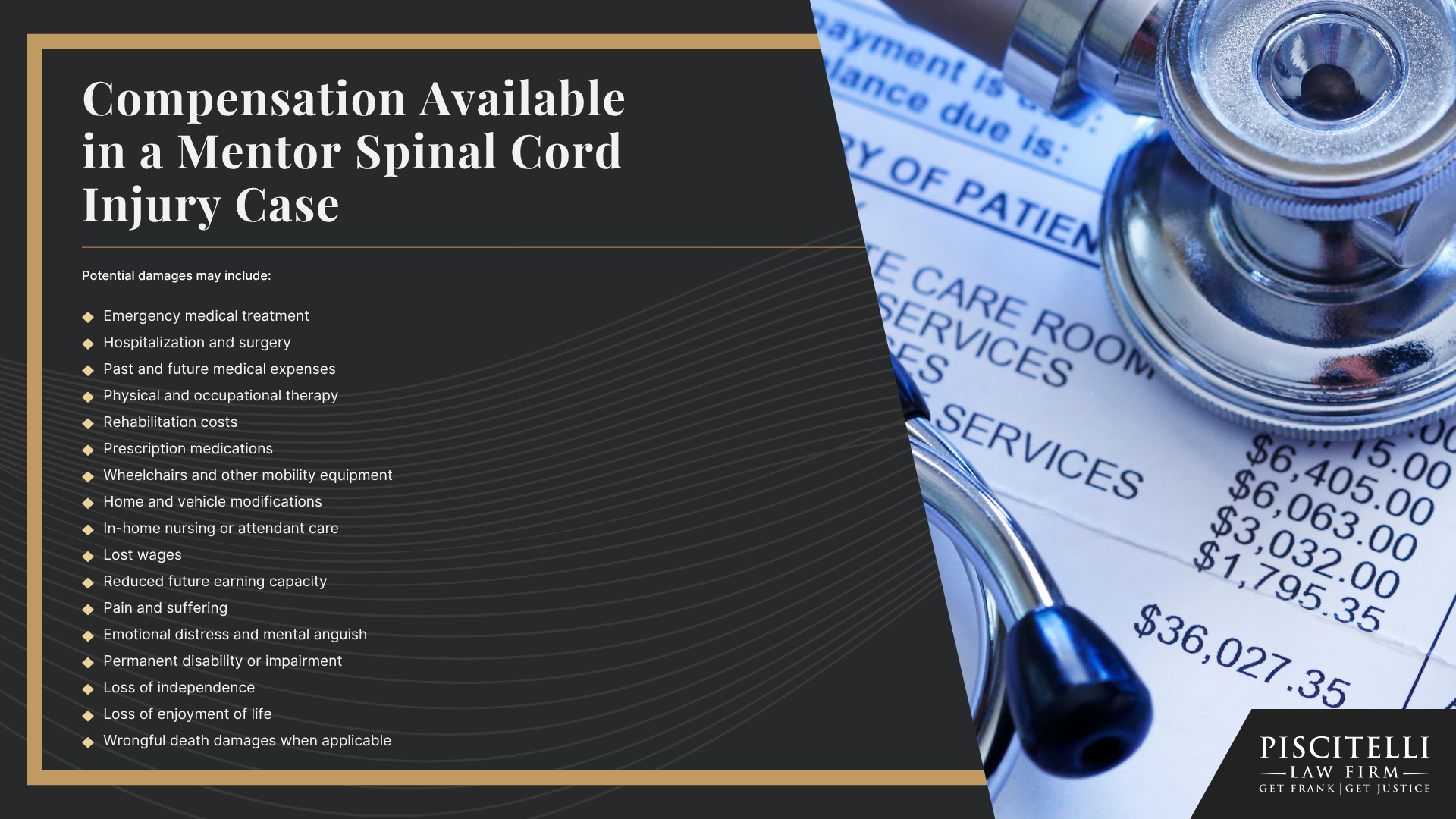
Potential damages may include:
Emergency medical treatment
Hospitalization and surgery
Past and future medical expenses
Physical and occupational therapy
Rehabilitation costs
Prescription medications
Wheelchairs and other mobility equipment
Home and vehicle modifications
In-home nursing or attendant care
Lost wages
Reduced future earning capacity
Pain and suffering
Emotional distress and mental anguish
Permanent disability or impairment
Loss of independence
Loss of enjoyment of life
Wrongful death damages when applicable
How Insurance Companies Handle Spinal Cord Injury Claims
Spinal cord injury claims often involve life-altering injuries, substantial medical expenses, future care needs, lost income, and permanent changes to a person’s independence.
Insurance companies may dispute fault, question whether the accident caused the spinal cord damage, challenge future treatment recommendations, or argue that certain damages are overstated.
Victims and their families often feel overwhelmed while managing medical care, rehabilitation, financial pressure, and an insurance claim at the same time.
A lawyer can handle communications with the insurance company, gather supporting medical and financial evidence, and respond to disputed liability or damages arguments.
Any settlement should be evaluated against the documented extent of the injury, anticipated future needs, available insurance coverage, and the losses supported by the evidence.
Ohio Comparative Fault: How it Impacts Spinal Cord Injury Cases
Ohio Revised Code § 2315.33 allows an injured person to recover damages when their share of fault is not greater than the combined fault of the other responsible parties.
If the injured person is partly responsible for the accident, their compensatory damages are reduced in proportion to their percentage of fault.
A claimant whose share of fault exceeds 50 percent generally cannot recover damages from the other responsible parties.
Comparative fault can become an important issue in a spinal cord injury case when the parties dispute how the accident occurred or whether the injured person’s own conduct contributed to the resulting harm.
How Long Do You Have To File a Spinal Cord Injury Lawsuit in Ohio?
Ohio generally requires a negligence action seeking damages for bodily injury to be filed within two years after the claim accrues.
That period commonly applies to motor vehicle, unsafe property, and other general negligence claims.
Different rules may apply when the spinal cord injury involves:
Medical negligence: Ohio generally uses a one-year filing period and a four-year statute of repose, subject to specific rules and exceptions.
A workplace incident: Workers’ compensation claims and third-party civil claims follow different procedures and deadlines.
A defective product: Product-liability claims may be affected by Ohio’s product-liability statute of repose.
A government defendant: Immunity and procedural rules may affect the claim.
Wrongful death: The general filing period is two years after death.
A minor or legally disabled claimant: Tolling or other special rules may require review.
Insurance negotiations, medical treatment, or an internal investigation do not automatically extend the applicable filing period.
Piscitelli Law Firm: Talk to a Mentor Spinal Cord Injury Lawyer Today
Spinal cord injury claims require careful investigation because the medical, financial, and personal consequences may continue for years or for the rest of a survivor’s life.
Frank Piscitelli can investigate how the injury occurred, gather medical and accident evidence, identify potentially responsible parties, and work with appropriate specialists to document future treatment, rehabilitation, long-term care, and loss of earning capacity.
Piscitelli Law Firm can also handle communications with insurance companies and evaluate whether a proposed settlement reflects the losses supported by the evidence.
With more than 30 years of experience representing injured Ohioans, Frank prepares serious injury cases with attention to both the immediate consequences of the accident and the survivor’s expected future needs.
Piscitelli Law Firm handles accepted personal injury cases on a contingency fee basis, meaning clients do not pay upfront attorney fees and legal fees are owed only if compensation is recovered, subject to the written fee agreement.
If you or a loved one suffered a spinal cord injury because of another party’s negligence or wrongful conduct, contact Piscitelli Law Firm today for a free consultation or use the chat feature on this page to discuss your potential claim.
After a spinal cord injury, your first priority should be getting emergency medical care and following all recommended doctor’s appointments, testing, physical therapy, and rehabilitation.
You should also document how the accident happened, save medical records, keep proof of medical expenses and lost wages, and avoid giving statements to insurance companies before understanding your legal options.
A Mentor spinal cord injury lawyer can investigate whether someone else’s negligence caused the injury and help protect your spinal cord injury claim.
A complete spinal cord injury generally means that sensory and motor function are not preserved in the lowest sacral segments of the spinal cord.
An incomplete spinal cord injury means that some sensory or motor function remains in those segments, although the amount of preserved function can vary considerably.
A complete injury does not necessarily mean that every function below the injury is absent, and an incomplete injury does not guarantee a particular level of recovery.
Doctors use neurological examinations, including evidence of sacral sparing, to classify the severity of the injury and help evaluate prognosis and treatment needs.
You may be able to file a spinal cord injury lawsuit if your injury was caused by someone else’s negligence, such as a car accident, fall accident, medical malpractice, sports injury, unsafe property condition, or other negligent act.
A personal injury claim may help injury victims seek compensation for medical expenses, future medical expenses, lost wages, lost income, chronic pain, emotional distress, mental anguish, and other losses.
Piscitelli Law Firm can investigate the negligent party, gather evidence, and fight to hold the responsible party accountable.
Compensation in a spinal cord injury case may address the medical, financial, and personal losses caused by the injury.
The value of a claim depends on factors such as the severity of the spinal cord damage, future treatment needs, ability to work, and effect on the survivor’s independence and daily life.
Even if a person has successfully recovered from the spinal injury to some degree, compensation may still be available for documented losses incurred during treatment and recovery.
More severe injuries involving permanent disability or long-term care may require medical, vocational, and financial evidence to calculate future damages.
The financial cost of a spinal cord injury can vary substantially according to the neurological level and severity of the injury.
National Spinal Cord Injury Statistical Center estimates published in 2024 put first-year health care and living expenses between approximately $447,037 for a motor-functional injury and $1,369,755 for high tetraplegia, or quadriplegia involving the C1-C4 level.
Subsequent annual expenses range from approximately $54,298 to $237,862, and those figures do not include indirect losses such as lost wages or reduced productivity.
A spinal cord injury claim involving permanent paralysis may therefore require careful documentation of future medical treatment, rehabilitation, attendant care, equipment, home modifications, and other anticipated expenses.
The long-term effects of a spinal cord injury depend on the location and severity of the neurological damage.
Lumbar injuries can affect the hips and legs, while spinal cord and nerve damage in the lower spine may also interfere with bowel and bladder function.
Spasticity, which can cause involuntary muscle tightening or spasms, affects approximately three out of four people with spinal cord injuries in published research.
Depression is also a significant concern, with estimates ranging from 12% to 40% during the first year after an injury.
People living with traumatic spinal cord injuries also have shorter average life expectancies than people without these injuries, with the greatest mortality risk occurring during the first year and among people with the most severe neurological impairments.
Consider hiring an attorney with experience handling catastrophic injury claims such as spinal cord injuries, where medical evidence, future care needs, and substantial damages can make the case more demanding than a routine personal injury claim.
Review the lawyer’s history of verdicts and settlements in serious injury cases while remembering that past results cannot predict the outcome of a new case.
Your lawyer should also be able to explain complex legal and medical terms in plain language and communicate clearly throughout the case.
Compassion and professionalism can support a stable attorney-client relationship during a claim that may involve extensive treatment, permanent disability, and major changes to the survivor’s life.
The attorney should also understand how to work with physicians, rehabilitation specialists, life care planners, vocational experts, and other professionals when their testimony is needed to document the full consequences of the injury.
Member of the Ohio State Bar Association since 1993. With 30+ years of legal experience, Attorney Frank Piscitelli has secured over $55 million in compensation for Ohio injury victims, car accident victims, and surviving family members of Ohio wrongful death victims.
Legally Reviewed
This article has been written and reviewed for legal accuracy and clarity by the team of writers and attorneys at Piscitelli Law Firm and is as accurate as possible. This content should not be taken as legal advice from an attorney. If you would like to learn more about our owner and experienced Ohio personal injury lawyer, Frank Piscitelli, you can do so here.
Fact-Checked
Piscitelli Law Firm does everything possible to make sure the information in this article is up to date and accurate. If you need specific legal advice about your case, contact us. This article should not be taken as advice from an attorney.