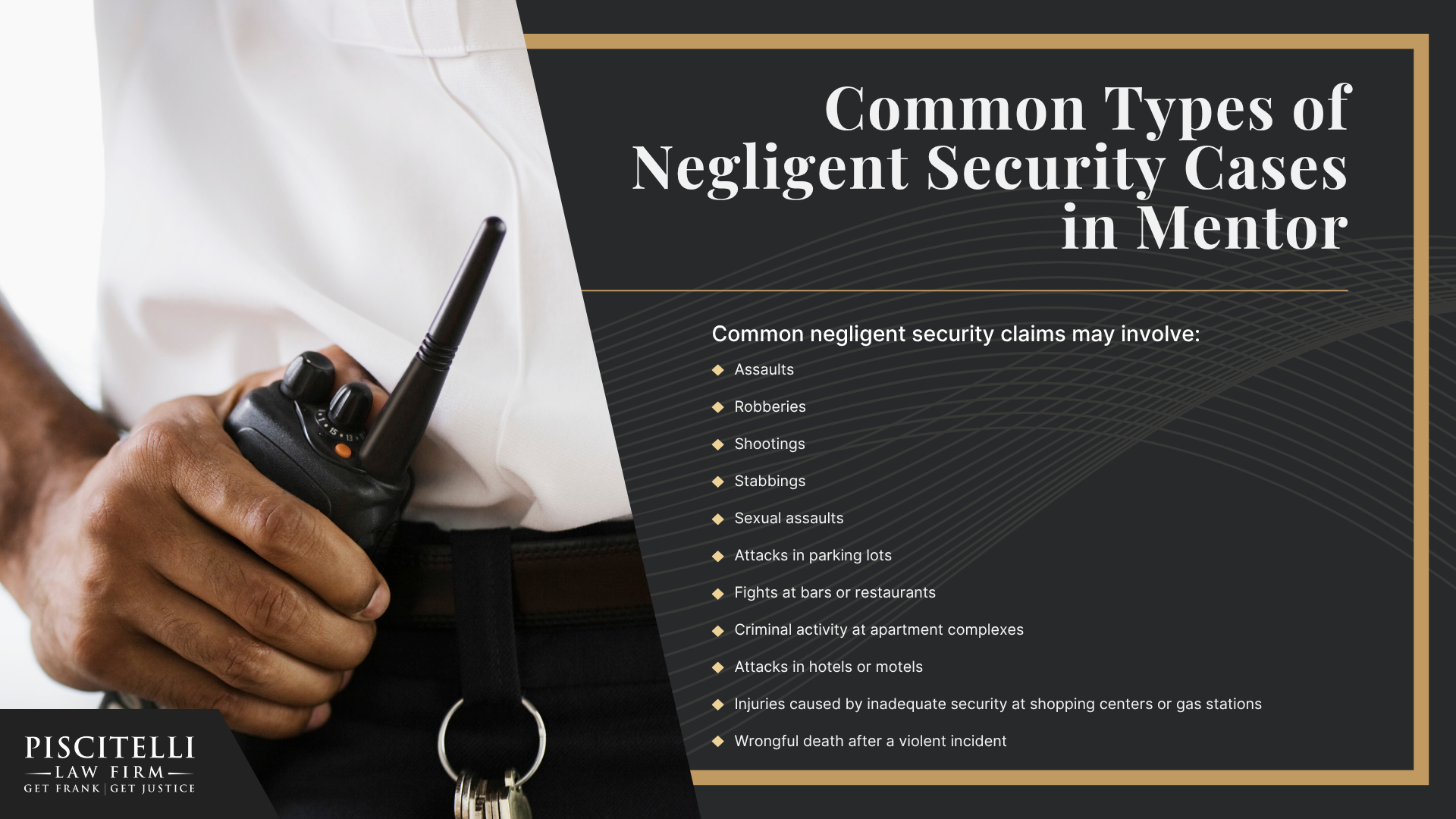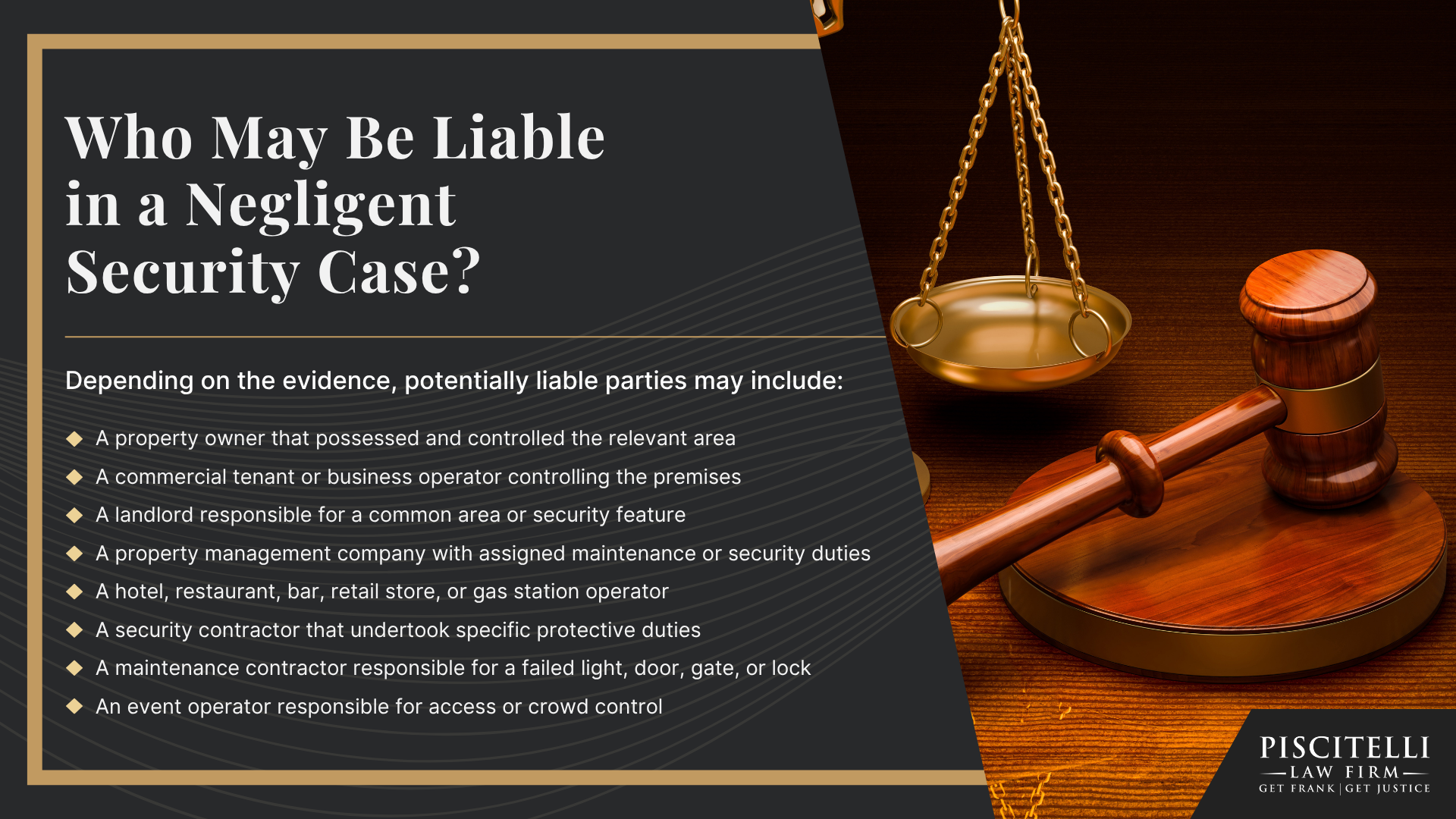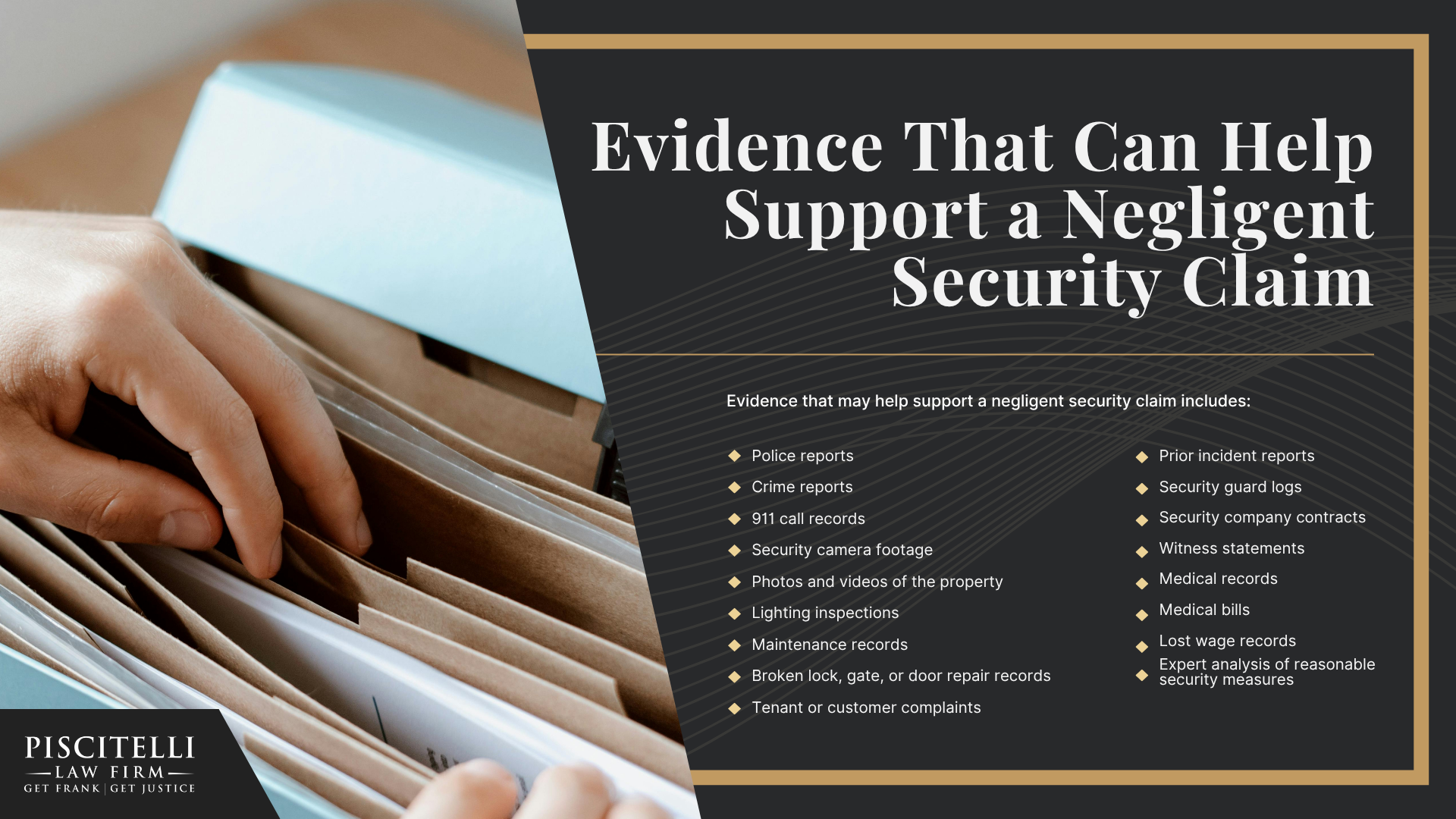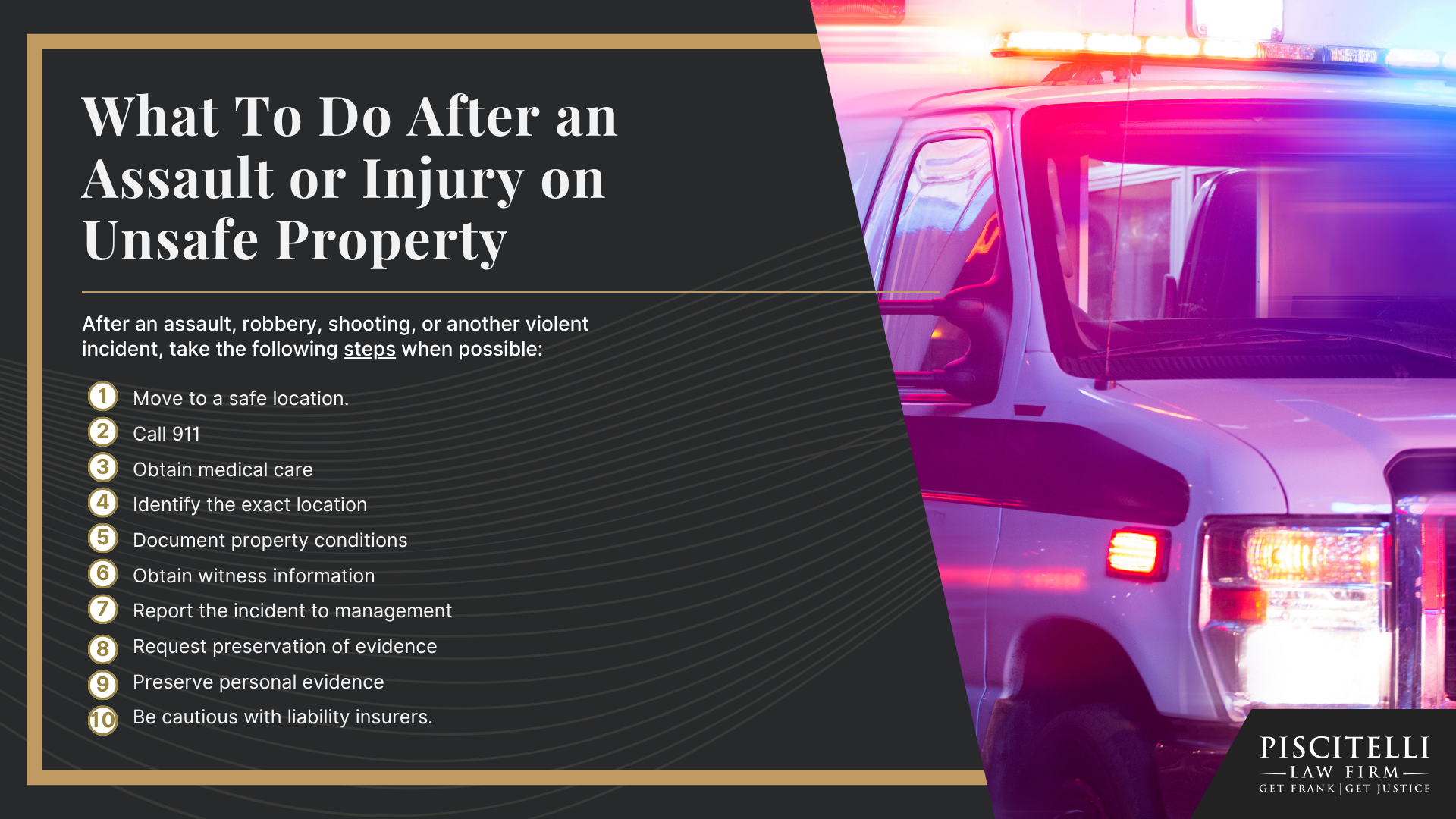
Negligent security is a premises liability claim involving injury caused by the criminal conduct of a third party.
The claim generally alleges that a person or company possessing and controlling the property failed to take reasonable precautions against a substantial and foreseeable risk of criminal harm.
The property owner or business is not accused of personally committing the assault or other crime.
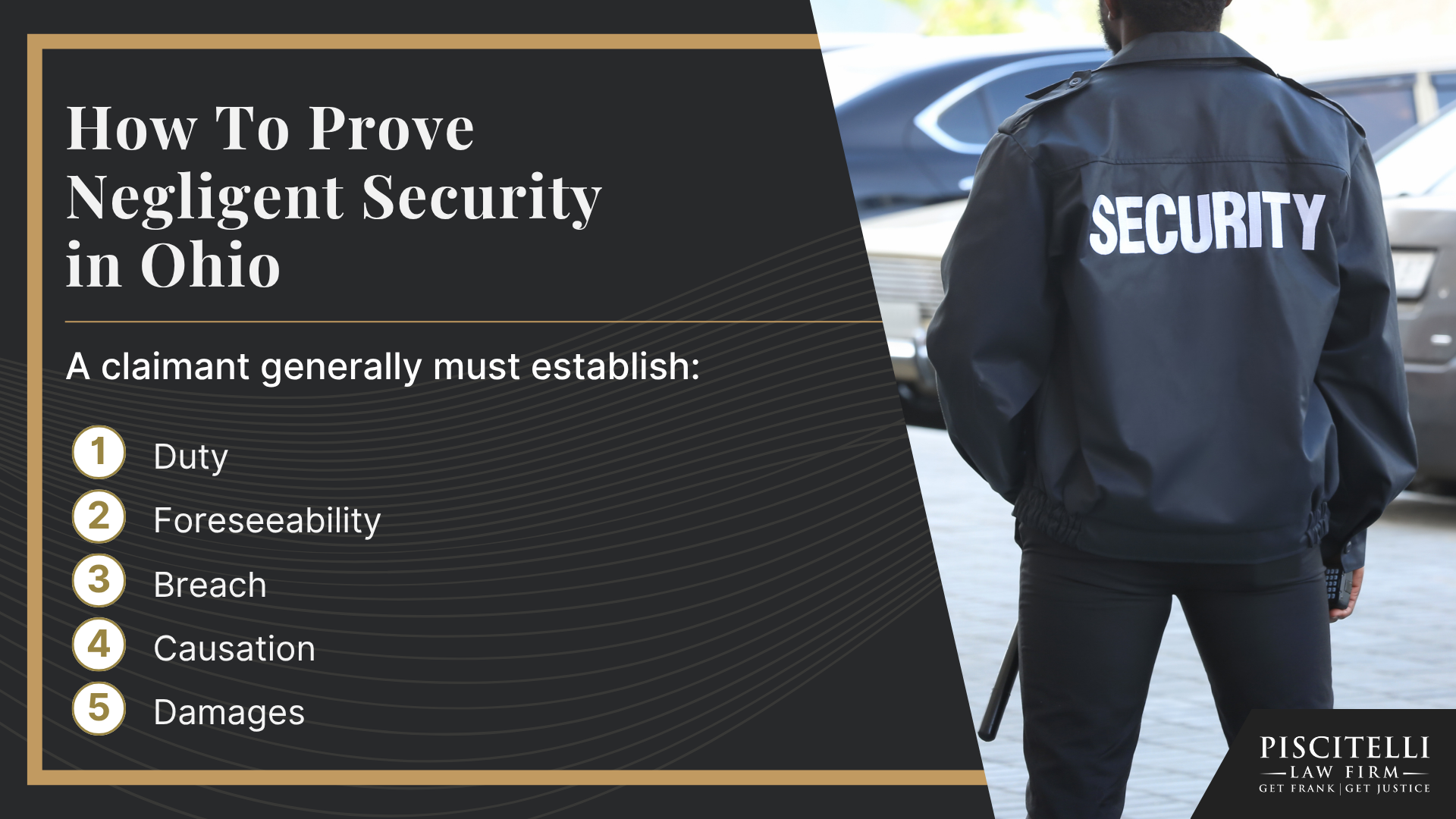
The civil claim examines whether that party had a legal duty to warn or protect the injured person, whether reasonable security measures were missing or inadequately maintained, and whether that failure was a proximate cause of the injury.
Property owners are not required to guarantee that every visitor will remain safe or that no crime will ever occur on the premises.
The issue is whether the circumstances created a duty to provide reasonable security measures in response to a known or foreseeable risk.
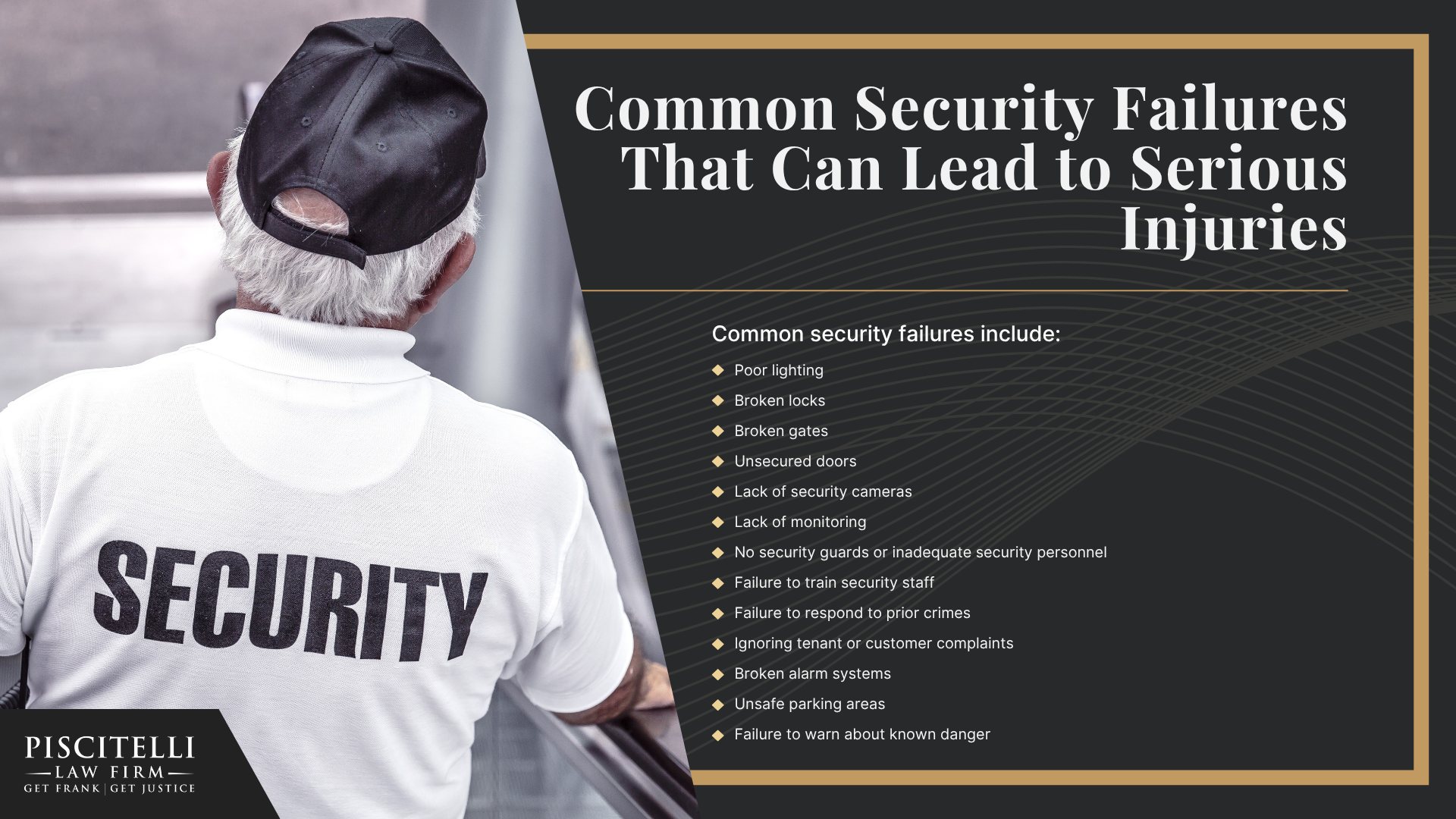
Depending on the property and the risks involved, those measures may include working locks, adequate lighting, controlled access, security personnel, surveillance systems, or procedures for responding to threats and prior incidents.
A safe environment does not require eliminating every possible danger, but property owners and businesses may be held responsible when they fail to address hazards or criminal risks that the law requires them to confront.
Whether negligent security occurred depends on the facts of the incident, the property’s history, the defendant’s knowledge, and the connection between the alleged security failure and the resulting injury.
When Can a Property Owner Be Liable for Negligent Security?
A property owner may be liable for negligent security when the circumstances created a duty to protect lawful visitors from a substantial and foreseeable risk of criminal harm.
Liability depends on what the owner knew or reasonably should have known, what areas of the property were under the owner’s control, and whether reasonable precautions were taken in response to the risk.
A property owner’s failure to address known security problems may support a claim when that omission contributed to an assault, robbery, shooting, or other criminal incident.
Courts may consider several facts when deciding whether the danger was sufficiently foreseeable and whether additional security measures were reasonable.
Relevant factors may include:
- Prior crimes of a similar nature on or near the property
- The timing, frequency, and proximity of earlier incidents
- Known threats or escalating violent behavior
- Complaints or warnings provided to property management
- The location and character of the property or business
- Broken locks, gates, doors, lighting, or other security features
- Existing security policies and whether they were followed
- The presence or absence of security personnel when prior incidents created a known risk
- Whether the owner controlled the area where the incident occurred
- Whether reasonable security measures could have reduced the risk of harm