Call the police immediately after a bicycle accident and remain at the scene unless emergency medical treatment requires you to leave.
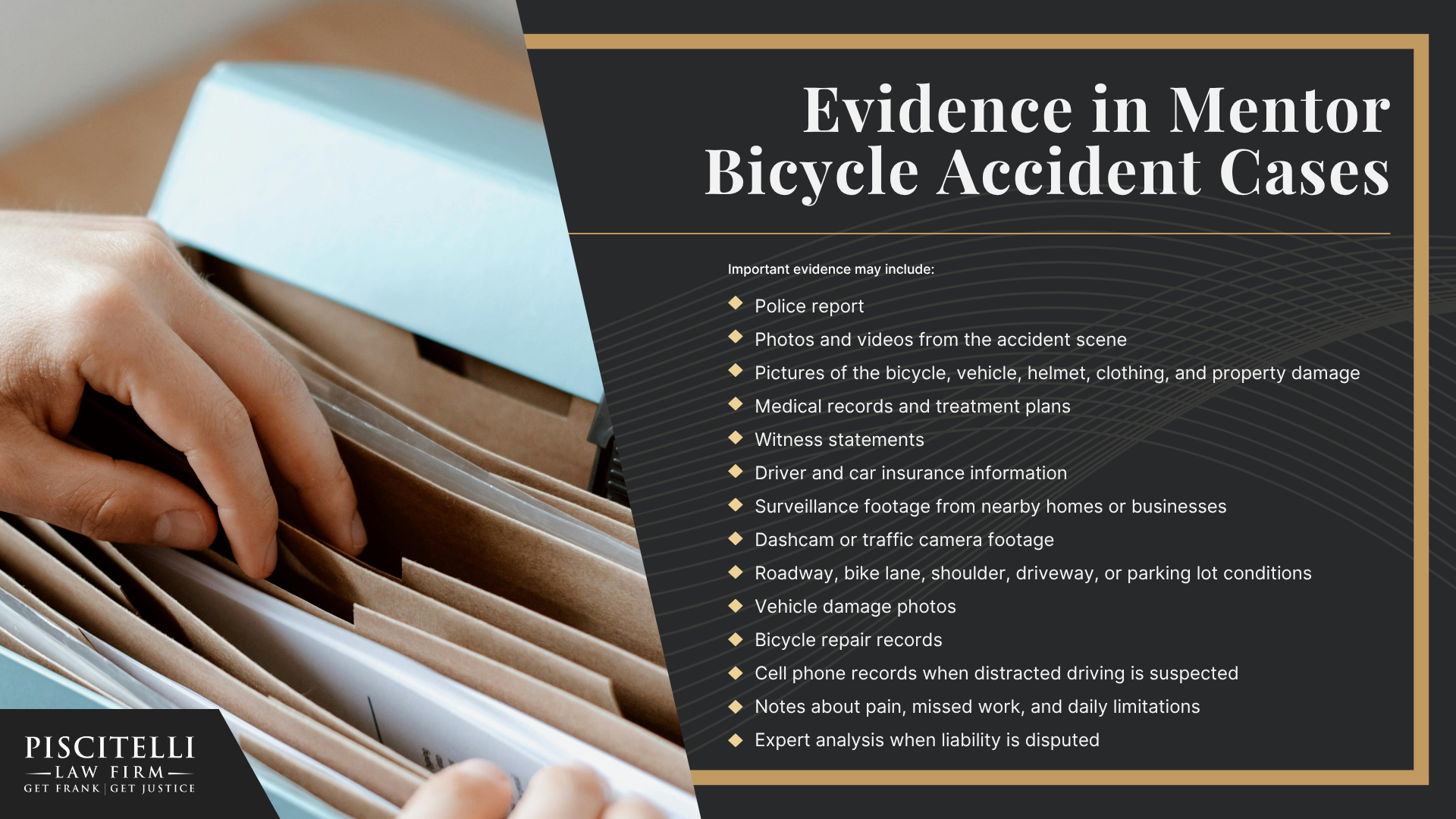
A police report can document the location of the crash, the parties involved, witness information, visible injuries, bicycle damage, road conditions, and any statements made by the driver.
Even when an officer does not issue a citation, eyewitness testimony and other evidence may support a claim that the driver acted negligently.
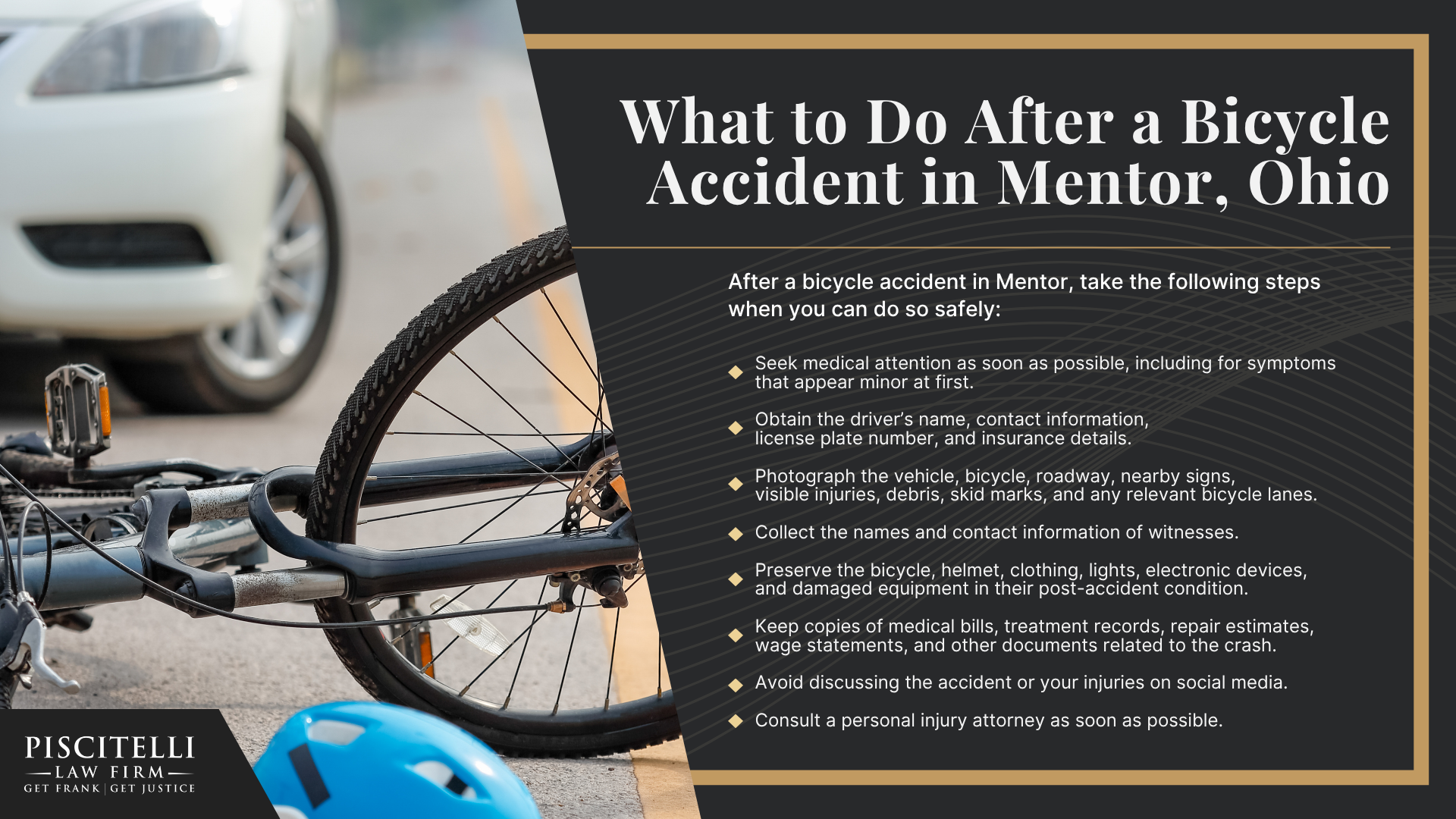
After a bicycle accident in Mentor, take the following steps when you can do so safely:
- Seek medical attention as soon as possible, including for symptoms that appear minor at first.
- Obtain the driver’s name, contact information, license plate number, and insurance details.
- Photograph the vehicle, bicycle, roadway, nearby signs, visible injuries, debris, skid marks, and any relevant bicycle lanes.
- Collect the names and contact information of witnesses.
- Preserve the bicycle, helmet, clothing, lights, electronic devices, and damaged equipment in their post-accident condition.
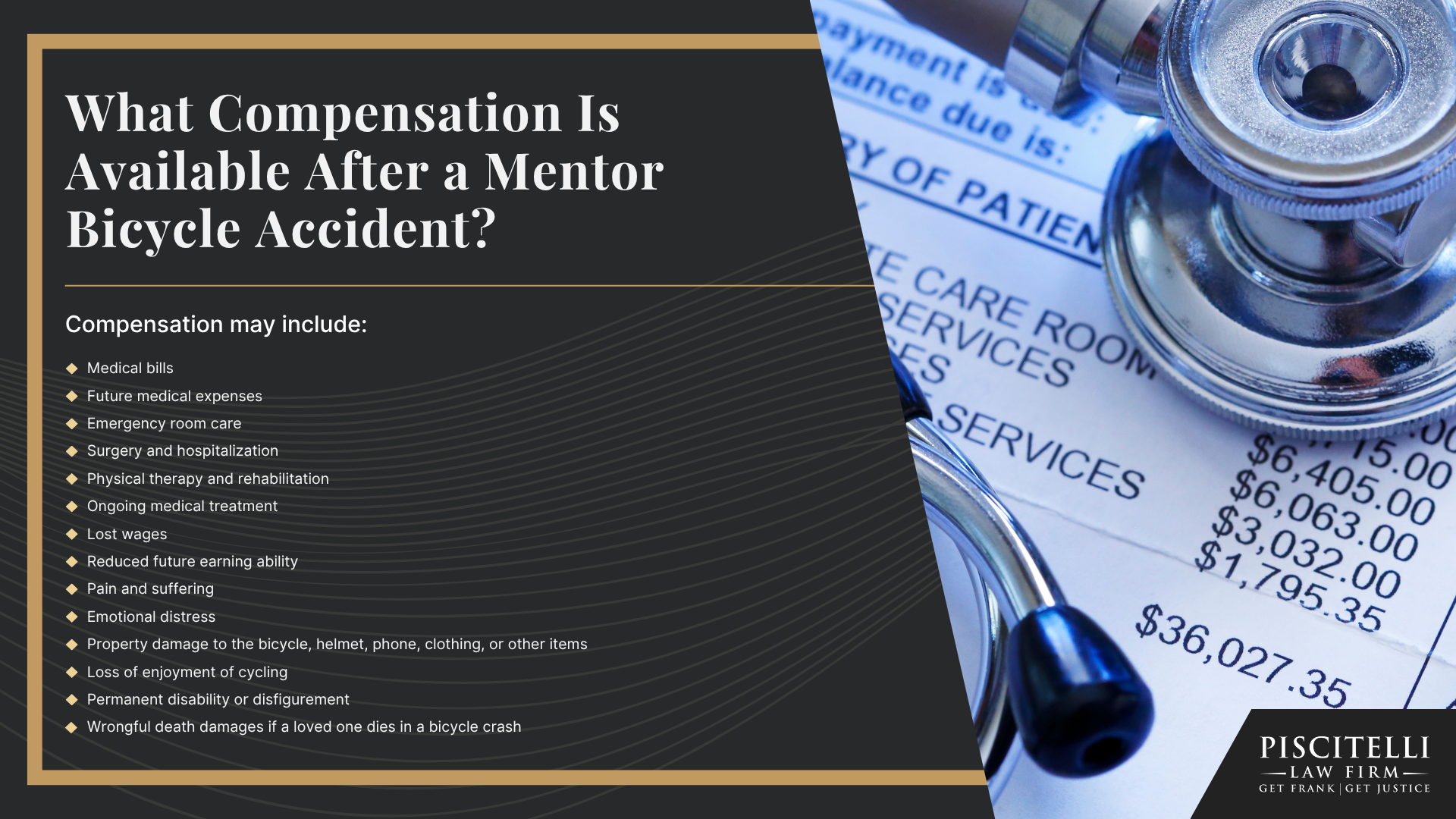
- Keep copies of medical bills, treatment records, repair estimates, wage statements, and other documents related to the crash.
- Avoid discussing the accident or your injuries on social media.
- Consult a personal injury attorney as soon as possible.
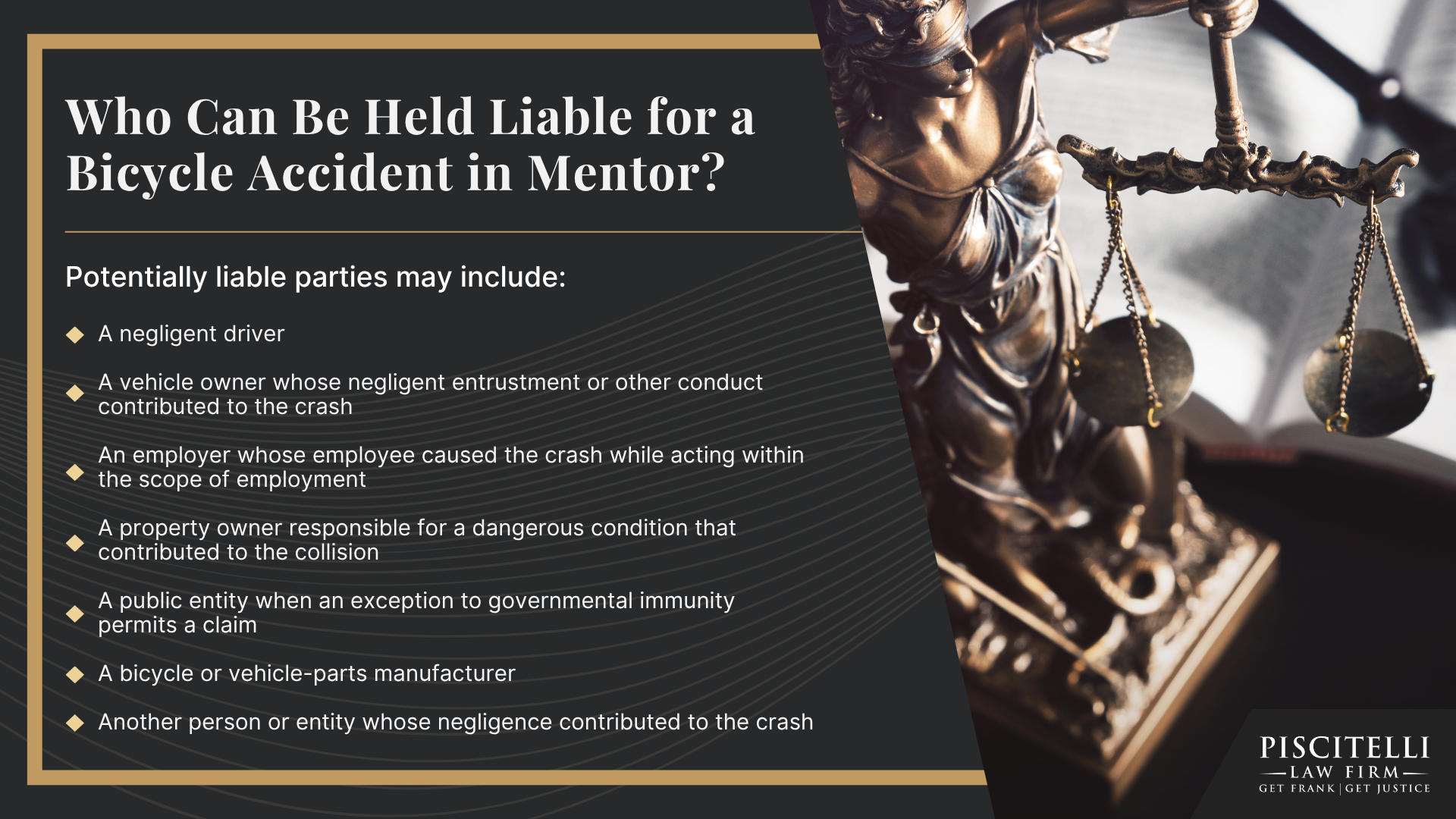
Establishing driver negligence is essential in most bicycle accident cases.
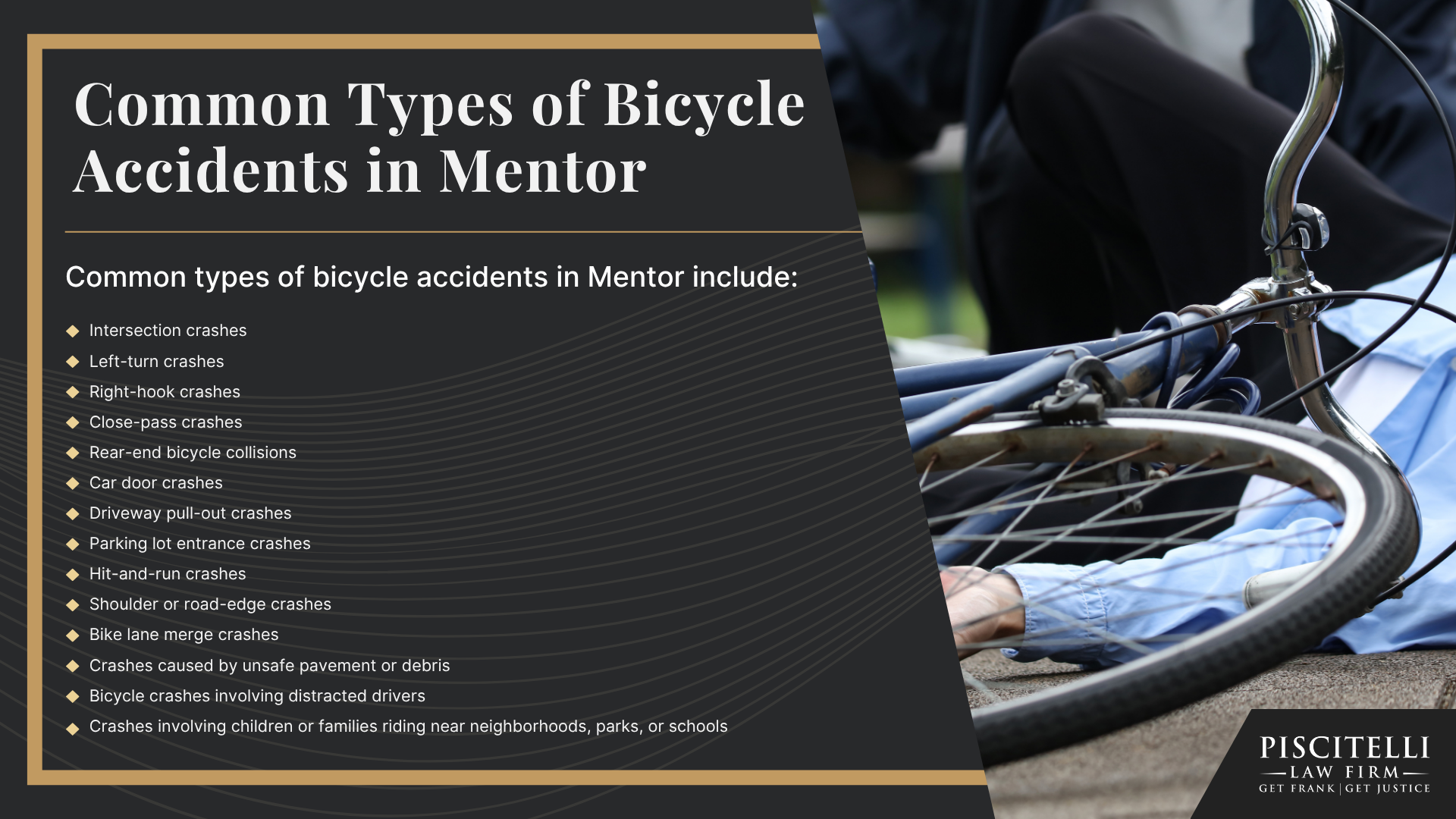
Relevant issues may include whether the driver failed to yield, passed too closely, entered a bicycle lane, made an unsafe turn, ignored a traffic signal, or failed to maintain a proper lookout.
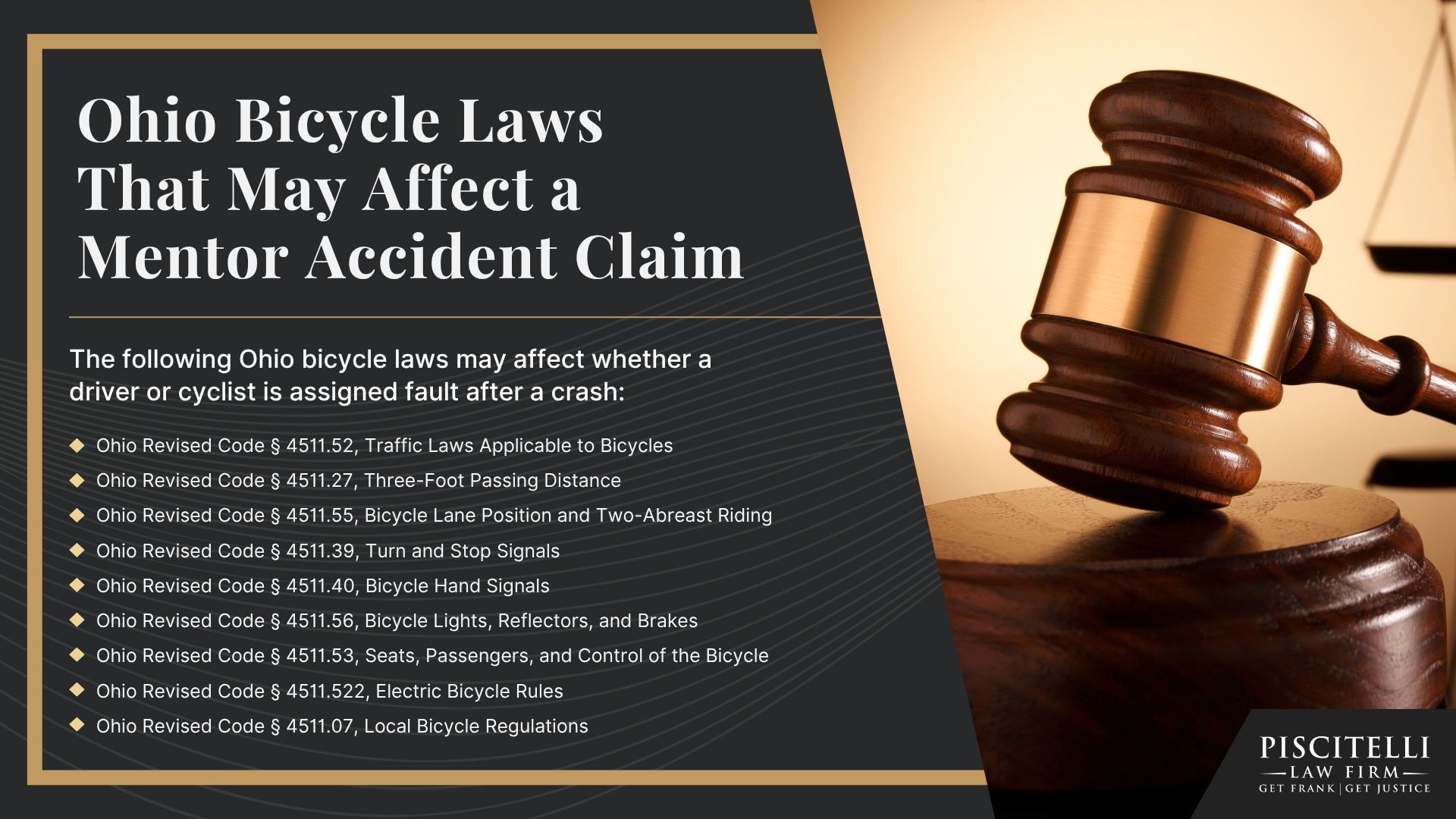
Familiarity with local traffic laws and bicycle ordinances can help determine whether the driver violated a legal duty owed to bike riders.
Insurance adjusters may attempt to shift blame onto the cyclist to reduce the amount paid through a settlement.
They may argue that the rider was outside a bicycle lane, failed to use required equipment, entered traffic improperly, or could have avoided the collision.
Photographs, witness statements, traffic-camera footage, medical records, and physical evidence from the bicycle can help respond to unsupported fault allegations.
Complex bicycle accident cases may require accident reconstruction to evaluate vehicle speed, points of impact, sight distance, road geometry, braking, and the movements of the cyclist and driver before the crash.
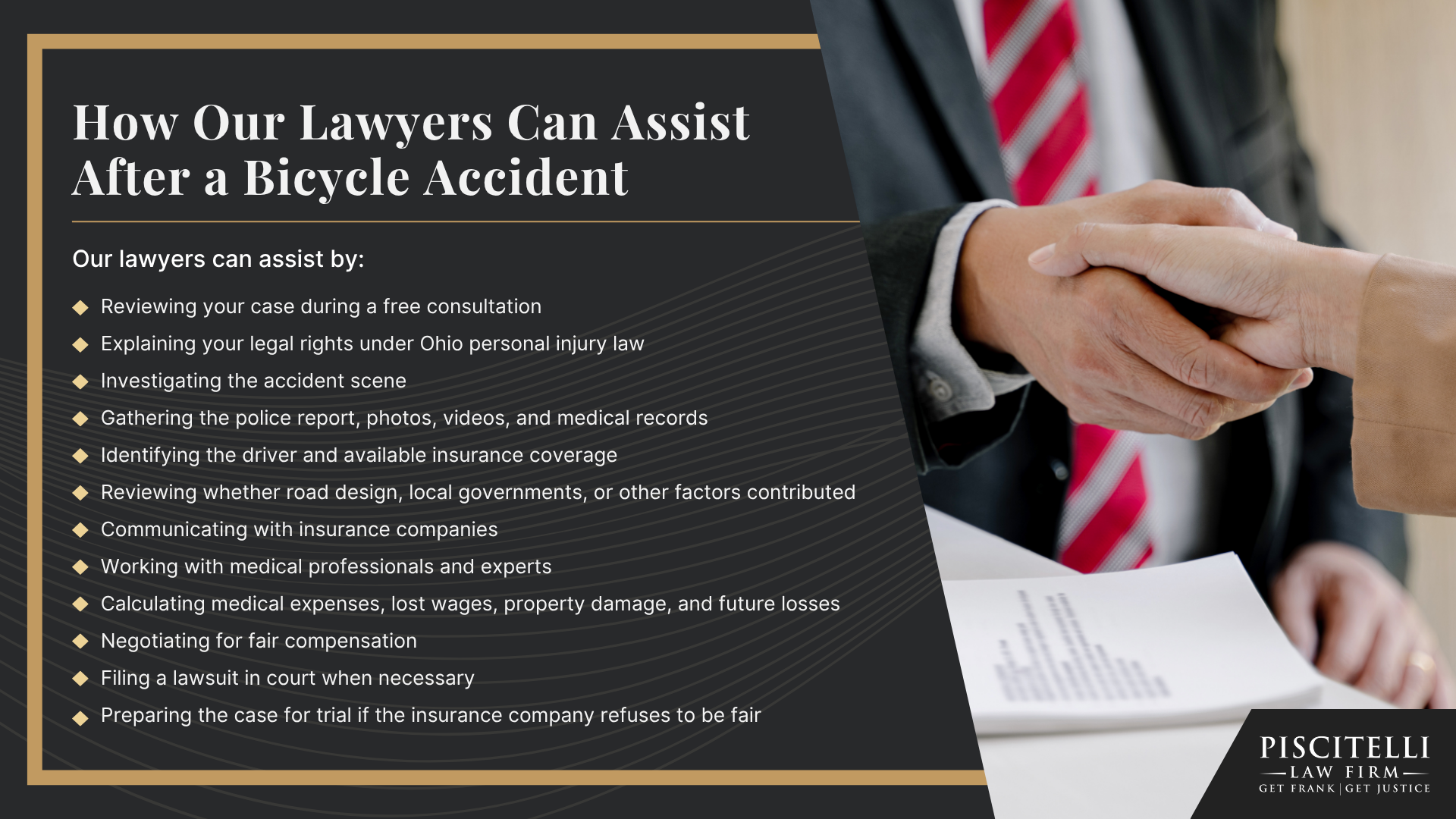
A personal injury attorney can preserve evidence, obtain available video, consult qualified experts, explain how local bicycle laws apply, and review the insurance policies that may provide compensation.