Frank Piscitelli is an Ohio dog bite lawyer who represents dog bite victims injured in dog attacks and other animal attacks throughout the state, including clients who need an Ohio dog bite attorney to deal with an insurance carrier after a serious incident.
Consulting a lawyer early helps protect your rights, preserve evidence, and reduce the risk of missteps that can weaken a dog bite claim, especially when the insurer quickly starts asking for statements or medical authorizations.
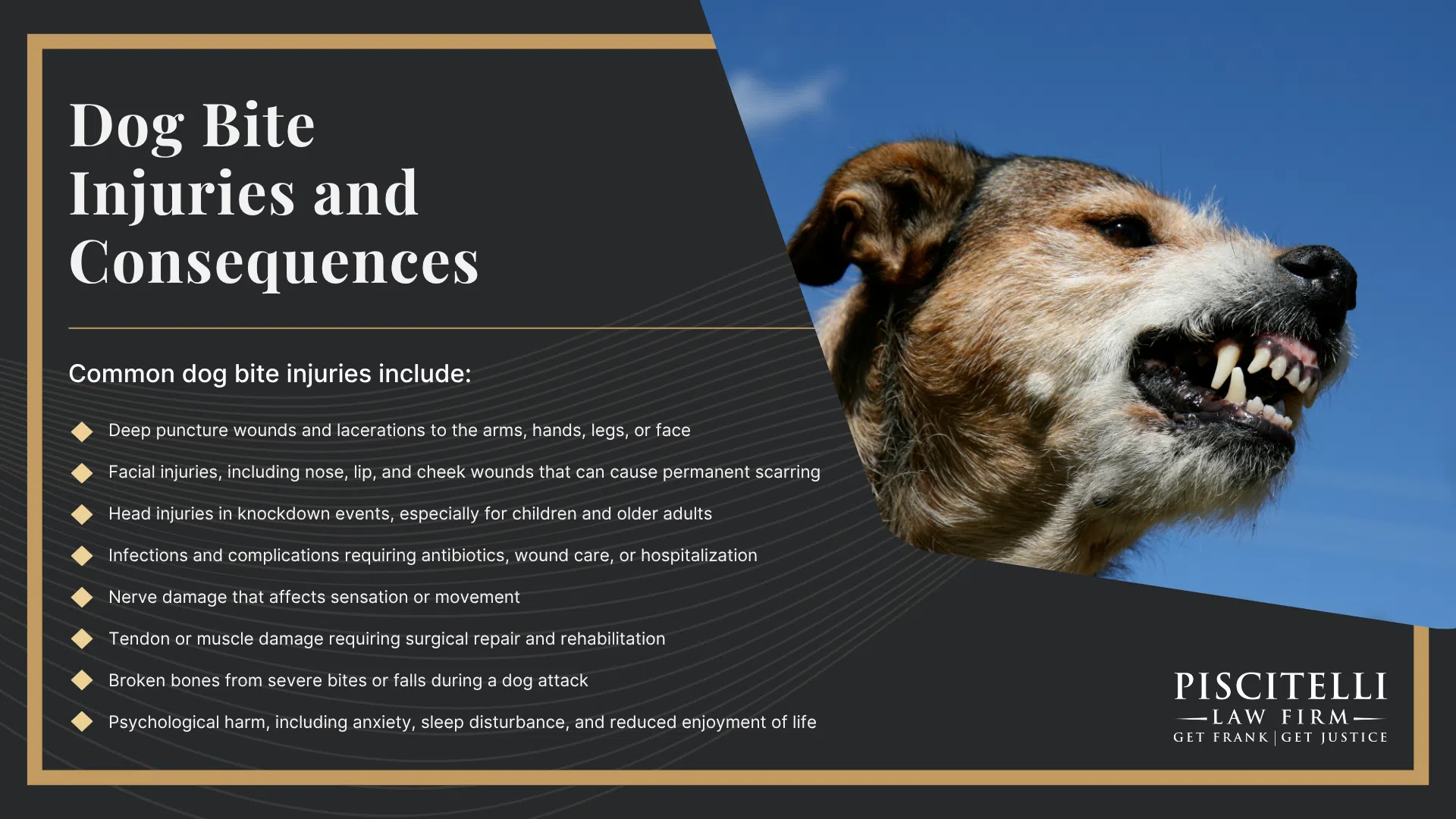
Dog bite injuries can also involve lasting emotional trauma, and children often experience fear and anxiety that continues long after the wounds heal.
Ohio’s dog bite statute imposes strict liability on a dog owner, keeper, or harborer for injuries caused by the dog in many situations, meaning victims generally do not need to prove negligence to pursue damages.
Most Ohio dog bite claims are handled through the dog owner’s homeowner’s insurance or renters coverage, which is why early documentation and careful communications matter from the start.
A lawyer can also coordinate the practical next steps that often come up after a bite, including medical attention, scarring documentation, and follow-up issues tied to vaccination records and local public health or disease control reporting.
How Much Does it Cost to Hire a Dog Bite Lawyer?
Most dog bite lawyers handle cases on a contingency fee basis.
You typically pay no upfront attorney fees, and the fee is paid as a percentage of any recovery obtained through settlement or verdict.
This arrangement lets dog bite victims pursue a claim while dealing with medical bills, follow-up care, and time away from work.

A reputable dog bite attorney should also explain costs clearly.
That includes items like medical record fees, filing fees, and expert costs when needed to prove the extent of injuries or future care.
Clear, written communication about fees and out-of-pocket costs helps you make decisions without surprises.
How A Dog Bite Lawyer Can Assist You
Choosing the right Ohio dog bite lawyer can significantly affect the outcome, especially when the insurance company disputes who qualifies as the responsible party or argues that an exception applies.
Ohio’s strict liability law applies not only to a dog owner, but also to a keeper or harborer, and identifying the correct legally responsible person can be decisive in a case.
A lawyer who regularly handles dog bite cases is also more likely to understand how local ordinances and leash requirements can strengthen settlement negotiations.
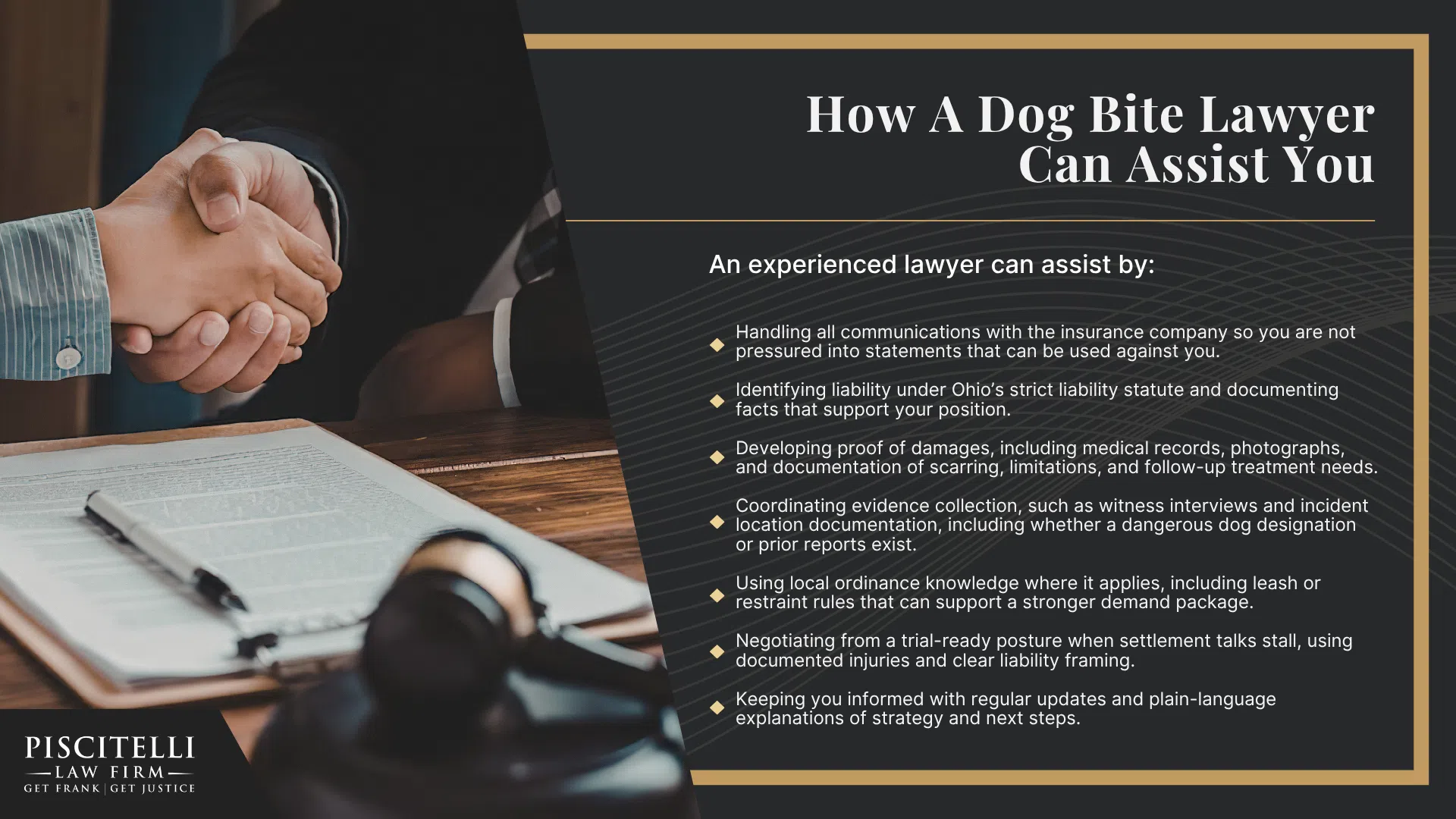
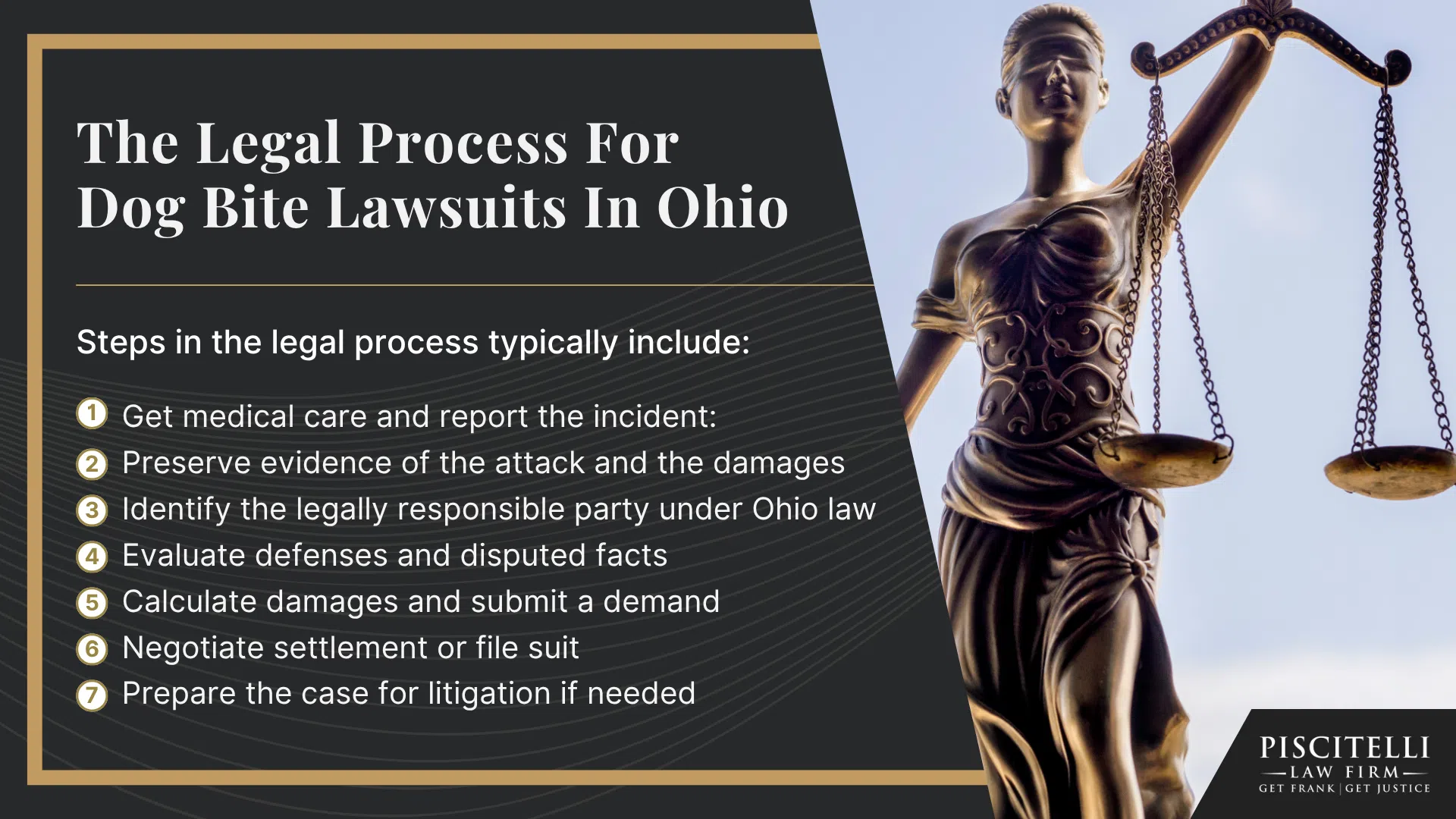
An experienced lawyer can assist by:
- Handling all communications with the insurance company so you are not pressured into statements that can be used against you.
- Identifying liability under Ohio’s strict liability statute and documenting facts that support your position.
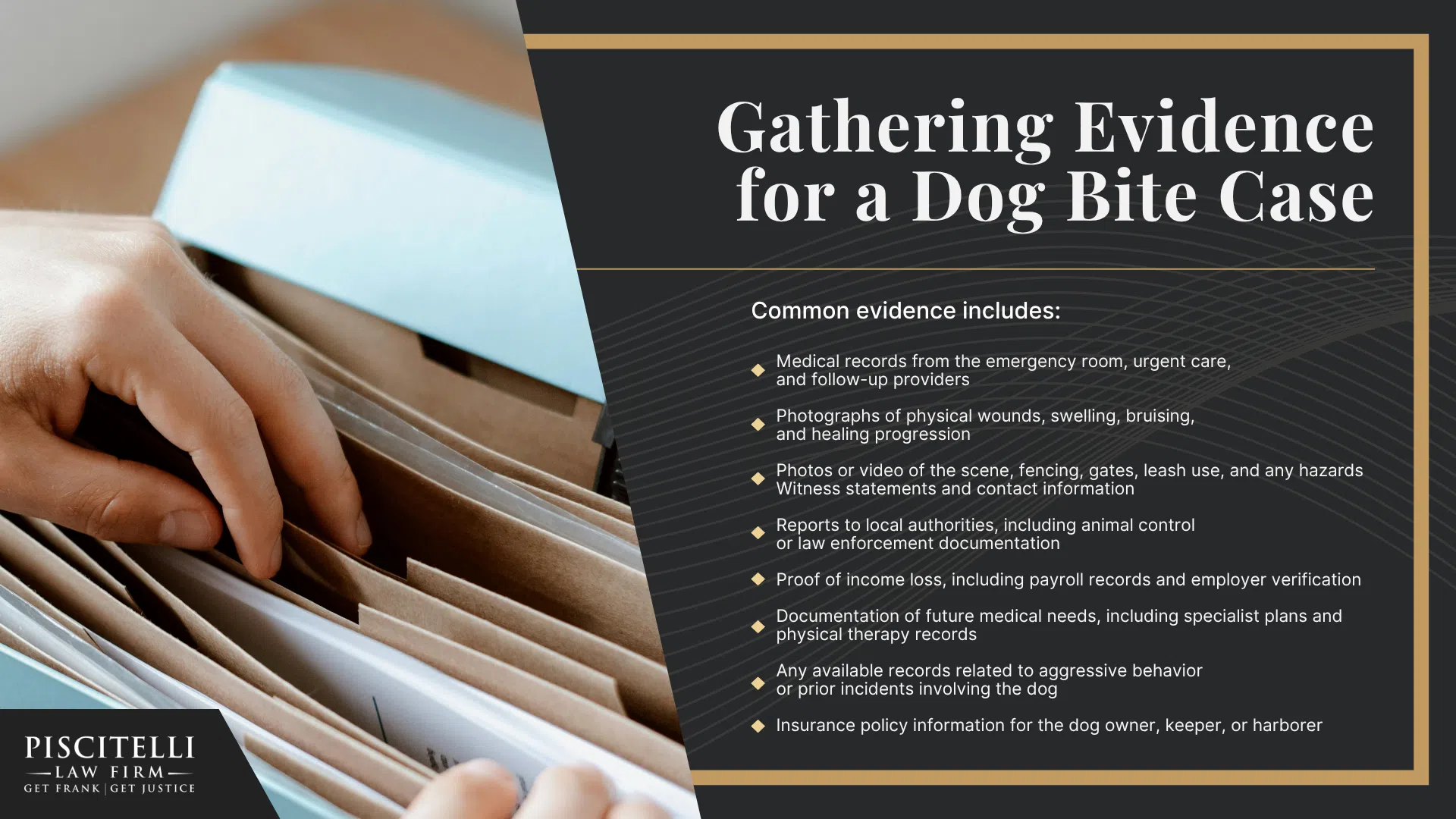
- Developing proof of damages, including medical records, photographs, and documentation of scarring, limitations, and follow-up treatment needs.
- Coordinating evidence collection, such as witness interviews and incident location documentation, including whether a dangerous dog designation or prior reports exist.
- Using local ordinance knowledge where it applies, including leash or restraint rules that can support a stronger demand package.
- Negotiating from a trial-ready posture when settlement talks stall, using documented injuries and clear liability framing.
- Keeping you informed with regular updates and plain-language explanations of strategy and next steps.
Because Ohio has time limits for filing, it is still advisable to contact a lawyer as soon as practical after a dog bite incident so deadlines do not become a problem.
Ohio’s general personal injury limitations period is two years in many bodily injury cases.
Many firms also offer a free consultation, which gives you a chance to ask whether the attorney will personally handle your case and what their track record looks like in dog bite settlements.
Types of Dog Bite Cases We Handle
Piscitelli Law Firm handles a wide range of dog bite cases involving severe injuries, disputed liability, and high medical costs.
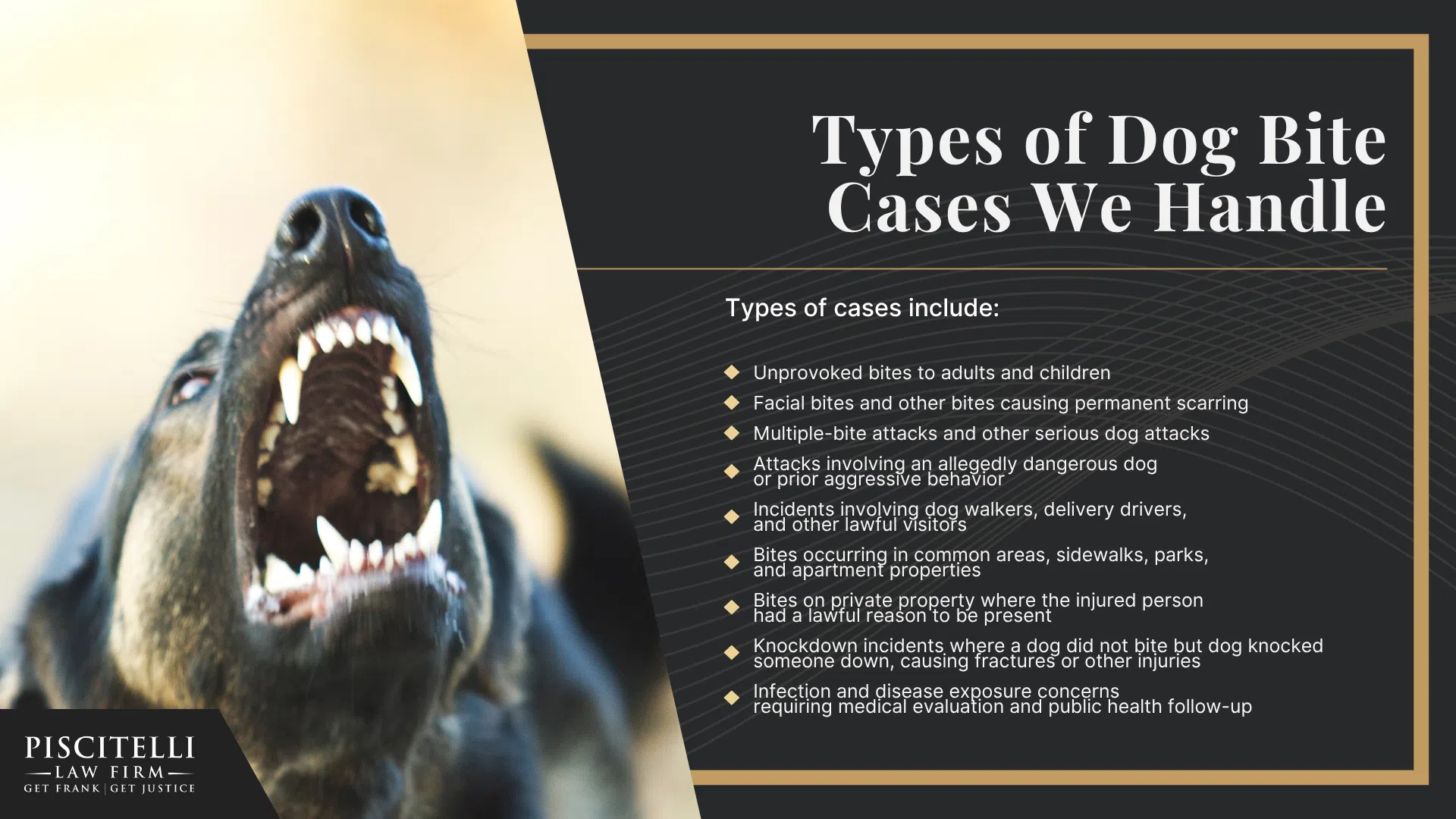
Types of cases include:
- Unprovoked bites to adults and children
- Facial bites and other bites causing permanent scarring
- Multiple-bite attacks and other serious dog attacks
- Attacks involving an allegedly dangerous dog or prior aggressive behavior
- Incidents involving dog walkers, delivery drivers, and other lawful visitors
- Bites occurring in common areas, sidewalks, parks, and apartment properties
- Bites on private property where the injured person had a lawful reason to be present
- Knockdown incidents where a dog did not bite but dog knocked someone down, causing fractures or other injuries
- Infection and disease exposure concerns requiring medical evaluation and public health follow-up
Ohio Dog Bite Laws and Regulations
Ohio’s dog bite statute imposes liability on the dog owner, keeper, or harborer for injury, death, or loss caused by the dog, with specific statutory defenses.
Ohio is not a “one bite” state in the sense that an owner can be held liable without proof that the dog had previously bitten someone.
The statute is framed around responsibility for the injury, not a prior-bite requirement.
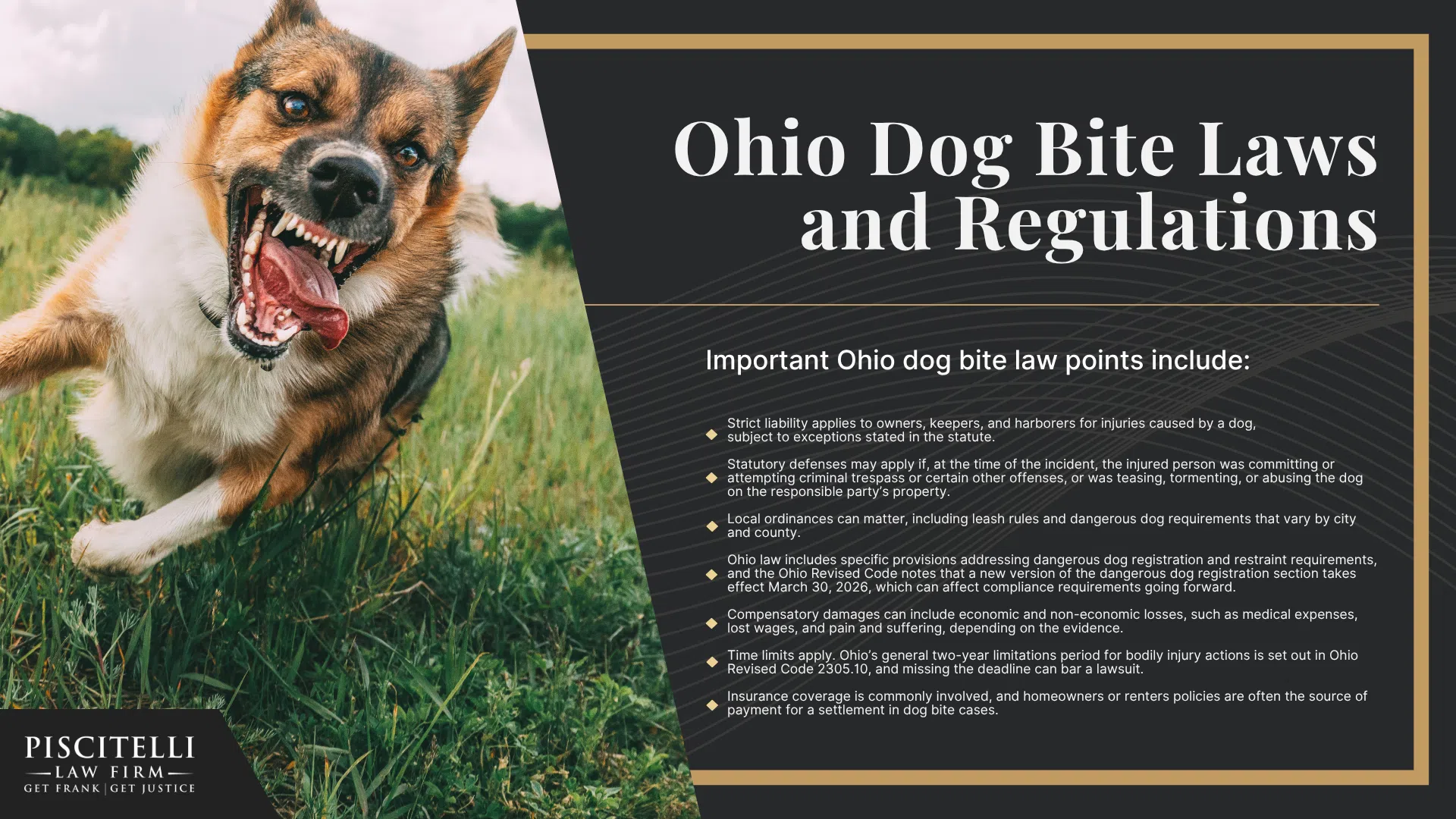
Important Ohio dog bite law points include:
- Strict liability applies to owners, keepers, and harborers for injuries caused by a dog, subject to exceptions stated in the statute.
- Statutory defenses may apply if, at the time of the incident, the injured person was committing or attempting criminal trespass or certain other offenses, or was teasing, tormenting, or abusing the dog on the responsible party’s property.
- Local ordinances can matter, including leash rules and dangerous dog requirements that vary by city and county.
- Ohio law includes specific provisions addressing dangerous dog registration and restraint requirements, and the Ohio Revised Code notes that a new version of the dangerous dog registration section takes effect March 30, 2026, which can affect compliance requirements going forward.
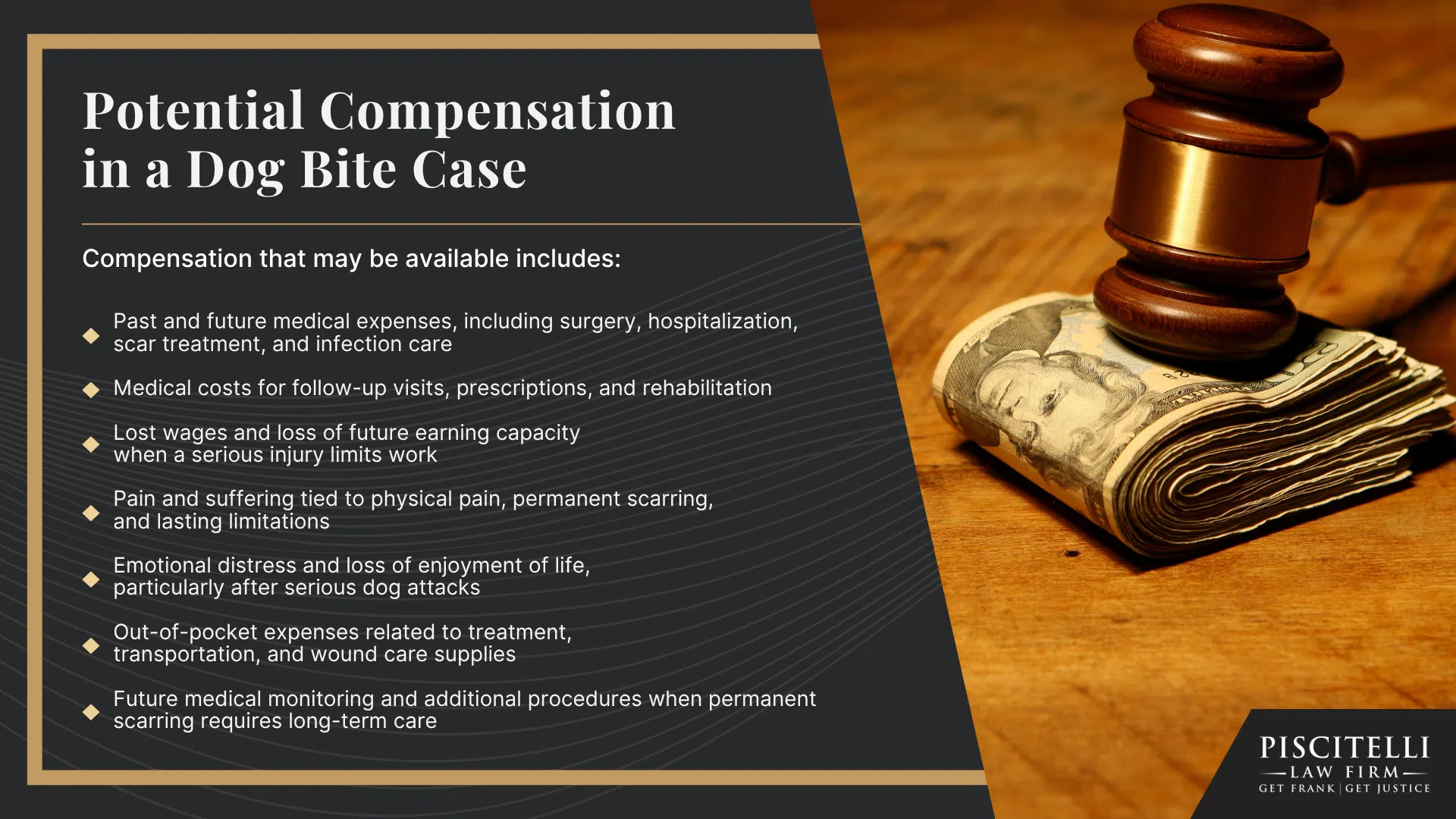
- Compensatory damages can include economic and non-economic losses, such as medical expenses, lost wages, and pain and suffering, depending on the evidence.
- Time limits apply. Ohio’s general two-year limitations period for bodily injury actions is set out in Ohio Revised Code 2305.10, and missing the deadline can bar a lawsuit.
- Insurance coverage is commonly involved, and homeowners or renters policies are often the source of payment for a settlement in dog bite cases.