Ohio Dog Bite Law Explained by an Experienced Dog Bite Lawyer
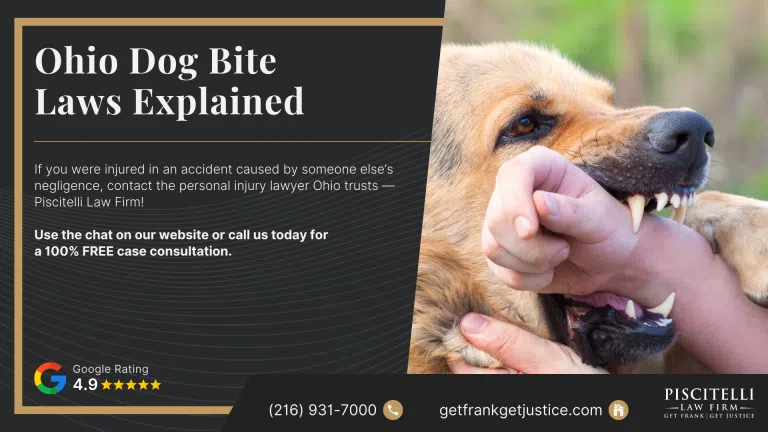
On this page, we’ll discuss Ohio dog bite laws, when a dog bite lawsuit can be filed according to Ohio law, the strict liability rule in Ohio dog bite cases, how a dog bite lawyer can help you with seeking compensation for injuries inflicted in a dog attack, and much more.
Can Dog Bite Victims File a Lawsuit To Recover Compensation?
Dog attacks can leave victims facing serious physical injuries, emotional trauma, and unexpected financial burdens.
Understanding your legal rights after a dog bite is essential, but Ohio’s dog-bite laws can feel complicated if you are unfamiliar with how liability is determined.
Under Ohio law, dog owners and others responsible for a dog may be held legally accountable when their animal causes injury or property damage.
The specific facts surrounding an attack can influence how a claim is handled and what compensation may be available.
Piscitelli Law Firm represents victims of dog bites and animal attacks throughout Northeast Ohio.
With extensive experience handling these cases, our firm focuses on providing compassionate, knowledgeable legal representation to help injured individuals pursue fair compensation while they focus on recovery.
Contact us today, or use the chatbot on this page for an instant case evaluation.
Under this law, the “owner, keeper, or harborer” of a dog is generally strictly liable for injuries, death, or property damage caused by the dog.
Strict liability means that an injured person does not have to prove that the dog had previously shown aggressive behavior or that the responsible party acted negligently.
In many cases, simply proving that the dog caused the injury and identifying the responsible party is enough to establish liability under the statute.
The law specifically states that liability applies regardless of whether the dog has bitten someone before or whether the attack was expected.
This differs from some other states that require proof of prior dangerous behavior before holding an owner responsible.
Ohio’s statute also applies broadly in terms of location.
A dog owner or responsible party may be held liable whether the bite occurred on public property, such as a sidewalk or park, or on private property, provided that the victim was lawfully present at the location when the incident occurred.
This means that guests, delivery drivers, postal workers, and other lawful visitors are typically protected under the statute.
By creating strict liability, Ohio law aims to hold those responsible for dogs accountable while making it easier for victims to pursue compensation after an attack.
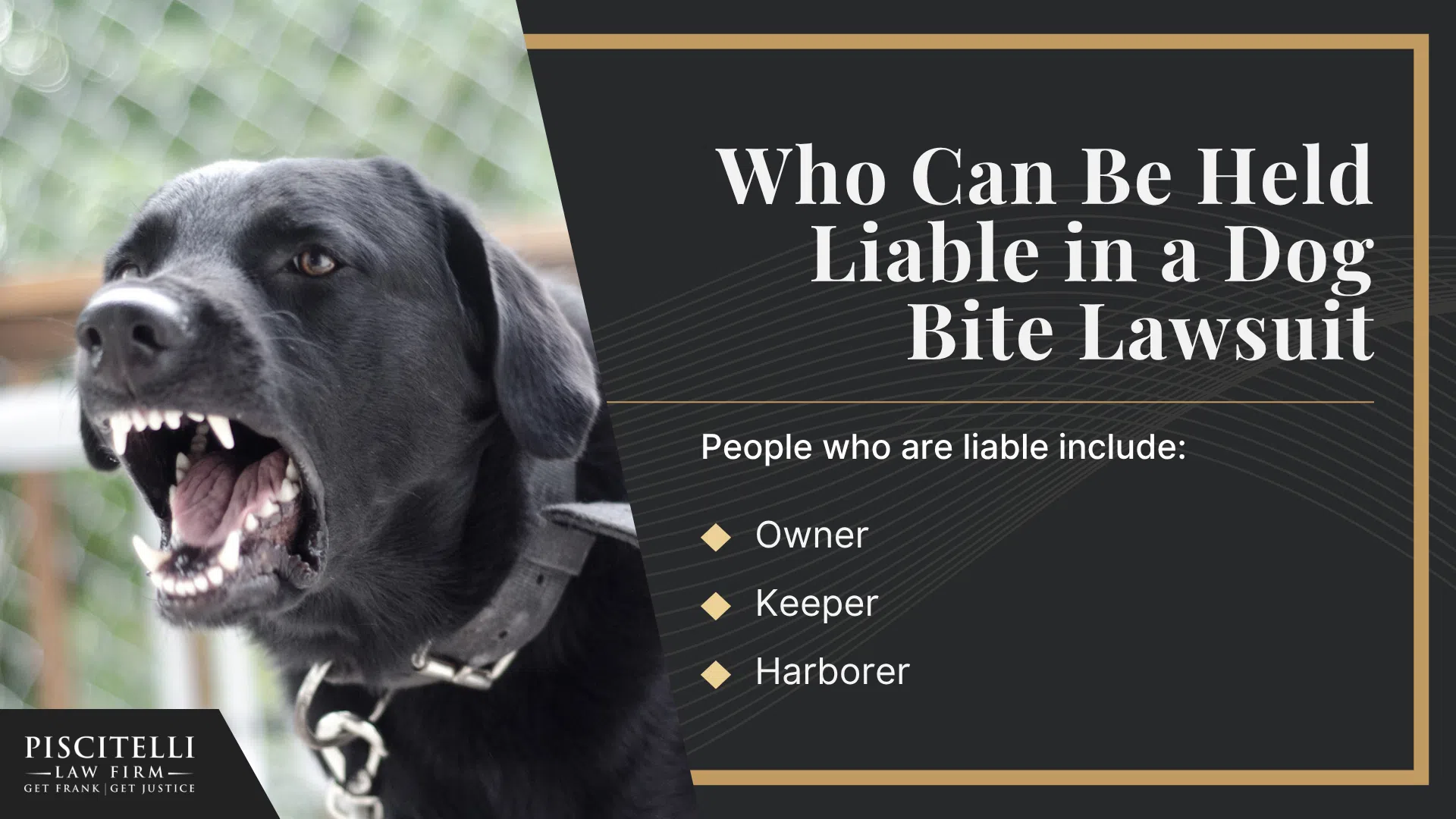
Ohio law takes a broad approach when determining responsibility for dog attacks.
Under Ohio Revised Code § 955.28(B), liability is not limited solely to the dog’s legal owner.
Responsibility may extend to an owner, keeper, or harborer of the dog.
This expanded definition is designed to ensure victims have a fair opportunity to recover damages when injuries occur.
People who are liable include:
Owner
Keeper
Harborer
Owner
The owner is typically the person who legally possesses or claims ownership of the dog.
In most cases, this is the individual whose name appears on licensing or veterinary records.
Owners are often the first party examined when determining responsibility, especially in cases involving dangerous dogs or a previously identified vicious dog.
Keeper
A keeper refers to someone who has physical control of the dog at the time of the incident, even if they are not the legal owner.
A friend, neighbor, or pet sitter who is temporarily caring for or walking the dog may be considered a keeper.
Because Ohio allows for a strict liability claim, the keeper may be held legally responsible if the dog injures someone while under their control.
Harborer
A harborer is a person who provides shelter or a living environment for the dog, such as a landlord, family member, or property occupant who allows the animal to stay on the premises.
Harborers can sometimes be held liable if they knowingly allowed the dog to live on their property and exercised some level of control over where the dog was kept.
For example, imagine a dog owner leaves their pet with a relative while traveling.
If the relative allows the dog to roam freely in their yard and the dog bites a neighbor, both the owner and the relative could potentially share liability.
This may apply even if there was no prior knowledge of the dog’s viciousness.
Dog-bite liability is a significant legal and financial issue.
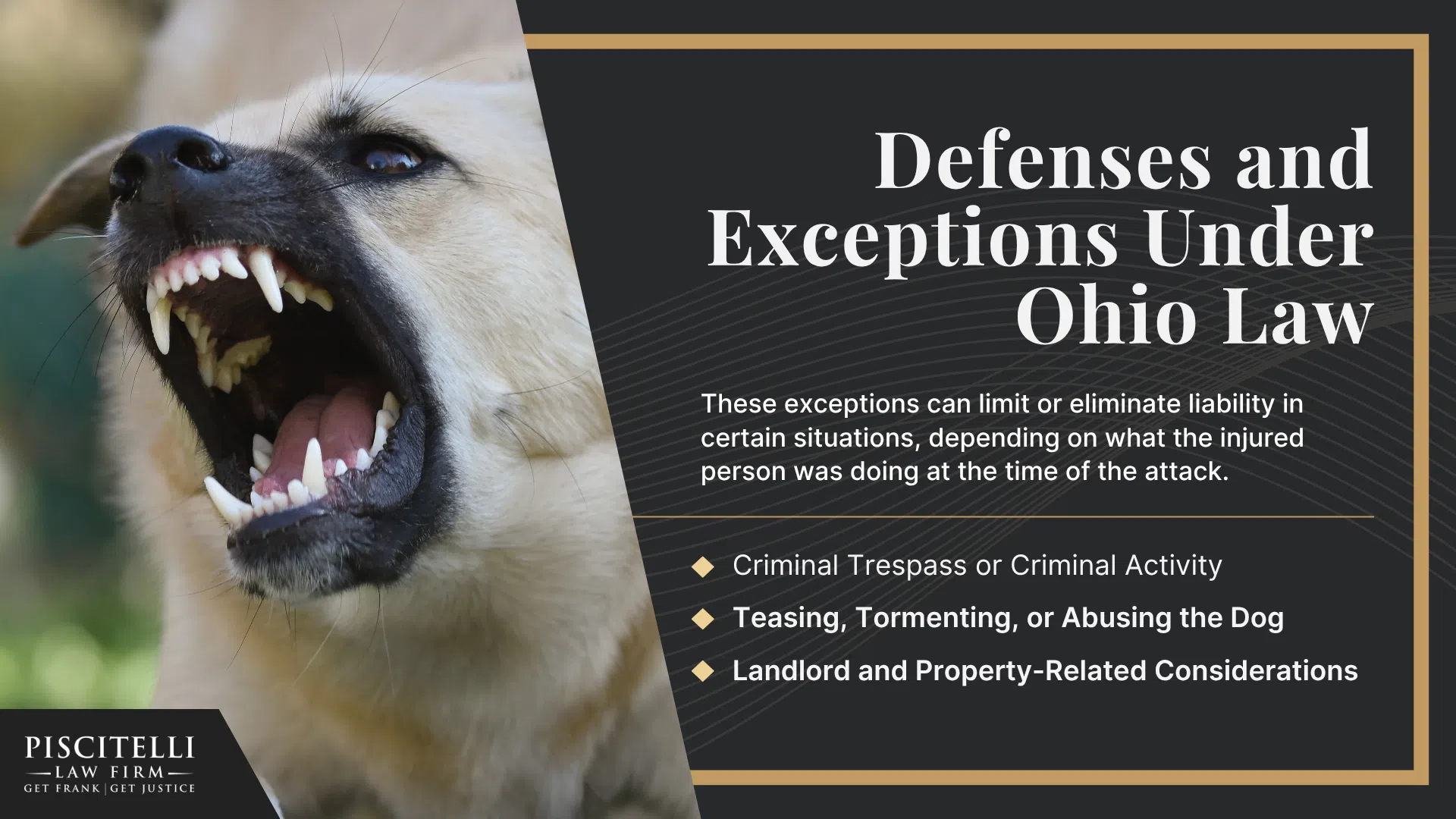
While Ohio’s dog-bite statute generally holds the person responsible for a dog strictly liable for injuries, the law does provide several important defenses and exceptions.
These exceptions can limit or eliminate liability in certain situations, depending on what the injured person was doing at the time of the attack.
Criminal Trespass or Criminal Activity
One major exception applies when the injured individual was committing or attempting to commit a criminal offense at the time of the incident.
If the victims commit criminal trespass or another criminal act beyond a minor misdemeanor, the person responsible for the dog may not be held liable, even if the dog belongs to them.
If someone unlawfully enters private property and is bitten by a dog while trespassing, the law may prevent that person from recovering compensation.
This exception is limited to situations involving unlawful or criminal conduct.
Lawful visitors, such as invited guests, delivery drivers, or service workers, are typically still protected under Ohio law.
Teasing, Tormenting, or Abusing the Dog
Another key defense arises if the victim was teasing, tormenting, or abusing the animal immediately before the attack.
Courts often examine whether the injured person intentionally provoked the dog or engaged in behavior that would reasonably cause the dog to react aggressively.
These determinations are often fact-specific and may require witness statements, veterinary records, or reports from a dog warden or local animal control agency.
Evidence collected during the investigation can play a critical role in determining whether this exception applies.
Landlord and Property-Related Considerations
Liability can also become more complex in cases involving rental properties and a tenant’s dog.
Landlords are not automatically responsible for injuries caused by a tenant’s pet.
They may face liability if they knowingly allowed a dangerous animal to remain on the property and had control over whether the dog could stay.
Even when an exception is raised, injured victims may still face significant impacts, including extensive medical bills and ongoing treatment costs.
Because these defenses can dramatically affect the outcome of a claim, evaluating the specific facts of each incident is essential when determining legal responsibility.
Alternative Legal Routes: Common Law and Negligence Claims
While Ohio’s dog-bite statute provides a strong path for victims seeking compensation, it is not the only legal option available.
In some situations, injured individuals may pursue additional claims based on common law negligence principles.
These alternative legal routes can become especially important when statutory requirements are disputed or when additional evidence strengthens the victim’s case.
Statutory Liability vs Negligence Claims
Under Ohio’s statutory framework, an owner, keeper, or harborer may be held strictly liable when their dog causes injury.
This means victims typically do not need to prove fault or prior aggressive behavior to establish the owner’s liability.
The focus is usually on showing that the dog caused the injury and identifying the responsible party under the statute.
Ohio courts also recognize negligence-based claims under common law, sometimes referred to as the “one-bite rule” or scienter doctrine.
Negligence claims often rely on demonstrating that the owner was aware of the dog’s history or failed to take reasonable steps to prevent an attack.
Evidence might include prior bite reports, complaints from neighbors, or proof that the dog was previously classified as dangerous under state law regulations.
These claims can be particularly relevant when the dog lives in an environment where the owner had repeated opportunities to address aggressive behavior but failed to do so.
Why Multiple Legal Theories May Matter
Pursuing both statutory and negligence-based claims can strengthen a case, especially in situations involving serious injuries or disputed facts.
While strict liability claims often provide a more straightforward path to compensation, negligence claims may allow victims to present additional evidence demonstrating reckless or careless conduct.
By evaluating all available legal avenues, injured individuals may improve their chances of securing fair compensation for the harm they have suffered.
What Victims Can Recover: Possible Damages for a Dog Bite Case
Dog attacks often leave victims dealing with far more than the immediate shock of the incident.
Ohio law allows injured individuals to seek compensation for a wide range of losses connected to a dog bite or animal attack.
When a claim is successful, whether through settlement or if a court ruled in the victim’s favor, financial recovery is intended to help restore the injured person as much as possible.
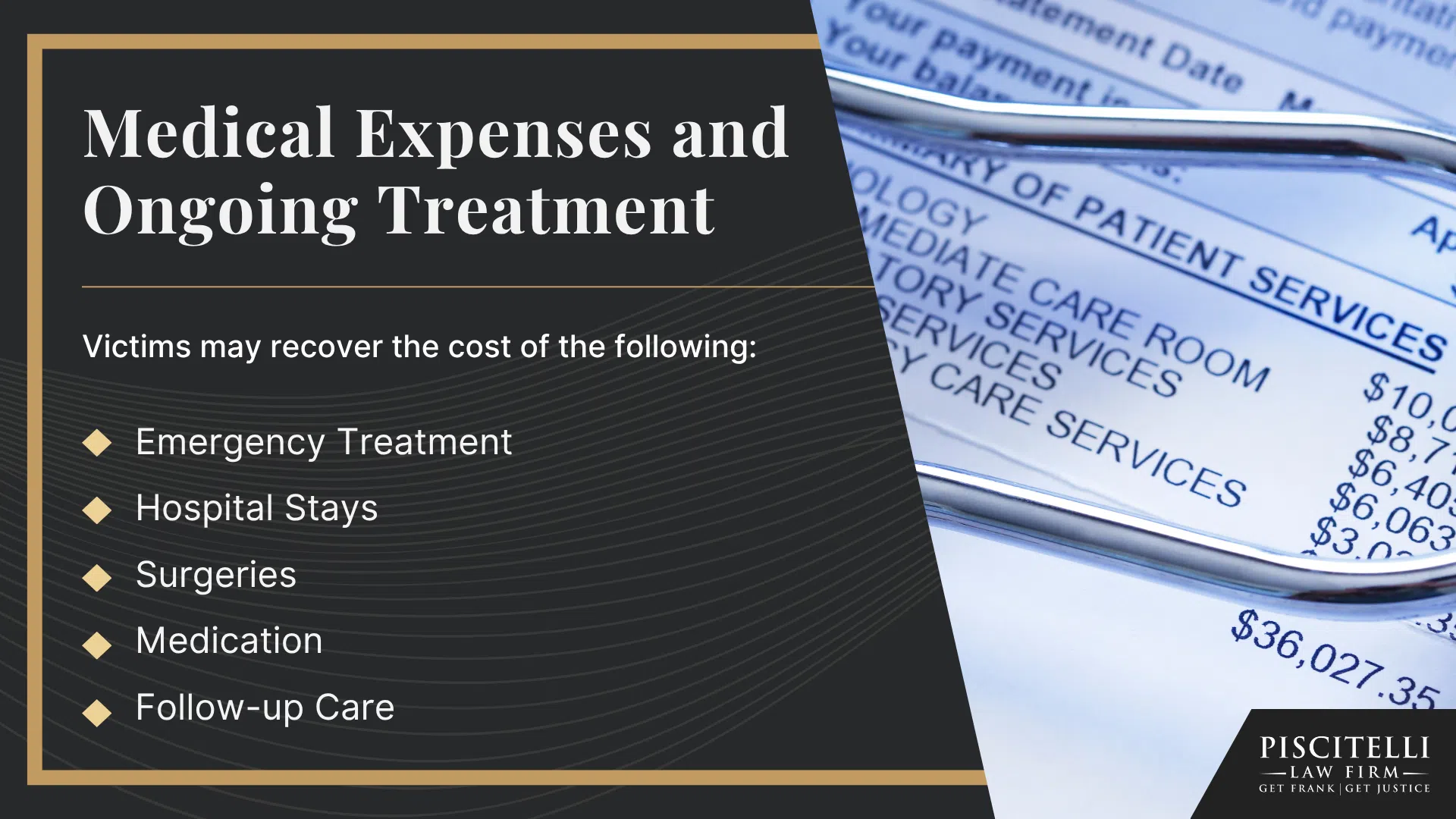
Medical Expenses and Ongoing Treatment
One of the most significant categories of compensation involves medical care.
Victims may recover the cost of the following:
Emergency Treatment
Hospital Stays
Surgeries
Medication
Follow-up Care
Dog bites frequently carry a high risk of infection and can require specialized treatment, including reconstructive procedures.
Compensation may also cover future medical needs if the injuries require long-term treatment or rehabilitation.
This can be especially important in cases where the defendant owned the dog that caused severe or permanent injuries requiring ongoing care.
Income Loss and Financial Impact
Dog attacks can disrupt a victim’s ability to work, sometimes for extended periods.
Ohio law allows victims to pursue compensation for lost wages related to time missed from work while recovering.
If injuries reduce a person’s long-term earning ability, they may also be entitled to recover damages related to diminished future income.
These financial losses can place substantial strain on victims and their families, particularly when injuries prevent individuals from returning to their previous employment or career path.
Pain, Emotional Trauma, and Property Damage
Beyond financial losses, victims may recover compensation for physical pain, emotional distress, and psychological trauma.
Dog attacks can cause lasting fear, anxiety, or post-traumatic stress, particularly among children or individuals who suffered severe injuries.
Scarring and disfigurement may also result in additional compensation due to their long-term physical and emotional impact.
In some cases, damages may also include compensation for harm caused to personal property.
For example, if a dog attacks a pet or other animal, the victim may be able to pursue recovery for veterinary expenses or related losses.
These forms of compensation reflect the broader consequences dog attacks can have on victims’ daily lives.
Statute of Limitations & Time To File in Ohio
Dog-bite claims in Ohio are subject to legal deadlines known as statutes of limitations.
These laws determine how long an injured person has to file a lawsuit seeking compensation.
Missing this deadline can prevent a victim from recovering damages, regardless of how strong the case may be.
In many situations, Ohio allows up to six years to file certain dog-bite claims under applicable statutes.
The timeline can vary depending on the legal theory involved, the age of the victim, and other case-specific factors.
Because dog-bite cases may involve multiple legal paths, including statutory strict liability and the so called common-law negligence claims, it is important to determine which filing deadlines apply.
For example, a negligence-based claim may require evidence showing that the dog’s owner knew or should have known the animal posed a risk.
Establishing whether the defendant knew about prior aggressive behavior may influence both the legal strategy and the timeline for filing.
Waiting too long can result in lost evidence, fading witness memories, or missed legal opportunities.
Consulting an attorney as soon as possible helps ensure that critical deadlines are met and that victims preserve their right to seek compensation.
Many law firms, including us at Piscitelli Law Firm, offer a free consultation to evaluate case details and explain applicable time limits based on the specific circumstances of the incident.
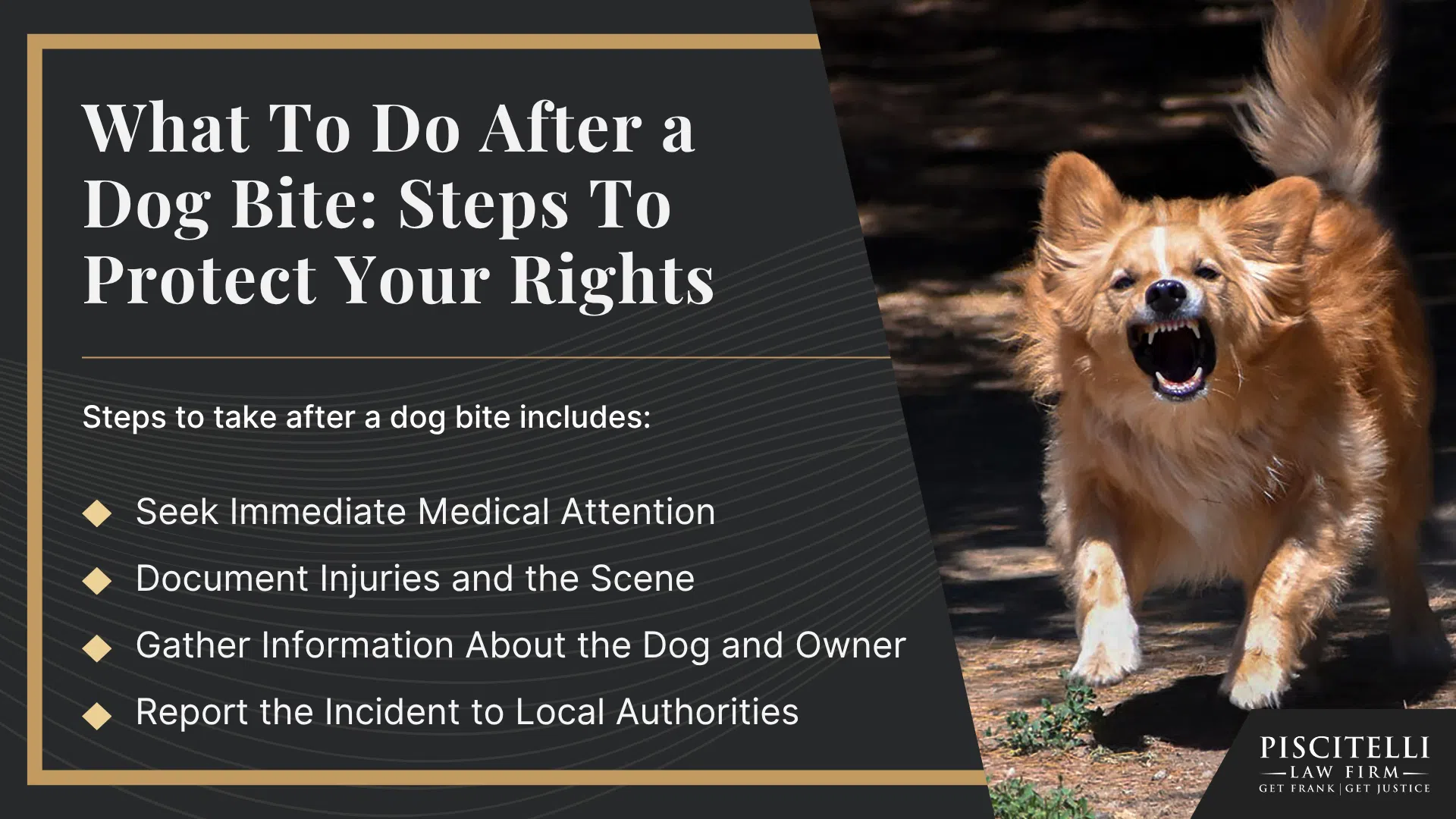
What To Do After a Dog Bite: Steps To Protect Your Rights
The actions taken immediately after a dog bite can significantly affect both a victim’s health and their ability to pursue a legal claim.
Taking prompt, organized steps helps protect your safety while preserving important evidence.
Steps to take after a dog bite includes:
Seek Immediate Medical Attention
Document Injuries and the Scene
Gather Information About the Dog and Owner
Report the Incident to Local Authorities
Seek Immediate Medical Attention
The first and most important step after a dog attack is obtaining medical care.
Even wounds that appear minor can lead to infections or complications.
Prompt treatment also creates medical records that may later serve as key evidence when documenting injuries and treatment costs.
Document Injuries and the Scene
If possible, take clear photographs of your injuries, torn clothing, and the location where the incident occurred.
Continue documenting the healing process over time, especially if scarring or complications develop.
These records can help demonstrate the extent of harm caused by the attack.
Gather Information About the Dog and Owner
Try to obtain the dog owner’s name, contact details, and vaccination information.
If witnesses saw the incident, collect their names and contact information as well.
Determining whether the dog had a history of aggression can help establish whether the owner knew the animal posed a risk.
Report the Incident to Local Authorities
Many Ohio communities require dog bites to be reported to local health departments or animal control agencies.
Filing a report with a dog warden or similar authority helps document the attack and may uncover prior complaints or classifications involving the dog.
Dog-bite cases can quickly become complex, especially when determining liability, dealing with insurance companies, and calculating the full extent of a victim’s losses.
Piscitelli Law Firm assists injured individuals throughout Northeast Ohio by guiding them through each stage of the legal process with experience and care.
Our firm begins by offering a thorough case evaluation during an initial consultation.
During this meeting, our attorneys review the facts of the incident, explain potential legal options, and help victims understand what compensation may be available.
Once representation begins, we handle the communication with dog owners, insurance carriers, and opposing parties to reduce stress for injured clients.
Piscitelli Law Firm also focuses on building strong cases through detailed evidence collection.
This may include reviewing animal control reports, obtaining medical records, consulting with medical professionals, and gathering witness statements.
By carefully documenting injuries and damages, we work to present a clear and persuasive claim for compensation.
When settlement negotiations are possible, our lawyers advocate for fair financial recovery.
If negotiations do not produce an appropriate resolution, we are prepared to pursue litigation and represent clients in court.
Their goal is to help victims focus on recovery while their legal team works to protect their rights.
Piscitelli Law Firm: Laws for Dog Bites and Dangerous Dogs in Ohio
Ohio law provides meaningful protections for individuals injured by dog attacks, allowing victims to pursue compensation under strict liability statutes and, in some cases, additional negligence claims.
These laws are designed to hold responsible parties accountable while helping injured individuals recover from the physical, emotional, and financial consequences of an attack.
However, dog-bite cases often involve detailed legal and factual questions, including determining who may be liable and whether any defenses apply.
Taking prompt action after an attack can strengthen a victim’s claim and help preserve important evidence.
Seeking guidance from an experienced attorney can make a significant difference when navigating Ohio’s dog-bite laws.
With knowledgeable legal support, victims can better understand their rights, explore available legal options, and work toward securing compensation that supports their recovery and long-term well-being.
Contact Piscitelli Law Firm today to learn more about your case and whether there’s liability and compensation to pursue.
You can also use the chatbot on this page to see if you qualify immediately.
Ohio’s strict liability law generally allows victims to pursue compensation even if the dog has never bitten anyone before.
In most cases, you only need to show that the dog caused your injury and that the responsible party qualifies as an owner, keeper, or harborer under Ohio law.
Evidence like medical records, photos, and witness statements can help document the injury and confirm how the incident occurred.
Victims may recover compensation for medical expenses, lost income, pain and suffering, emotional distress, scarring, and other losses connected to the attack.
The exact damages depend on the severity of the injuries and their impact on daily life.
Future treatment needs, including scar revision or therapy, may also be part of the damages analysis when supported by medical records.
While it is possible to pursue a claim without legal representation, dog-bite cases can involve complex liability issues and negotiations with insurance companies.
Working with an experienced attorney can help protect your rights and improve your chances of obtaining fair compensation.
A lawyer can also help identify the correct responsible party and handle insurer requests for statements or broad medical authorizations.
Member of the Ohio State Bar Association since 1993. With 30+ years of legal experience, Attorney Frank Piscitelli has secured over $55 million in compensation for Ohio injury victims, car accident victims, and surviving family members of Ohio wrongful death victims.
Legally Reviewed
This article has been written and reviewed for legal accuracy and clarity by the team of writers and attorneys at Piscitelli Law Firm and is as accurate as possible. This content should not be taken as legal advice from an attorney. If you would like to learn more about our owner and experienced Ohio personal injury lawyer, Frank Piscitelli, you can do so here.
Fact-Checked
Piscitelli Law Firm does everything possible to make sure the information in this article is up to date and accurate. If you need specific legal advice about your case, contact us. This article should not be taken as advice from an attorney.