Frank Piscitelli is an experienced attorney who represents slip and fall victims injured on someone else’s property across Ohio.
A serious slip and fall accident can lead to medical expenses, time away from work, and long-term complications, including broken bones, head injuries, and traumatic brain injuries.
When property owners fail to keep walkways, entrances, and interior floors reasonably safe, an Ohio slip and fall lawyer can investigate the incident, preserve evidence, and pursue accountability based on the facts and Ohio premises liability standards.

Piscitelli Law Firm approaches each slip and fall case with early evidence collection and clear liability analysis.
The firm gathers incident documentation, photographs, and witness information, then works to secure records that may show whether the property owner knew or should have known about a hazard and failed to address it.
That preparation helps support a slip and fall claim that reflects both medical bills and the broader impact of a fall accident on daily life.
How Much Does It Cost to Hire an Ohio Slip and Fall Lawyer?
Most slip and fall lawyers handle cases on a contingency fee basis.
That means you typically do not pay upfront attorney fees, and the fee is paid from any recovery obtained through settlement or verdict.
This structure allows people dealing with medical bills, lost wages, and a serious injury to pursue a fall claim without adding new financial strain at the start of the case.

A slip and fall attorney should also explain how case expenses are handled, including costs for records, filing fees, and expert support if needed.
Clear communication about fees and costs is part of responsible representation in any premises liability lawsuit.
Filing a Slip and Fall Claim
A slip and fall claim usually begins with immediate documentation and medical care.
Many fall accidents happen quickly, and the hazard can be cleaned up or repaired before you realize how important the evidence will be.
If you were injured, seek medical evaluation promptly and keep all records tied to treatment and symptoms.
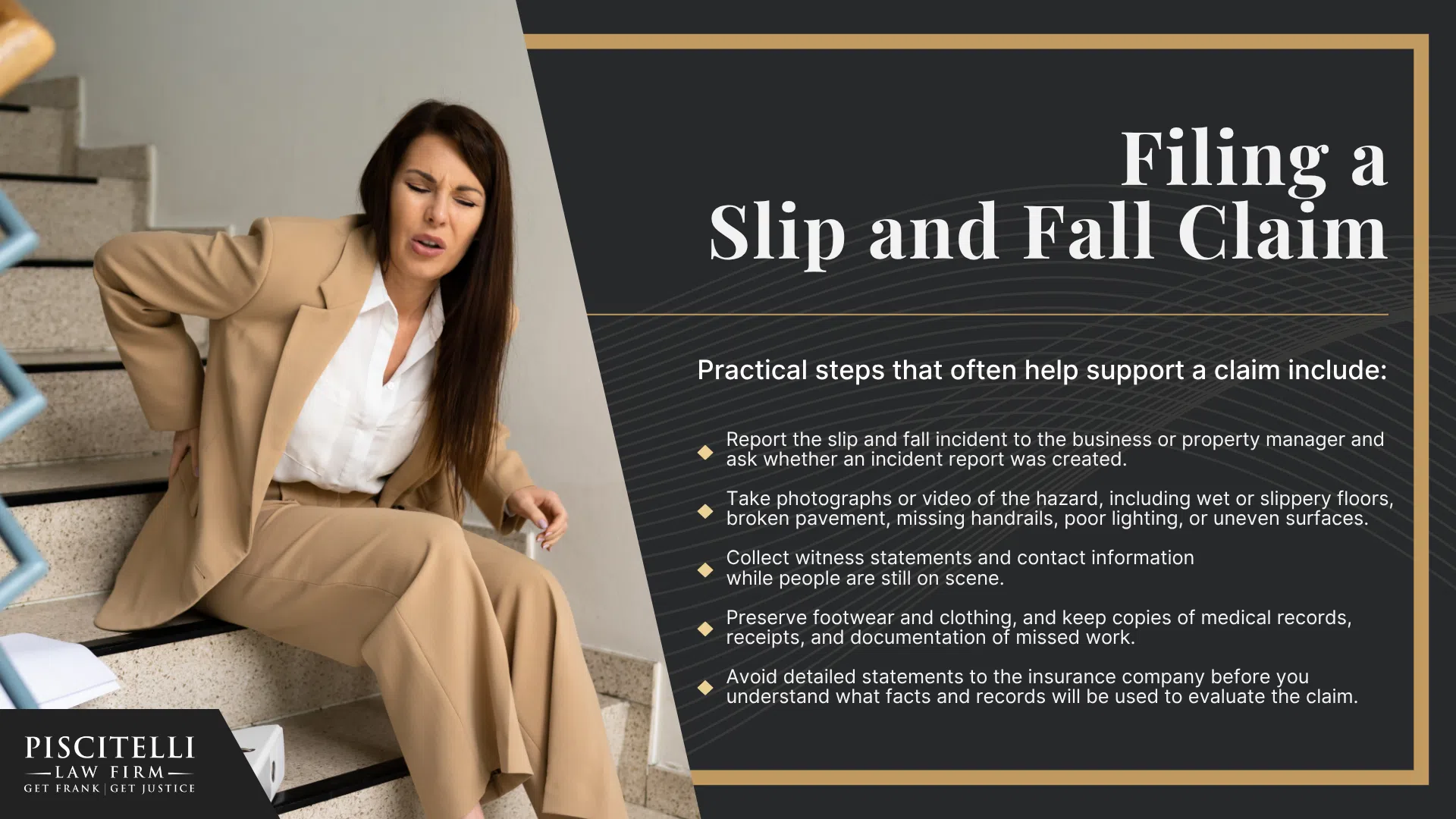
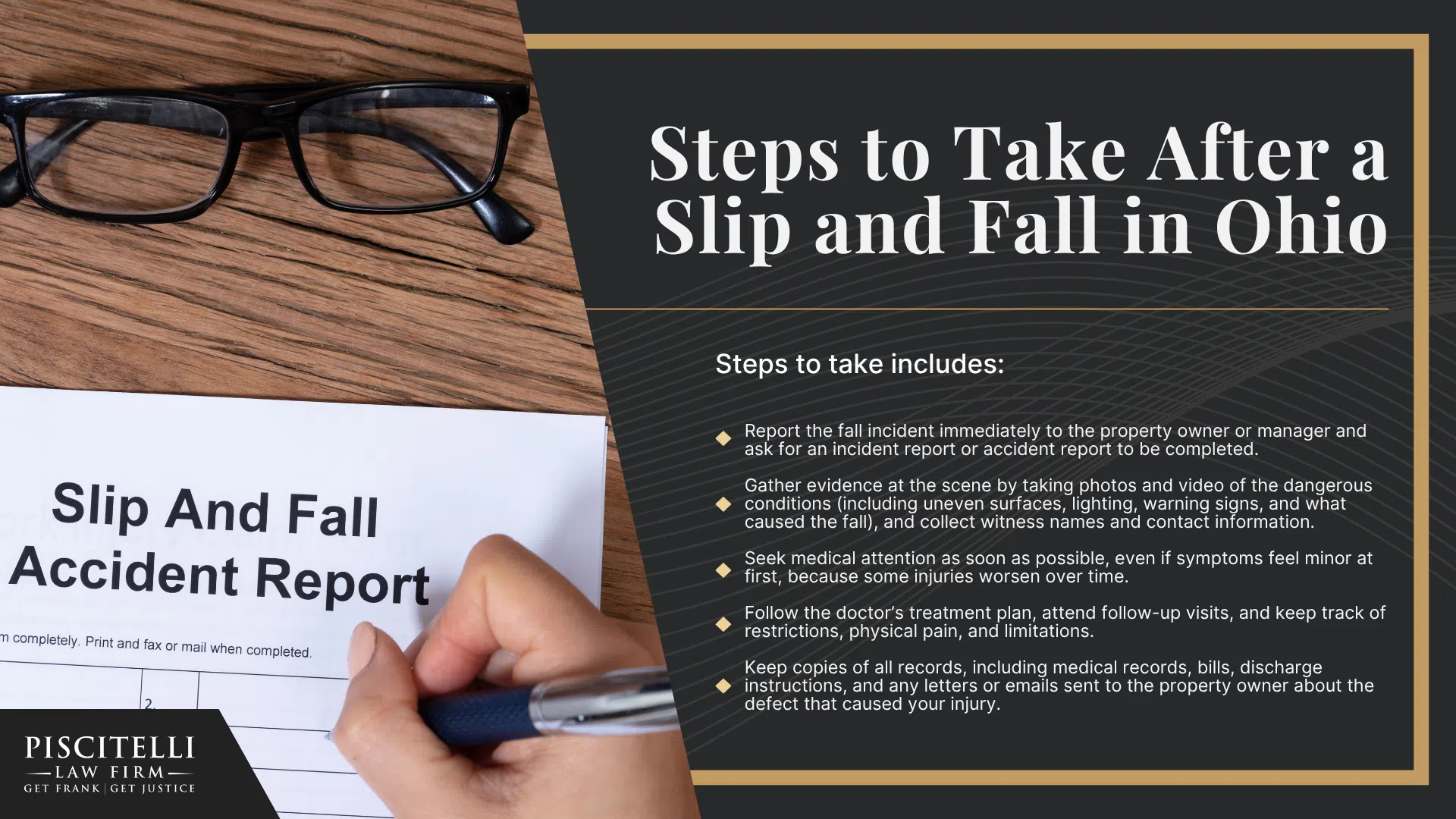
Practical steps that often help support a claim include:
- Report the slip and fall incident to the business or property manager and ask whether an incident report was created.
- Take photographs or video of the hazard, including wet or slippery floors, broken pavement, missing handrails, poor lighting, or uneven surfaces.
- Collect witness statements and contact information while people are still on scene.
- Preserve footwear and clothing, and keep copies of medical records, receipts, and documentation of missed work.
- Avoid detailed statements to the insurance company before you understand what facts and records will be used to evaluate the claim.
A properly prepared Ohio slip and fall claim focuses on liability and damages.
The goal is to seek compensation that is supported by the evidence and the medical record, not by assumptions or early pressure from the insurer.
Liability in Slip and Fall Cases
Liability in a slip and fall lawsuit depends on the duty of care the property owner owed to the injured person, the condition that caused the accident, and whether the owner knew or should have known the hazard existed.
Ohio premises liability law generally classifies visitors as invitees, licensees, or trespassers, and that classification affects the duty of care and potential liability.
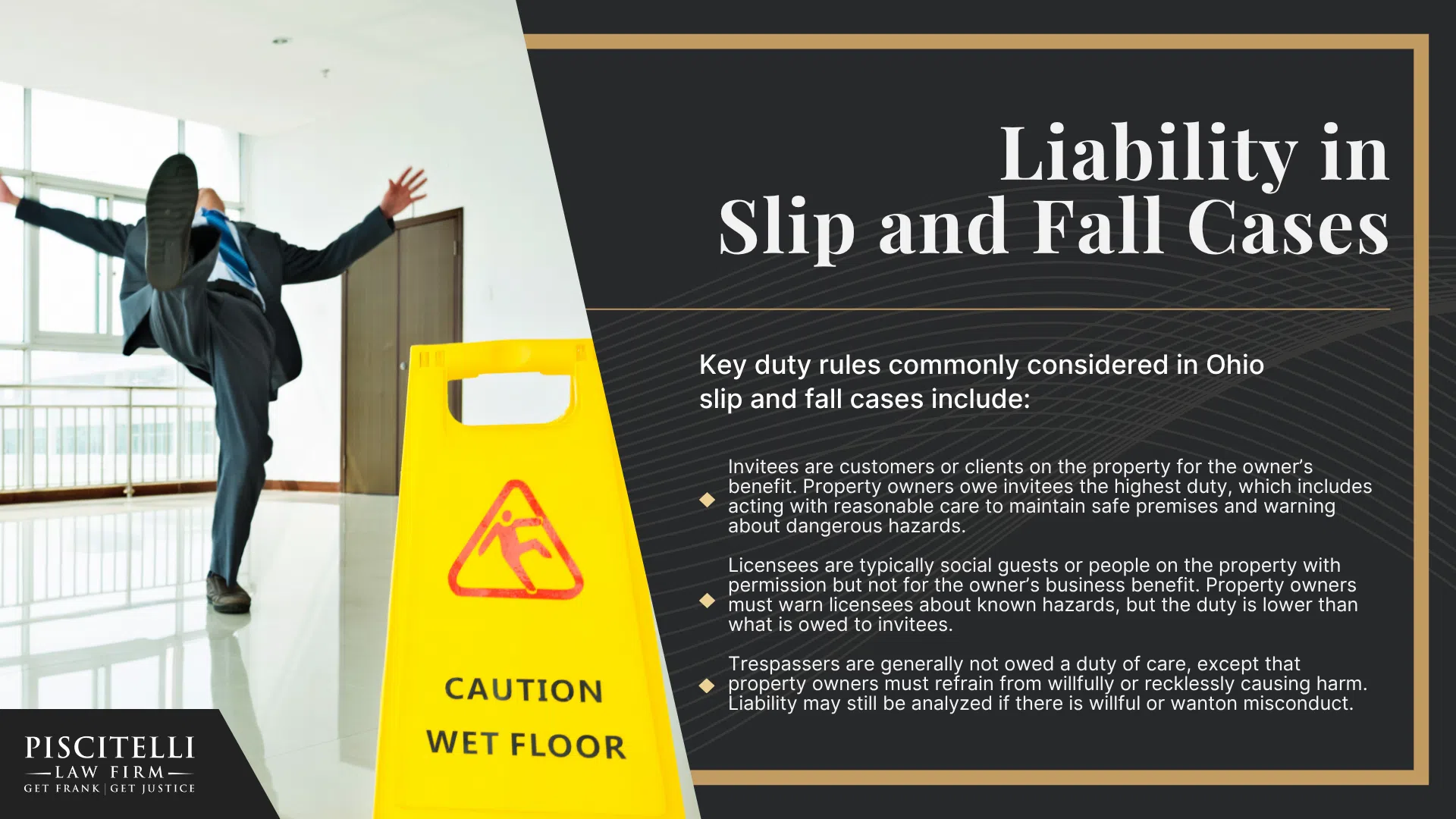
Key duty rules commonly considered in Ohio slip and fall cases include:
- Invitees are customers or clients on the property for the owner’s benefit. Property owners owe invitees the highest duty, which includes acting with reasonable care to maintain safe premises and warning about dangerous hazards.
- Licensees are typically social guests or people on the property with permission but not for the owner’s business benefit. Property owners must warn licensees about known hazards, but the duty is lower than what is owed to invitees.
- Trespassers are generally not owed a duty of care, except that property owners must refrain from willfully or recklessly causing harm. Liability may still be analyzed if there is willful or wanton misconduct.
To prove negligence in a slip and fall case, the injured party generally must show that the hazard existed, that the property owner’s negligence caused the fall accident, and that the owner knew or should have known about the condition and failed to correct it or warn in a reasonable time.
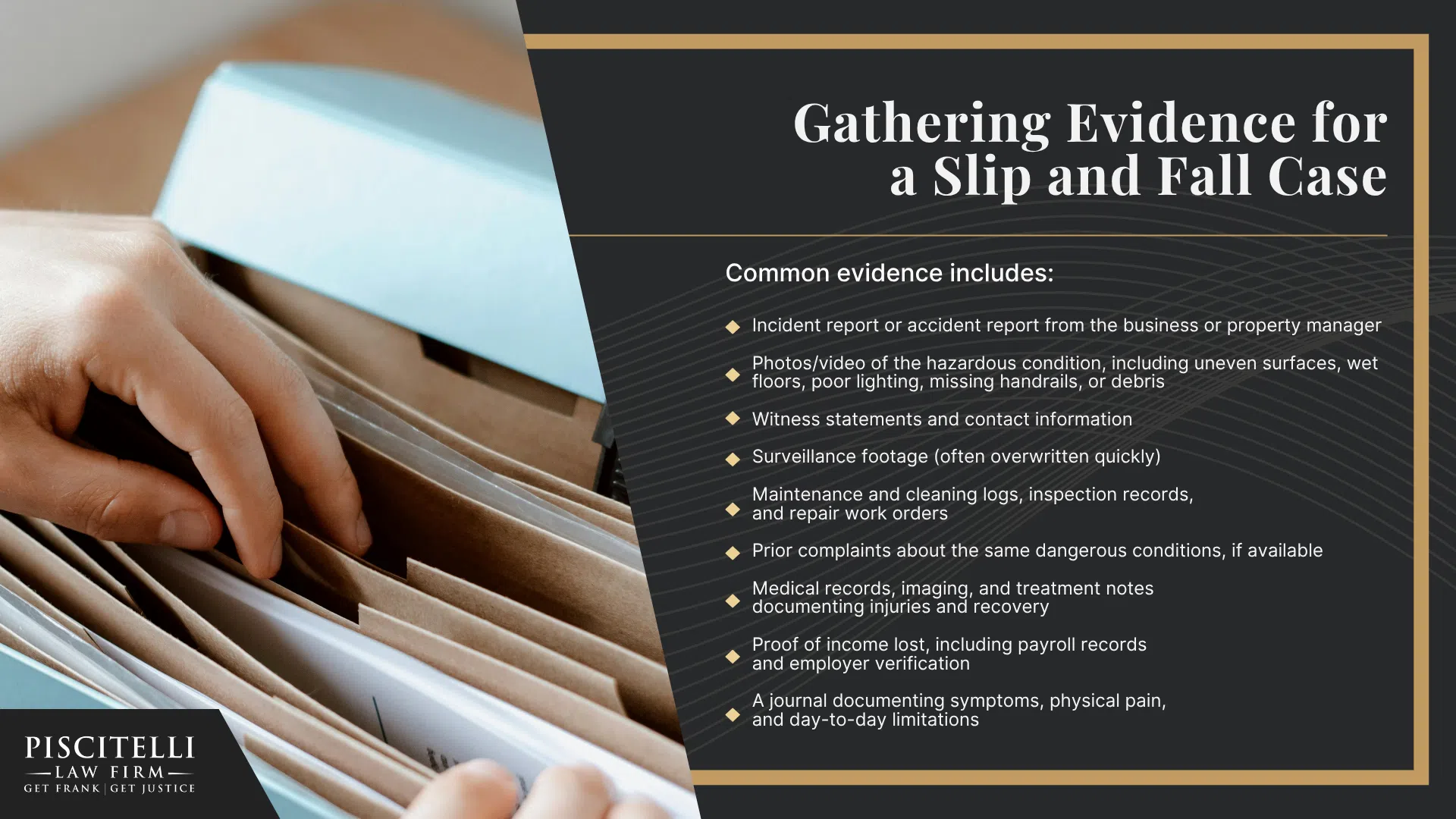
Evidence can be critical here, including maintenance records, cleaning logs, safety inspections, video footage, and witness testimony.
Ohio also applies legal defenses that can affect a claim:
- Modified comparative negligence: Recovery may be reduced if the injured person is partly at fault, and recovery is barred if the injured person is found more than 50 percent at fault.
- Open and obvious doctrine: In Ohio, property owners may argue they are not liable for injuries caused by hazards that are readily visible to a reasonable person. These disputes often turn on lighting, sight lines, distractions, and whether the hazard was truly obvious in the specific circumstances.
An experienced Ohio slip and fall lawyer evaluates these issues early to build a liability theory that fits the evidence and addresses the defenses the insurance company is likely to raise.
Common Causes of Slip and Fall Accidents
Slip and fall accidents are a leading cause of nonfatal injuries requiring medical attention, and many fall accidents occur because property owners fail to maintain safe premises.
Tripping hazards and walkway problems are common, especially in stores, apartment complexes, and public-facing properties where foot traffic is high.
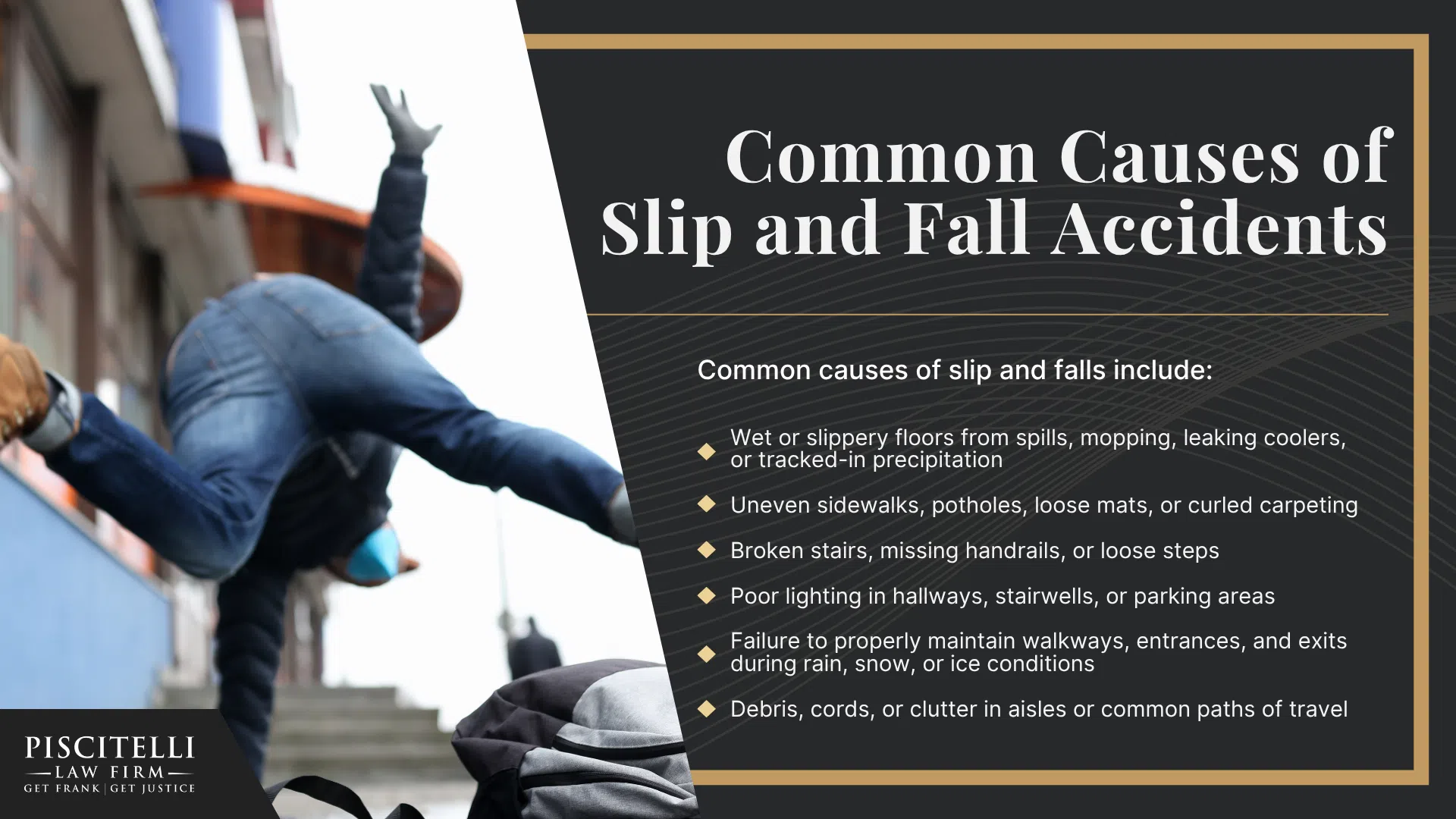
Common causes of slip and falls include:
- Wet or slippery floors from spills, mopping, leaking coolers, or tracked-in precipitation
- Uneven sidewalks, potholes, loose mats, or curled carpeting
- Broken stairs, missing handrails, or loose steps
- Poor lighting in hallways, stairwells, or parking areas
- Failure to properly maintain walkways, entrances, and exits during rain, snow, or ice conditions
- Debris, cords, or clutter in aisles or common paths of travel
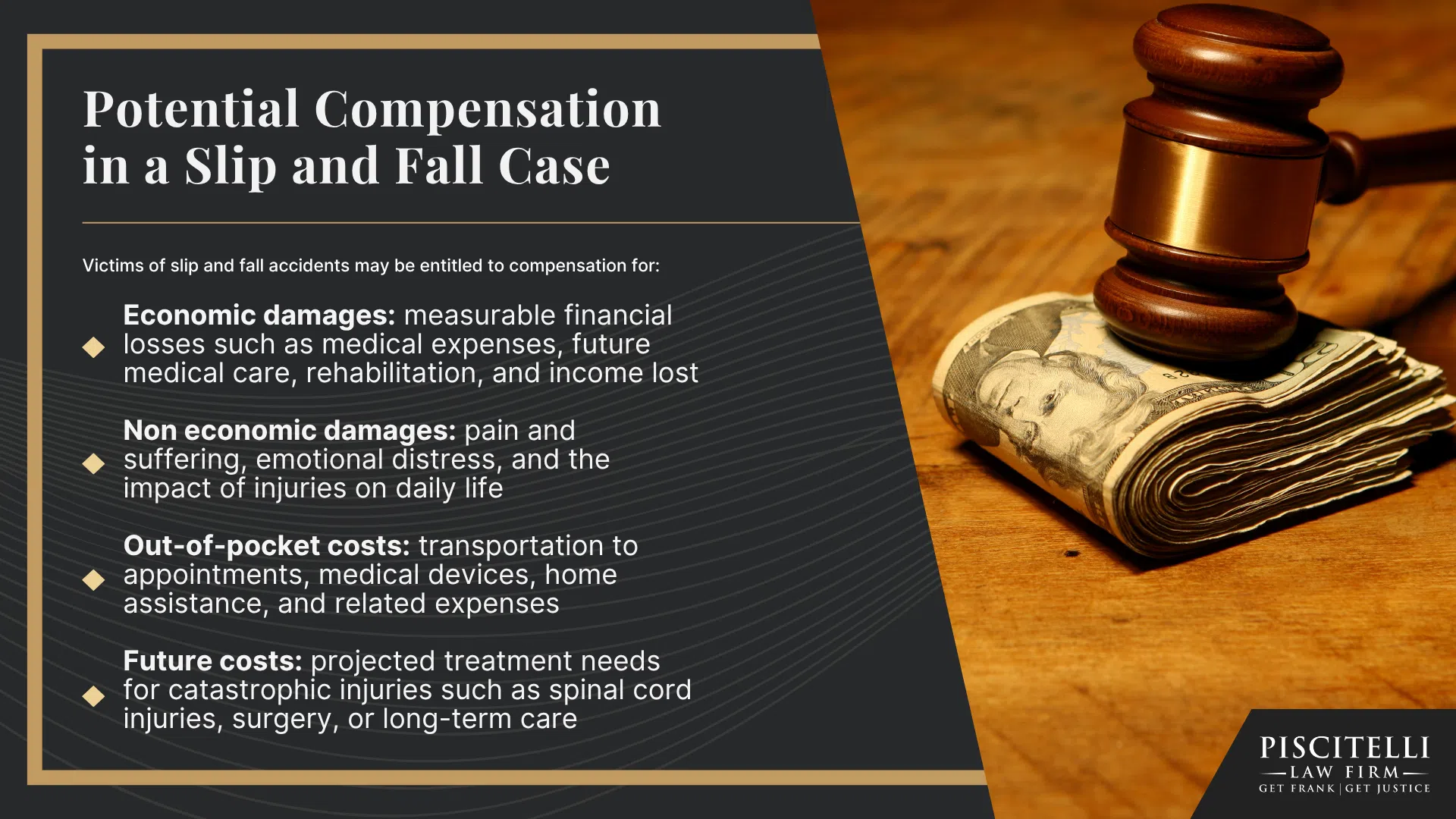
If you were injured on someone else’s property, a fall attorney can investigate the cause, preserve evidence, and pursue a slip and fall claim aimed at recovering compensation for medical expenses, lost wages, and other documented losses, while keeping the case positioned for full and fair compensation supported by the facts.